Author discovery
Authors with similar reading profiles, and the differences that matter
Similarity should create a better next choice, not erase an author's identity. These pairings begin with reading profile, then concentrate on the difference that will decide whether the match actually works.
Most useful pairing
Adrian Tchaikovsky and Alastair Reynolds share scale, not texture
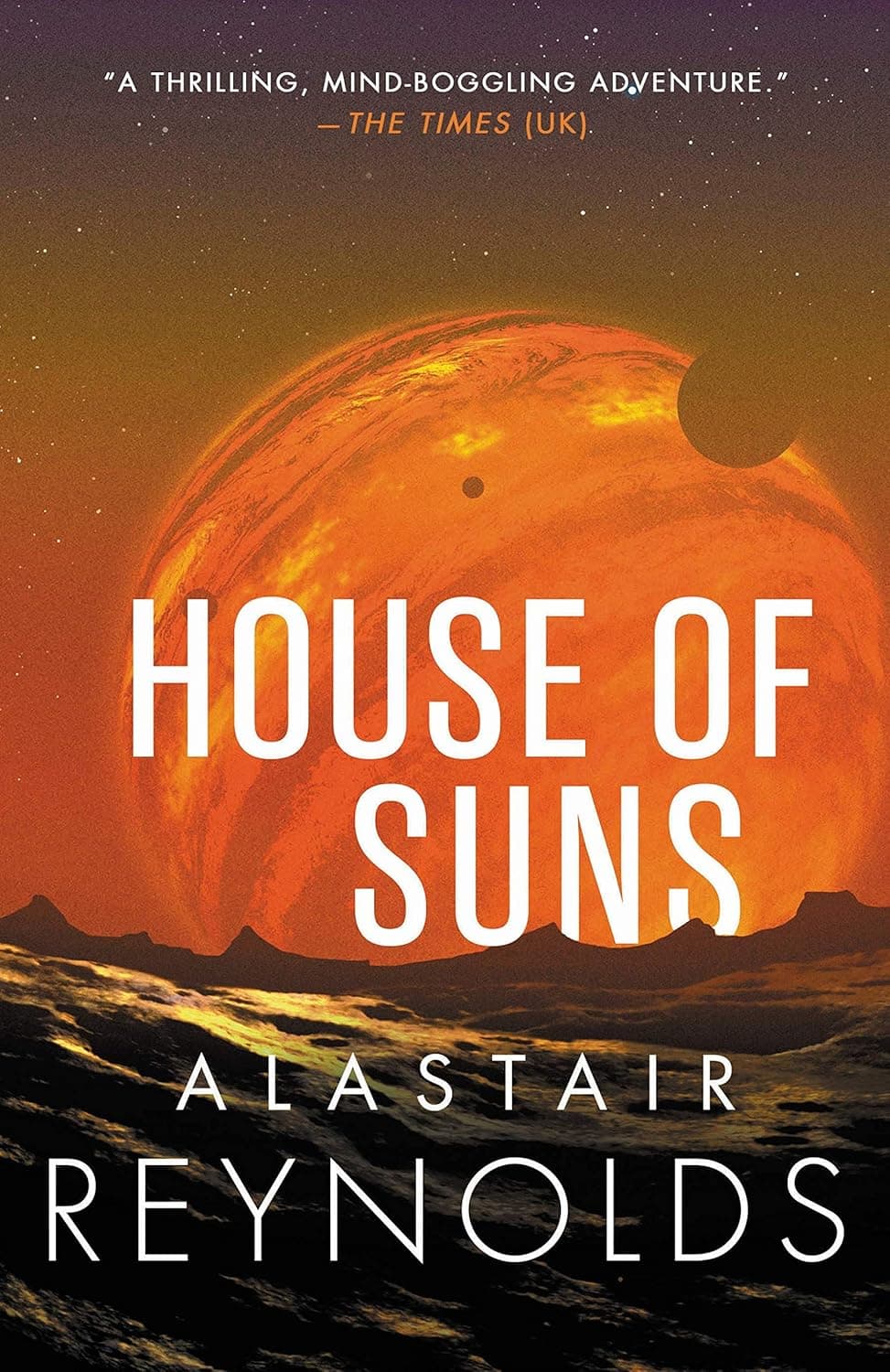
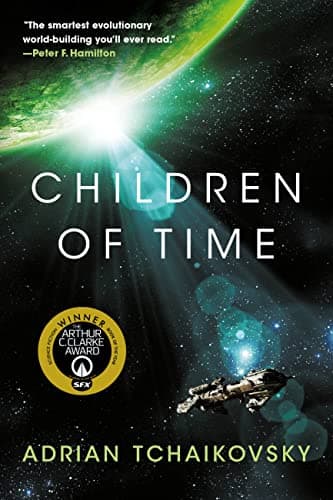
Both writers use nonhuman intelligence, deep time, threatened civilizations, and large scientific ideas. Tchaikovsky usually makes the biological or social thought experiment easier to follow through strongly contrasted viewpoints. Reynolds is more likely to make distance, memory, and incomplete explanation part of the reading difficulty. Choose Children of Time for evolutionary clarity and House of Suns for a denser galactic mystery.
This is not a list of authors who sound alike. Reading profiles summarize pace, darkness, romance, difficulty, genres, and recurring subjects across the books we have reviewed. Two writers may land near one another numerically while using radically different prose, structure, or moral emphasis. The editorial note after each pairing identifies that gap because it is often more useful than the similarity itself.
Confidence varies with catalog depth. We have many reviewed books by Alastair Reynolds, Michael Crichton, J.R.R. Tolkien, and Martha Wells. Joe Abercrombie is represented by only The Devils, so any comparison involving his work is provisional. Author profiles will become more reliable as additional books are reviewed, and the author pages linked below make the current evidence visible rather than hiding the sample.
The book discussed here
Ready to try Children of Time?
Read more about the book, or see the formats currently listed on Amazon.
As an Amazon Associate, I earn from qualifying purchases.
Ten editorial matches
Similar reading promises, different reasons to choose
Use the pairing as a bridge. The first sentence names the shared experience; the second explains where the writers separate.
1
Adrian Tchaikovsky and Alastair Reynolds
Large-scale science fiction
Children of Time and House of Suns both make human assumptions feel small beside long timescales and unfamiliar minds. Tchaikovsky tends to organize the big idea around visible evolutionary or cultural stages. Reynolds more often withholds orientation and lets archaeology, memory, or distance turn knowledge into a mystery.
Choose between them: start with Tchaikovsky for clearer conceptual scaffolding and Reynolds for colder atmosphere, deeper temporal vertigo, and a greater willingness to leave edges unresolved.
2
Martha Wells and T. Kingfisher
Humane speculative fiction with dry humor
All Systems Red and Nettle & Bone center wary protagonists who notice practical problems, distrust grand performances, and form relationships through action. Wells leans toward systems, autonomy, and controlled internal voice. Kingfisher leans toward fairy-tale objects, bodily oddity, domestic observation, and horror that can turn funny without becoming harmless.
Choose between them: choose Wells for science fiction and boundaries; choose Kingfisher for fantasy or horror grounded in craft, food, animals, and reluctant community.
3
Michael Crichton and Andy Weir
Technical problems with thriller momentum
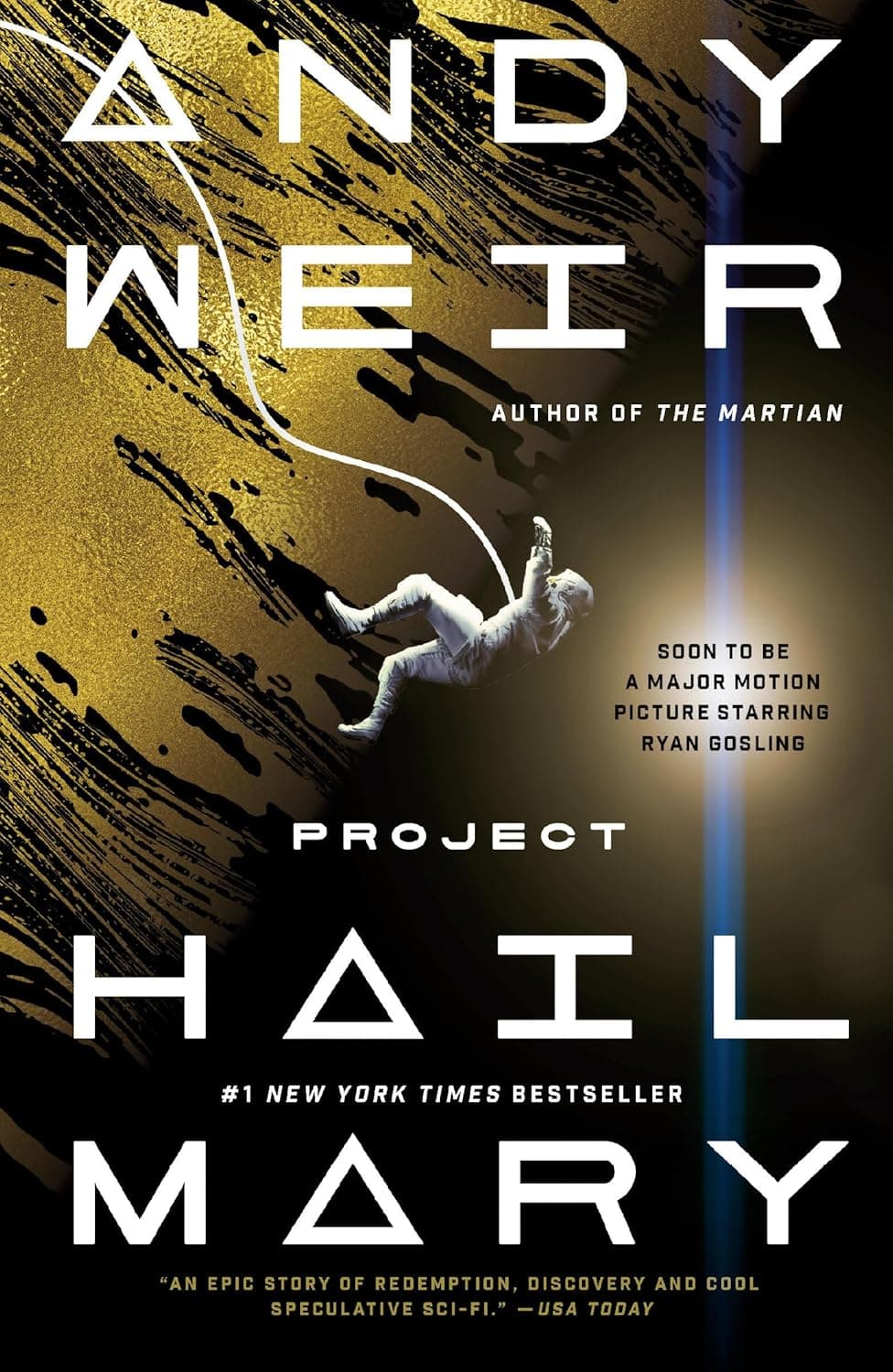
Jurassic Park and The Martian make explanation part of suspense because scientific facts alter immediate options. Crichton is more skeptical of institutions, commercialization, and claims of control. Weir is more optimistic about distributed competence and uses problem solving itself as a source of pleasure and humor.
Choose between them: choose Crichton when you want systems to fail under pressure; choose Weir when you want capable people to learn, collaborate, and engineer a route out.
4
George R. R. Martin and Joe Abercrombie
Dark adult fantasy and compromised choices
A Game of Thrones and The Devils distrust clean heroism, distribute attention across competing motives, and let violence carry political consequences. Martin builds a broader historical network of houses, institutions, and inherited claims. Our current Abercrombie sample emphasizes abrasive group chemistry, faster black comedy, and a mission whose moral premise keeps curdling.
Choose between them: choose Martin for layered dynastic history. Choose Abercrombie for a tighter, more openly comic ensemble, while treating the pairing as provisional until more of his books are reviewed.
5
Dan Brown and Freida McFadden
Accessible twists and short-term questions
The Da Vinci Code and The Housemaid create momentum by keeping the next revelation close and ending scenes with unstable information. Brown expands outward into codes, institutions, art, and public conspiracy. McFadden contracts suspense into homes, intimate access, social performance, and private motives.
Choose between them: choose Brown for a chase across public history and puzzles; choose McFadden for domestic pressure, faster chapters, and reversals tied to who controls the household story.
6
Emily Henry and Ali Hazelwood
Contemporary romance with professional pressure
Funny Story and Love on the Brain use banter, competence, embarrassment, and work or community identity to shape attraction. Henry gives more space to place, friendship, family disappointment, and life reconstruction. Hazelwood more often concentrates the romantic mechanism through specialized workplaces, heightened chemistry, and sharper trope visibility.
Choose between them: choose Henry when friendship, family, and place should matter almost as much as the couple; choose Hazelwood for a more concentrated, high-chemistry romance built around professional rivalry or proximity.
7
Suzanne Collins and Julie Kagawa
Young protagonists under survival systems
The Hunger Games and Kagawa's dystopian adventures place young people inside institutions that normalize danger and force alliances under pressure. Collins is more politically compressed, using spectacle and first-person limitation to examine propaganda. Kagawa leans more heavily into genre adventure, creatures, quest movement, and continuing-series momentum.
Choose between them: choose Collins for political precision and traumatic consequence; choose Kagawa for a wider adventure canvas and a stronger supernatural or speculative quest feel.
8
Carl Sagan and Yuval Noah Harari
Big nonfiction questions for general readers
Cosmos and Sapiens both move across enormous timescales using memorable examples and a confident explanatory voice. Sagan anchors wonder in scientific method and repeatedly returns to uncertainty and evidence. Harari builds broad historical syntheses whose clarity is stimulating but whose generalizations deserve more active resistance from the reader.
Choose between them: choose Sagan for science, skepticism, and cosmic scale; choose Harari for provocative historical frameworks that are best read with corroborating sources nearby.
9
J.R.R. Tolkien and Patrick Rothfuss
Language, music, legend, and remembered worlds
The Hobbit and The Name of the Wind both care about songs, names, stories within stories, and the way a narrated life becomes legend. Tolkien often adopts the distance of a storyteller or invented history. Rothfuss brings the reader much closer to one gifted narrator whose performance shapes every claim.
Choose between them: choose Tolkien for mythic range and a complete classic journey; choose Rothfuss for lyrical first-person immersion, school life, and a deliberately unfinished personal legend.
10
Brandon Sanderson and James Islington
Systems, political secrets, and readable epic fantasy
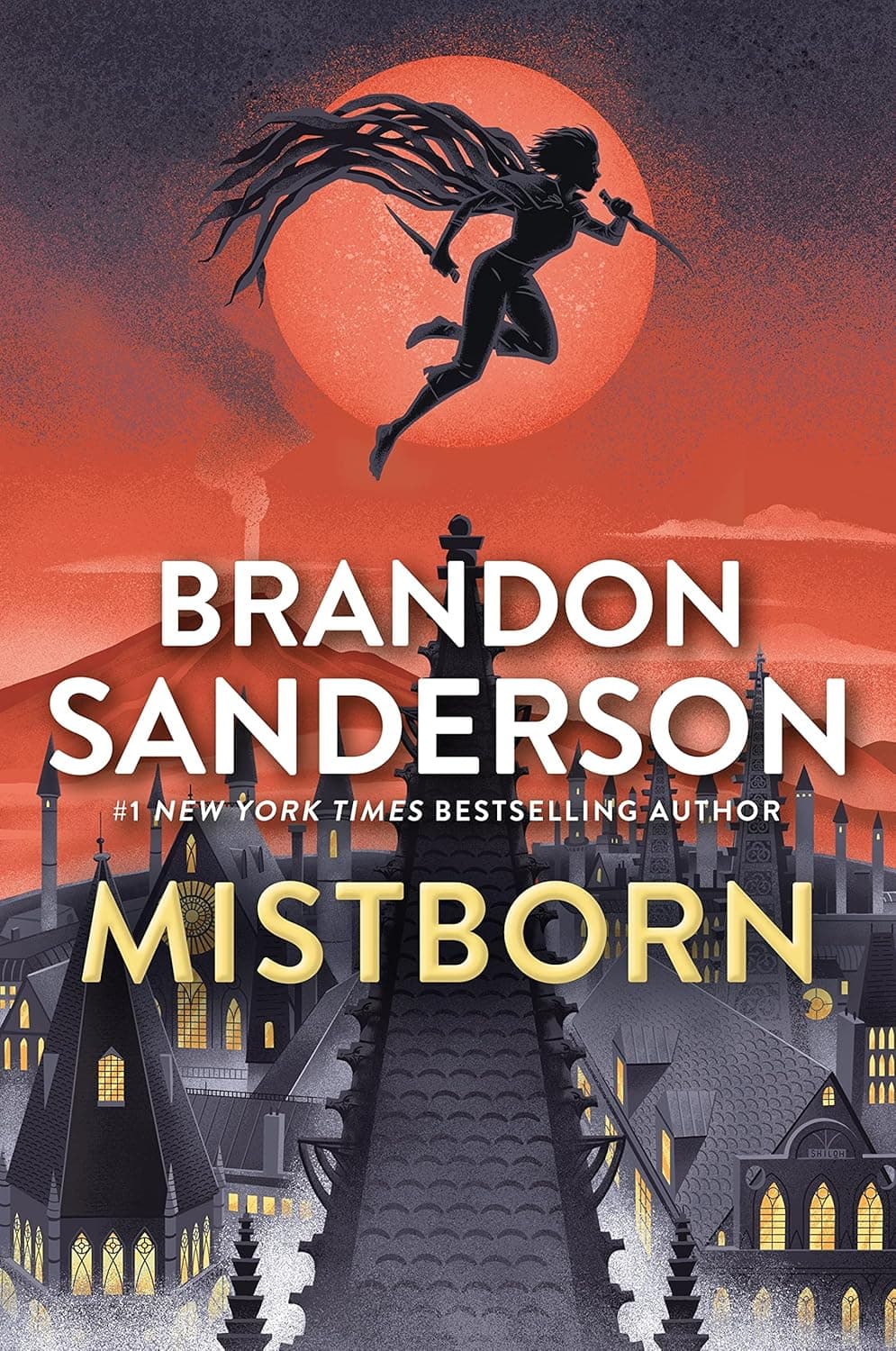
Mistborn and The Will of the Many give protagonists learnable systems, visible goals, concealed political structures, and revelations that reframe earlier events. Sanderson foregrounds magic mechanics and builds toward large action payoffs. Islington makes hierarchy, identity, and academy competition more immediately central to the mystery.
Choose between them: choose Sanderson for explicit rules and cumulative payoff; choose Islington for a faster political opening, an academy setting, and uncertainty about the system's deepest premises.
Side by side
Five high-confidence author bridges
These pairs have enough reviewed evidence to support a practical next step. Similarity describes the reading promise; the final column protects the distinction.
| If you read | Try | Shared profile | Main difference |
|---|---|---|---|
| Adrian Tchaikovsky | Alastair Reynolds | Big-idea, moderate-to-demanding science fiction | Reynolds is colder and more elliptical |
| Martha Wells | T. Kingfisher | Character-first speculative fiction, dry humor | Kingfisher uses more fairy tale and horror |
| Michael Crichton | Andy Weir | Technical clarity and momentum | Weir is more optimistic about institutions |
| Emily Henry | Ali Hazelwood | Accessible adult romance and banter | Henry widens the non-romantic relationships |
| Brandon Sanderson | James Islington | Readable systems and political fantasy | Islington foregrounds academy mystery |
Why tag overlap is not enough
Two authors can both be tagged science fiction and still serve opposite reading moods. Dan Brown and Alastair Reynolds use mysteries, but one aims for immediate clue-and-chase movement while the other may make comprehension itself part of the atmosphere. A useful profile needs pace, darkness, romance, and difficulty alongside genre.
Even that richer profile cannot capture sentence rhythm, humor, or the moral assumptions behind an ending. The paired notes therefore point to reviewed books, not invented averages alone. Read the linked review of the suggested starting title before buying.
How sample size changes confidence
Alastair Reynolds and Michael Crichton have deep catalogs here, so repeated tendencies are visible across standalones, series entries, and different publication periods. Joe Abercrombie currently has one reviewed book. Calling him similar to George R. R. Martin may be a useful hypothesis, but pretending equal evidence would be misleading.
New reviews should refine these pairings. A future author page may reveal a comic novel, nonfiction work, or romance that pulls an average in a new direction. Editorial discovery works best when the data remains open to correction rather than freezing one successful book into an author's permanent identity.
Quick answers
Questions readers ask before buying
Are these authors' writing styles actually the same?
No. The pairings concern reading profile and recurring promise, not sentence-level imitation. Each entry explicitly identifies the largest useful difference.
Which pairing is most reliable?
Adrian Tchaikovsky with Alastair Reynolds, Martha Wells with T. Kingfisher, and Michael Crichton with Andy Weir have the strongest combination of multiple reviewed books and clear shared reader needs.
Will author matches change with new reviews?
They should. Profiles become more representative as an author's reviewed sample grows. Pairings based on one title are labeled provisional rather than presented as settled fact.
Sources
Sources for this guide
Pairings use the pace, darkness, romance, difficulty, genre, and topic profiles attached to reviewed books, followed by editorial review of the actual differences. Links go to current author pages so readers can inspect sample depth.
Keep reading