Portrait of Brandon Sanderson

Author profile

Brandon Sanderson: books, reviews, and where to start

Brandon Sanderson built one of modern fantasy's largest readerships through transparent storytelling, rule-bound magic, enormous interconnected worlds, and an unusually direct publishing relationship with readers.

Born 1975novelistshort story writerwriter

Biography and criticism

The architect of the Cosmere

Sanderson's career combines traditional epic fantasy, meticulous production systems, classroom craft, and experiments in independent publishing. The scale is remarkable, but the method is more revealing than the output count.

Learning persistence through unpublished novels

Brandon Sanderson was born in Lincoln, Nebraska, in 1975. He has described himself as an indifferent reader until a teacher placed Barbara Hambly's Dragonsbane in his hands, an encounter that redirected his attention toward fantasy. After missionary service in South Korea, he studied at Brigham Young University, worked night shifts at a hotel, and wrote a succession of novels before selling one. Elantris, published in 2005, was not the first novel he completed. It was the first to reach readers.

That backlog matters to the shape of his career. Sanderson learned by finishing large projects, identifying structural failures, and beginning again. Mistborn: The Final Empire followed with a cleaner commercial proposition: a heist crew attempts to overthrow an apparently immortal ruler in a world where ash falls and magical abilities obey legible constraints. The trilogy demonstrated his talent for delayed revelation. Rules introduced as practical tools become evidence about history, religion, and the world's hidden design.

Finishing The Wheel of Time

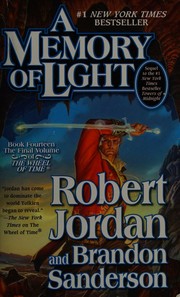
After Robert Jordan's death in 2007, Jordan's widow and editor Harriet McDougal selected Sanderson to complete The Wheel of Time from notes and existing material. The assignment placed a relatively new novelist inside one of fantasy's most scrutinized series. Sanderson did not attempt a perfect imitation. He brought his own strengths in plotting, battle structure, and converging climaxes while working to preserve Jordan's characters and intended destination. The final material expanded into three volumes, ending with A Memory of Light in 2013.

The work greatly enlarged Sanderson's readership and tested his ability to manage continuity that did not belong to him. It also clarified an important feature of his public persona: he explains process. Progress bars, annual updates, lectures, convention answers, and detailed publication plans make the labor visible. For readers accustomed to silence around long fantasy projects, this transparency has become part of the appeal, although it can also encourage the mistaken idea that fiction is valuable chiefly when delivered on schedule.

How the Cosmere rewards attention

The Cosmere links many of Sanderson's fantasy settings within a larger universe. Mistborn, The Stormlight Archive, Elantris, Warbreaker, and other works can usually be read as individual stories or series, but recurring characters, concepts, and forms of Investiture create another level of interpretation. The design gives dedicated readers the pleasure of recognition without requiring every connection to carry the local plot.

Sanderson's magic systems are often described as scientific because they have rules, costs, and interactions that characters can test. Their deeper narrative function is fairness. A spectacular solution feels earned when the reader already understands enough of the system to recognize the ingenuity. This approach is especially effective in action and revelation. It can become over-explicit when characters explain emotional or thematic material with the same precision used for magical mechanics. Readers who value ambiguity may feel that the books close possibilities too firmly.

Plain prose and engineered climaxes

Sanderson generally favors accessible sentences, clear viewpoint, and visible motivation over dense stylistic texture. His prose is a delivery system for scene, world, and plot. This is not the absence of craft; it is a choice about where difficulty should live. Stormlight's scale comes from accumulated commitments, invented history, and multiple character arcs rather than syntactic resistance. The familiar late-book acceleration often called the Sanderlanche works because separate promises begin paying off in rapid sequence.

Character work is strongest when the rule-bound world meets a problem that cannot be solved like a rule. Kaladin's depression does not disappear after a heroic success. Vin's survival habits distort intimacy even when she is safe. Dalinar's moral reconstruction cannot undo the people harmed by his earlier life. Sanderson sometimes states these conflicts repeatedly, but he understands that a satisfying fantasy victory and a completed psychological recovery are not the same event.

A publishing operation as part of the career

Sanderson teaches creative writing at BYU and has made versions of his lectures freely available, influencing aspiring writers far beyond his classroom. In 2022 he announced four secret novels through a record-breaking crowdfunding campaign, using his company Dragonsteel to publish premium editions directly. The campaign demonstrated both the loyalty of his audience and the infrastructure built around the fiction. It also made him a central example in debates about author independence, fulfillment, pricing, and the power of established platforms.

Mistborn is still the best entrance for a reader who wants a complete early arc and a clear magic system. The Way of Kings suits those ready for a much larger commitment. The Emperor's Soul shows his strengths at novella length, while The Sunlit Man is deliberately less welcoming to newcomers because its movement depends on wider Cosmere knowledge. Sanderson's achievement is not simply that he writes quickly. It is that he has designed stories, business systems, and reader communication to support one another, for better and for worse.

The books in context

How the work develops on the page

These notes connect the biography to specific choices in the books. Each title links to the full spoiler-free review.

Our Mistborn: The Final Empire review focuses on the hook without spoiling the big turns: a streetwise young woman discovers she is a powerful Mistborn and joins a crew of rebels trying to overthrow the immortal Lord Ruler using allomancy and heist style tactics.

Allomancy, the metal fueled magic system, is the main attraction. Each ability has clear rules and limits, so every chase and rooftop fight feels like a puzzle built from pushes, pulls, and clever planning. Readers curious about how Sanderson designs systems like this can explore his craft notes at Brandon Sanderson's writing lectures.

What keeps the book grounded is the cast. Vin's journey from wary street survivor to confident Mistborn runs in parallel with a found family crew that mixes idealism, history, and political theory. The balance of character growth and cinematic action makes the novel accessible even if you are new to epic fantasy.

If you want a fantasy series with clear rules and high stakes, you can pick up Mistborn: The Final Empire on Amazon and dive deeper into our fantasy recommendations for other stories about rebellion and magic.

Sanderson writes action through explicit cause and effect, naming resources and consequences so readers can understand a tactical reversal at the moment it occurs.

Allomancy has visible costs and physical rules, so training scenes, infiltration, and combat share one logic; Vin's changing trust gives those mechanics an emotional stake.

The prose is functional rather than distinctive, some crew members remain roles more than people, and political oppression is occasionally simplified for momentum.

Vin's training explains one metal at a time and can feel instructional before the social and heist plots fully converge.

Yes. The climax uses established magical limits, resolves the book's central regime, and reveals enough larger history to make continuation feel earned rather than mandatory.

The Will of the Many offers sharper first-person political tension and a faster social mystery, with a less transparent magic system.

The Name of the Wind is more lyrical and voice-driven but slower, less complete, and more invested in one gifted narrator.

Fourth Wing adds stronger romance and academy competition; Mistborn gives its revolution and magic rules greater structural weight.

Create a chart of each allomantic metal and its push or pull effect, then note how Vin learns to combine them.

A streetwise Mistborn joins a crew of rebels to topple the immortal Lord Ruler with precision allomancy, heist tactics, and revolutionary stakes.

Read the complete review

The Sunlit Man drops Nomad onto Canticle with almost no time to recover. The planet's sunlight is instantly lethal, forcing mobile cities to remain ahead of dawn while competing for the energy needed to keep moving. Nomad is also fleeing the Night Brigade, so staying anywhere long enough to care about local problems creates danger.

Brandon Sanderson builds the novel around motion. Rules governing heat, Investiture, weight, and Nomad's changing abilities turn survival into a sequence of practical puzzles, while his bond with Auxiliary gives the action an emotional history that new acquaintances cannot immediately see.

The book is marketed as a standalone Cosmere novel, and its immediate plot can be followed alone. However, readers familiar with The Stormlight Archive will understand much more about Nomad, his past, and the cost behind his abilities. It is best approached as a fast future-Cosmere companion rather than a first Sanderson novel.

Sanderson writes action through explicit resource conversion and countdown, making heat, light, and power readable as tactical quantities.

Canticle's lethal sun, heat economy, mobile settlements, and Investiture turn every delay into a physical and social problem.

Cosmere references crowd the standalone claim, character reflection is compressed by speed, and explanation arrives during already busy action.

The opening introduces a disguised protagonist, new planet, magic interactions, factions, and constant flight before readers can orient emotionally.

Yes. The escape and moral choice use the planet's rules and reveal enough identity to give the sprint emotional direction.

Read the complete review

Where to begin

A good place to start with Brandon Sanderson
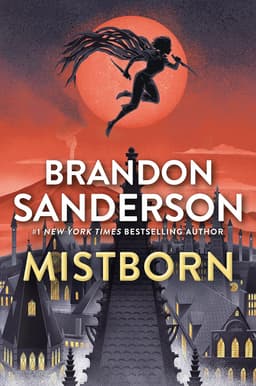
Cover of Mistborn: The Final Empire
Our highest-rated review

Mistborn: The Final Empire

4.4 / 5

Mistborn: The Final Empire combines a clean magic system, a heist crew, and a credible revolutionary question into an exceptionally readable fantasy opener.
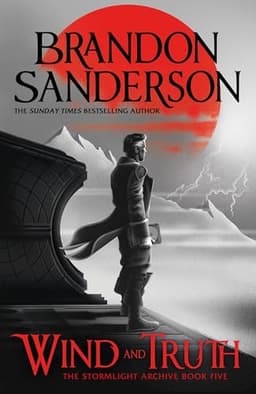
Cover of Wind and Truth
Most recently added

Wind and Truth

4.4 / 5

Wind and Truth delivers enormous Stormlight payoff and sincere character reckoning, but its scale, repetition, and connective obligations make it an exhausting conclusion to the arc.

Cover of The Sunlit Man
Another route in

The Sunlit Man

4.2 / 5

The Sunlit Man is a breathless Cosmere survival story whose moving daylight and hidden identity generate momentum, though accessibility suffers under accumulated lore.

Reading order and buying help

Reading guides featuring Brandon Sanderson

Reading dataReading pace by genreWhere to startBest Brandon Sanderson starting bookRead after Harry PotterHarry Potter for adults

Bibliography

Books by Brandon Sanderson

Reviewed titles open directly on Book Review Guide. Other editions and works remain marked until a full review is published.

Cover unavailable

Not reviewed yet

Tress

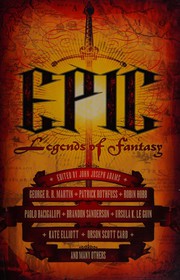
Cover of Epic

Not reviewed yet

Epic

Cover unavailable

Not reviewed yet

Elantris

Cover unavailable

Not reviewed yet

Lux

Bibliographic records: Open Library.

Reviewed bibliography

Brandon Sanderson books reviewed here

Every title below has a complete, spoiler-free review. Scores are our editorial ratings, not visitor averages.

Cover of The Sunlit Man

20234.2 / 5

The Sunlit Man

A Cosmere Novel

The Sunlit Man is a breathless Cosmere survival story whose moving daylight and hidden identity generate momentum, though accessibility suffers under accumulated lore.

Read the review
See current formats on Amazon

As an Amazon Associate, I earn from qualifying purchases.

Cover of Wind and Truth

20244.4 / 5

Wind and Truth

The Stormlight Archive, Book 5

Wind and Truth delivers enormous Stormlight payoff and sincere character reckoning, but its scale, repetition, and connective obligations make it an exhausting conclusion to the arc.

Read the review
See current formats on Amazon

As an Amazon Associate, I earn from qualifying purchases.