Author profile
Patrick Rothfuss: books, reviews, and where to start
Patrick Rothfuss writes fantasy about talent, performance, poverty, memory, and the dangerous distance between a gifted young man and the legend he tells about himself.
Biography and criticism
The music of a self-made legend
The Kingkiller Chronicle's unfinished status shapes its reception, but the existing books deserve attention for voice, framing, and the ambiguity Rothfuss places inside apparent mastery.
A long first novel finds its publisher
Patrick Rothfuss was born in Wisconsin in 1973 and spent an extended undergraduate period at the University of Wisconsin-Stevens Point, exploring subjects before completing his degree. He taught and developed the manuscript that became The Name of the Wind over many years. The novel was published in 2007 after an excerpt won the Writers of the Future contest and the larger project found representation.
Its central device is Kvothe's narration of his life to Chronicler across three days. The young Kvothe is brilliant, poor, proud, traumatized, musical, and often persuasive about his own significance. The older innkeeper's silence creates the question the story cannot yet answer: how did the performer of a heroic identity become a man apparently unable or unwilling to inhabit it?
Beauty, indulgence, and the unfinished frame
Rothfuss writes lyrical but readable prose, particularly around music, naming, and the private logic of Auri in The Slow Regard of Silent Things. The university chapters make tuition, food, debt, and patronage concrete, preventing talent from floating free of material constraint. The Wise Man's Fear expands the world but indulges Kvothe's competence and sexual legend more readily than the first book.
The long delay of The Doors of Stone and controversy around a promised charity chapter have affected trust between author and audience. Those facts belong to the career without justifying harassment or converting unfinished fiction into fraud. New readers should begin with The Name of the Wind and understand that the trilogy has no published conclusion. The existing books are most interesting when Kvothe's beautiful telling is read as evidence, not unquestioned truth.
The books in context
How the work develops on the page
These notes connect the biography to specific choices in the books. Each title links to the full spoiler-free review.
The Name of the Wind introduces Kvothe, an orphaned prodigy who looks back on the choices and accidents that turned him into a name people whisper about. He tells his story from a quiet inn, tracing a path from childhood tragedy to relentless study and dangerous magic.
The prose is the book's most talked about feature. Sentences move with an easy rhythm, and small details like stew on the fire, calloused fingers, or the weight of a lute help the world feel solid. When Kvothe plays music, the scenes read like live performances, which makes this a natural fit for readers who enjoy sensory, character driven fantasy. You can find similar titles curated in our epic fantasy bookshelf.
Magic in Temerant has rules. Sympathy demands discipline and study, while naming leans on intuition that cannot be completely taught. Both shape university politics, street scams, and regional legends. The structure keeps even spectacular scenes grounded because every bit of power has a cost.
Kvothe as narrator is sharp, funny, and stubborn. He is aware of his gifts and not always modest about them, which creates friction with teachers, rivals, and potential allies. Supporting characters, from the Chronicler to Denna, feel distinct even when they appear briefly, and the frame story in the inn gives everything a slightly melancholy echo.
The pacing favors slow burn character development, academic intrigue, and foreshadowing over constant action. Readers who like to sit with atmosphere, relationships, and small mysteries are often the ones who fall hardest for this book.
If you decide to keep a copy, our trusted Amazon link lets you pick up The Name of the Wind easily while you explore more impressions and lore deep dives on sites like Tor.com.
Rothfuss contrasts Kvothe's lyrical first-person performance with spare third-person inn scenes, making eloquence itself evidence that the narrator is shaping a legend.
Music, tuition, hunger, sympathy, and naming give talent material costs, while the frame makes every triumph part of a larger mystery about failure.
Women often orbit Kvothe's fascination, Denna is idealized through limited knowledge, and the novel delays the wider promised catastrophe.
The Tarbean childhood is long and bleak before the University supplies the intellectual and social engine many readers are waiting for.
Yes as a narrated first movement, though the book's strongest promises belong to a trilogy whose central resolution remains outside this volume.
The Will of the Many delivers a faster academy plot, sharper political pressure, and a less ornate first-person voice.
Fantasy fans who enjoy slow burn coming of age stories packed with music, academic rivalries, and layered worldbuilding.
Readers who like immersive settings similar to those in The Night Circus but prefer a more grounded magic system.
Track each sympathy lesson and naming clue in a notebook so you can revisit them when the frame narrative returns to the Waystone Inn.
An orphaned prodigy recounts how quiet beginnings, relentless study, and dangerous names forged him into a legend whispered across the Four Corners of Civilization.
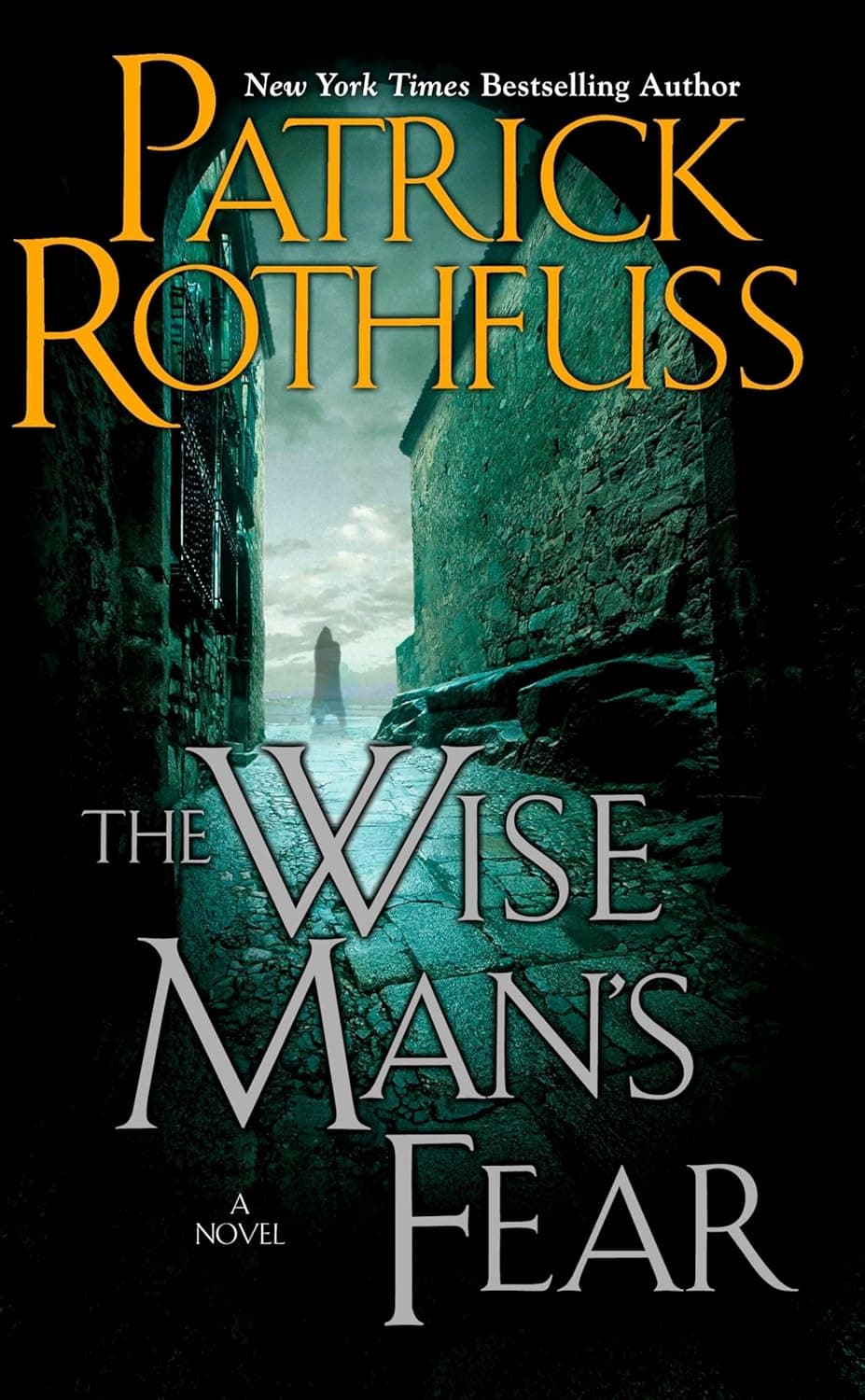
Read the complete reviewThe Wise Man's Fear by Patrick Rothfuss follows a brilliant yet volatile hero who leaves the University to test his name in distant courts, shadowed forests, and seas ruled by mercenaries. It is the second Kingkiller Chronicle novel and widens the story into a journey that is equal parts legend building and hard lesson.
Rothfuss keeps the story close to Kvothe's point of view, then sharpens the focus whenever danger hits. Quiet scenes in the Archives sit beside tense duels, political maneuvering in Severen, and strange magic in distant lands. Each new stop feels like a real culture rather than a box on a quest checklist.
The prose remains one of the main draws. Sentences are musical without becoming purple, and details like a cup of spiced wine or the sound of lute strings matter as much as outbreaks of sympathy. The magic system has rules and real costs, and the book keeps circling the idea that names, language, and craft can bend a life even when politics and violence close in.
Kvothe himself is hard to look away from because he is as difficult as he is gifted. He can be generous, petty, protective, and careless inside a single chapter. That mix keeps his first person voice honest even when it is clear he might be polishing his own legend. Relationships carry both warmth and friction, and the flashes of humor keep the darker stretches from becoming flat misery.
The long middle section is deliberate and will divide readers. Some will love the extended time spent on Ademre culture, maritime strategy, and Felurian's twilight domain, while others may wish for fewer detours. In return you get set pieces that are easy to remember, smart problem solving, and a steady deepening of the Four Corners that rewards patient readers and companion guides at Tor.com.
If you are ready to continue Kvothe's story, you can pick up a copy on print or Kindle through our trusted Amazon link right here.
Readers who want more context on how it all begins can explore our The Name of the Wind review to see how the saga starts and why the stakes feel larger in the second book.
Rothfuss remains strongest in sensory music and storytelling scenes; elsewhere the first-person polish can make distinct cultures sound absorbed into one performer's voice.
The Maer, Adem, bandit hunt, music, and expanded magic reveal different social measures of competence and let the world breathe beyond the University.
Sexual episodes are overextended, women remain filtered through Kvothe's exceptionalism, and the long detours produce little movement in the frame mystery.
The Felurian sequence and later Adem training occupy an enormous middle stretch whose thematic rewards do not justify every repetition.
Individual journeys resolve, but the larger story advances too little for a volume of this size, making the close feel like return rather than arrival.
A wide ranging travel arc that proves Kvothe can navigate courts, pirates, and hidden orders with a mix of wit and painful trial and error.
Fans of slow burn storytelling similar to the layered mythmaking in The Night Circus who also want sharper conflict and higher danger.
Create a travel log that tracks Kvothe's route from the University to the Maer's court and beyond to see how each region changes his reputation.
Study the Ademre martial forms alongside official illustrations to appreciate the way discipline, language, and movement reinforce identity.
A brilliant but volatile hero leaves the University to test his name in distant courts, hidden forests, and seas ruled by mercenaries in this sweeping Kingkiller Chronicle sequel.
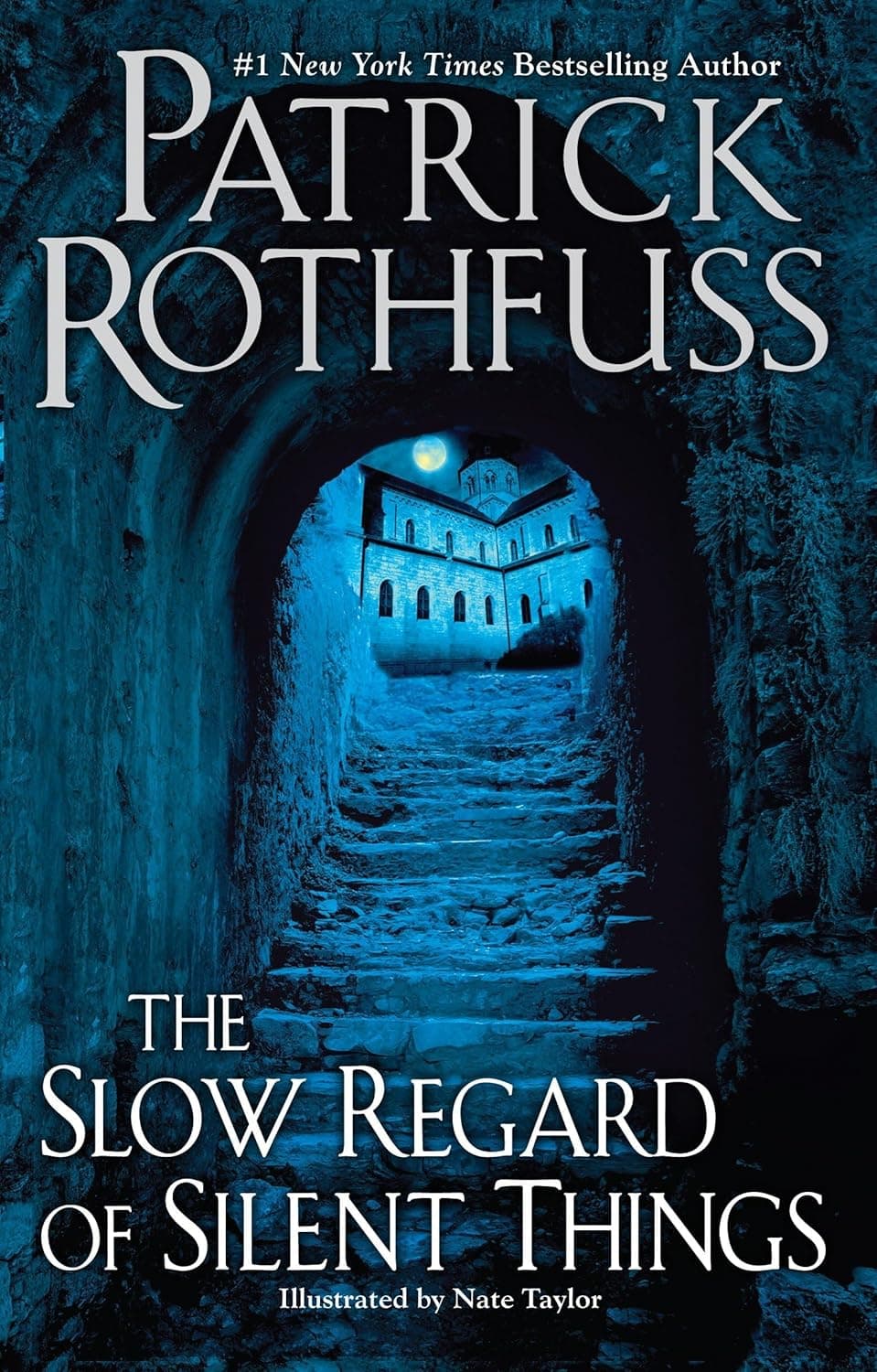
Read the complete reviewOur The Slow Regard of Silent Things book review focuses on the heart of the story without giving away key turns. This Kingkiller Chronicle novella follows Auri as she moves through the Underthing, tending to hidden rooms, secret rules, and the quiet magic of paying attention.
Read the complete reviewWhere to begin
A good place to start with Patrick Rothfuss
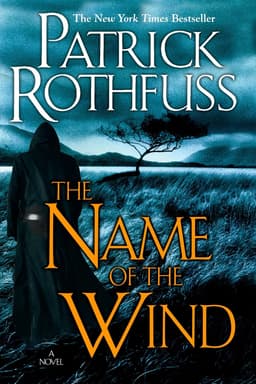
The Name of the Wind
4.5 / 5The Name of the Wind is beautifully voiced and deeply absorbing when Kvothe is learning, performing, or improvising, but his self-portrait is too polished to go unquestioned.

The Slow Regard of Silent Things
4.2 / 5The Slow Regard of Silent Things is a delicate character study for readers willing to accept ritual, objects, and private logic in place of conventional plot.
Reading order and buying help
Reading guides featuring Patrick Rothfuss
Series buying note
Would the collection be the better buy?
These are useful only when you want several books in the same run. The notes below spell out what each package includes and, just as importantly, what it leaves out.
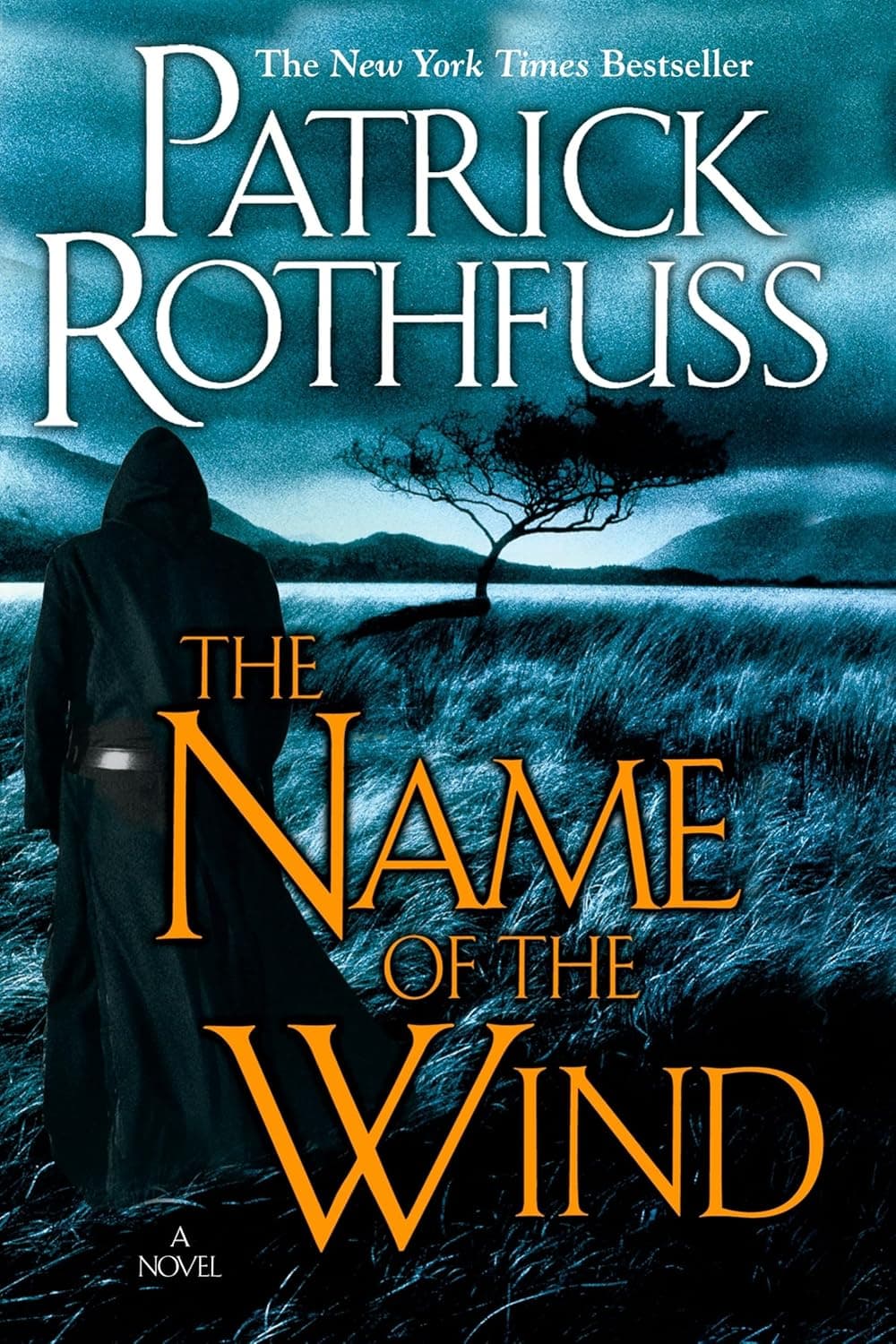
Four-book paperback collection
Kingkiller Chronicle 4-Book Collection
The collection pairs Kvothe's two main novels with the Auri and Bast companion stories, which makes it a broad tour of the Four Corners rather than four consecutive saga volumes.
Included: The Name of the Wind, The Wise Man's Fear, The Slow Regard of Silent Things, The Narrow Road Between Desires
Our buying note: The central trilogy is still unfinished. Two books here are companion novellas, so this is for readers comfortable buying into an open-ended series.
As an Amazon Associate, I earn from qualifying purchases.
Bibliography
Books by Patrick Rothfuss
Reviewed titles open directly on Book Review Guide. Other editions and works remain marked until a full review is published.

Reviewed
The Name of the Wind

Reviewed
The Wise Man’s Fear

Reviewed
The Slow Regard of Silent Things
Reviewed
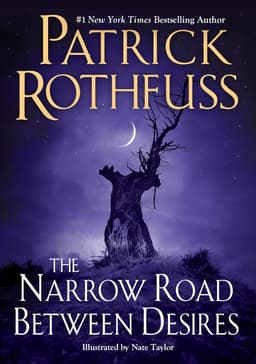
The Narrow Road Between Desires

Not reviewed yet
A Slow Regard of Silent Things

Not reviewed yet
Unfettered

Not reviewed yet
Rick and Morty vs. Dungeons & Dragons

Not reviewed yet
Epic
Not reviewed yet
Arbol Del Relampago
Not reviewed yet
Canallas
Not reviewed yet
Rogues
Not reviewed yet
Narrow Road Between Desires
Not reviewed yet
Untitled Rothfuss 1 Of 1
Not reviewed yet
Untitled Rothfuss 3 Of 3

Not reviewed yet
Kingkiller Chronicle Patrick Rothfuss Collection 3 Books Set
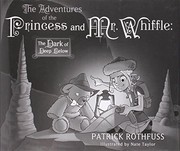
Not reviewed yet
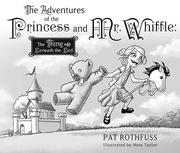
Las aventuras de la Princesa y el señor Fu
![Cover of The Wise Man’s Fear [1/2]](https://covers.openlibrary.org/b/id/11218175-M.jpg)
Not reviewed yet
The Wise Man’s Fear [1/2]
![Cover of The Wise Man’s Fear [2/2]](https://covers.openlibrary.org/b/id/11218180-M.jpg)
Not reviewed yet
The Wise Man’s Fear [2/2]

Not reviewed yet
Your Annotated, Illustrated College Survival Guide
Bibliographic records: Open Library.
Reviewed bibliography
Patrick Rothfuss books reviewed here
Every title below has a complete, spoiler-free review. Scores are our editorial ratings, not visitor averages.

20084.5 / 5
The Name of the Wind
The Kingkiller Chronicle Day One
The Name of the Wind is beautifully voiced and deeply absorbing when Kvothe is learning, performing, or improvising, but his self-portrait is too polished to go unquestioned.
As an Amazon Associate, I earn from qualifying purchases.

20234.3 / 5
The Narrow Road Between Desires
A Kingkiller Chronicle Novella
The Narrow Road Between Desires gives Bast a clever, morally pointed day in which granting a wish requires understanding the cost hidden inside it.
As an Amazon Associate, I earn from qualifying purchases.

20144.2 / 5
The Slow Regard of Silent Things
A Kingkiller Chronicle Novella
The Slow Regard of Silent Things is a delicate character study for readers willing to accept ritual, objects, and private logic in place of conventional plot.
As an Amazon Associate, I earn from qualifying purchases.

20124 / 5
The Wise Man's Fear
The Kingkiller Chronicle Day Two
The Wise Man's Fear contains superb episodes of craft and travel, but its scale indulges Kvothe's legend more often than it challenges it.
As an Amazon Associate, I earn from qualifying purchases.
Keep exploring