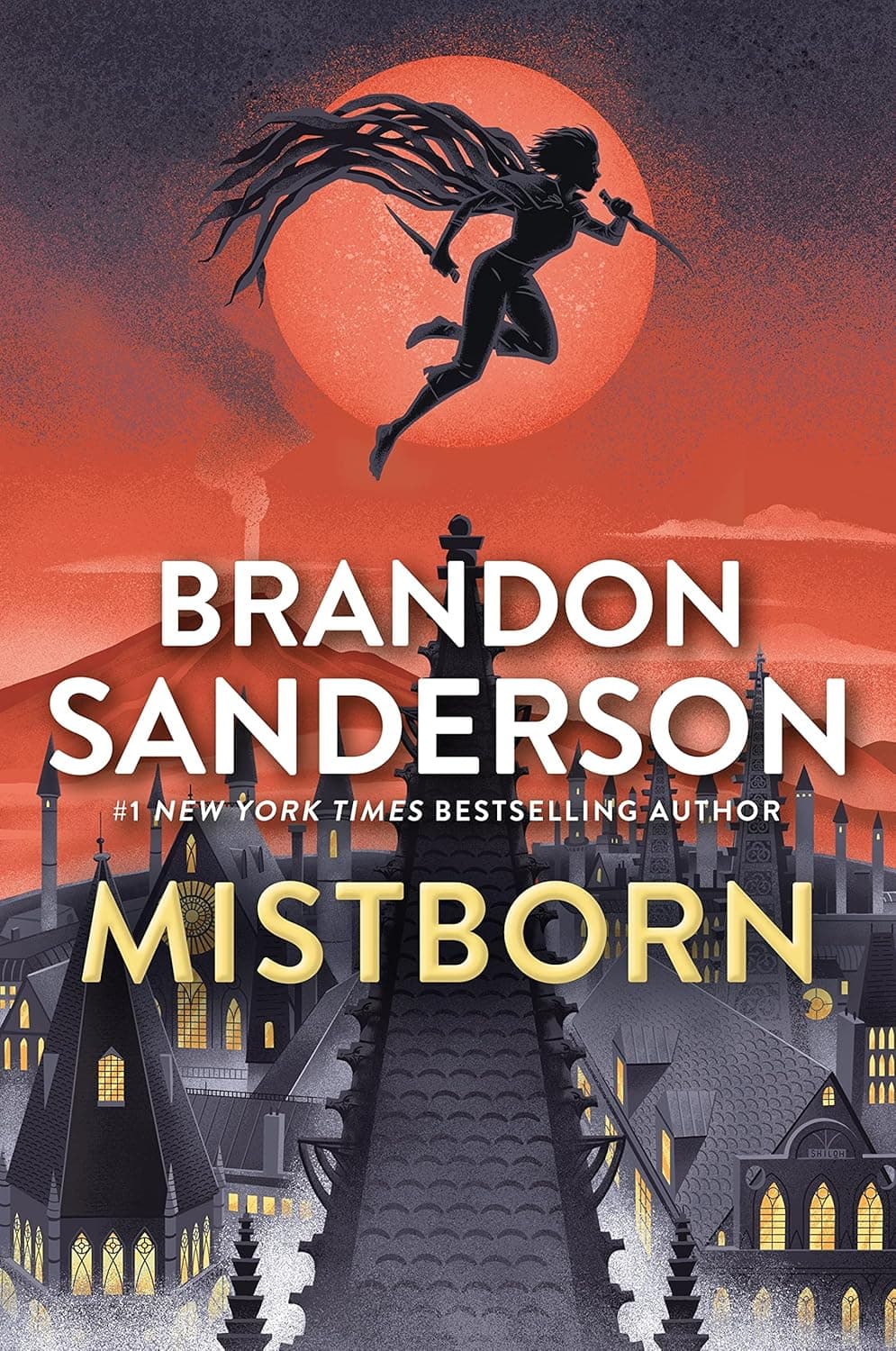
Should you read Mistborn: The Final Empire?
What works
Allomancy has visible costs and physical rules, so training scenes, infiltration, and combat share one logic; Vin's changing trust gives those mechanics an emotional stake.
What may not work for you
The prose is functional rather than distinctive, some crew members remain roles more than people, and political oppression is occasionally simplified for momentum.
What may test your patience
Vin's training explains one metal at a time and can feel instructional before the social and heist plots fully converge.
Does the ending reward the effort?
Yes. The climax uses established magical limits, resolves the book's central regime, and reveals enough larger history to make continuation feel earned rather than mandatory.
Reading Mistborn: The Final Empire closely
A streetwise young woman discovers she is a powerful Mistborn and joins a crew of rebels planning to overthrow the immortal Lord Ruler. The plot combines allomancy, infiltration, and the practical problems of turning a heist into a revolution.
Allomancy, the metal fueled magic system, is the main attraction. Each ability has clear rules and limits, so every chase and rooftop fight feels like a puzzle built from pushes, pulls, and clever planning. Readers curious about how Sanderson designs systems like this can explore his craft notes at Brandon Sanderson's writing lectures.
What keeps the book grounded is the cast. Vin's journey from wary street survivor to confident Mistborn runs in parallel with a found family crew that mixes idealism, history, and political theory. The balance of character growth and cinematic action makes the novel accessible even if you are new to epic fantasy.
Our fantasy recommendations include other stories about rebellion and magic.
What works in Mistborn
A hard magic system where metals fuel acrobatics, espionage, and emotional manipulation.
A heist inspired structure that balances planning, infiltration, and large scale battles.
A found family crew dynamic that explores trust, trauma, hope, and leadership under oppression.
Three useful comparisons
The Will of the Many
The Will of the Many offers sharper first-person political tension and a faster social mystery, with a less transparent magic system.
Best for: A fast-opening political fantasy built around academy competition, hidden identity, and a large mystery.
The Name of the Wind
The Name of the Wind is more lyrical and voice-driven but slower, less complete, and more invested in one gifted narrator.
Best for: Choose it for musical prose, a university setting, magical study, and a gifted but questionable narrator. Skip it if an unfinished larger story will sour the experience.
Fourth Wing
Fourth Wing adds stronger romance and academy competition; Mistborn gives its revolution and magic rules greater structural weight.
Best for: Come for dragons, lethal academy competition, disability-aware adaptation, explicit romance, and fast cliffhanger plotting.
Make the next decision