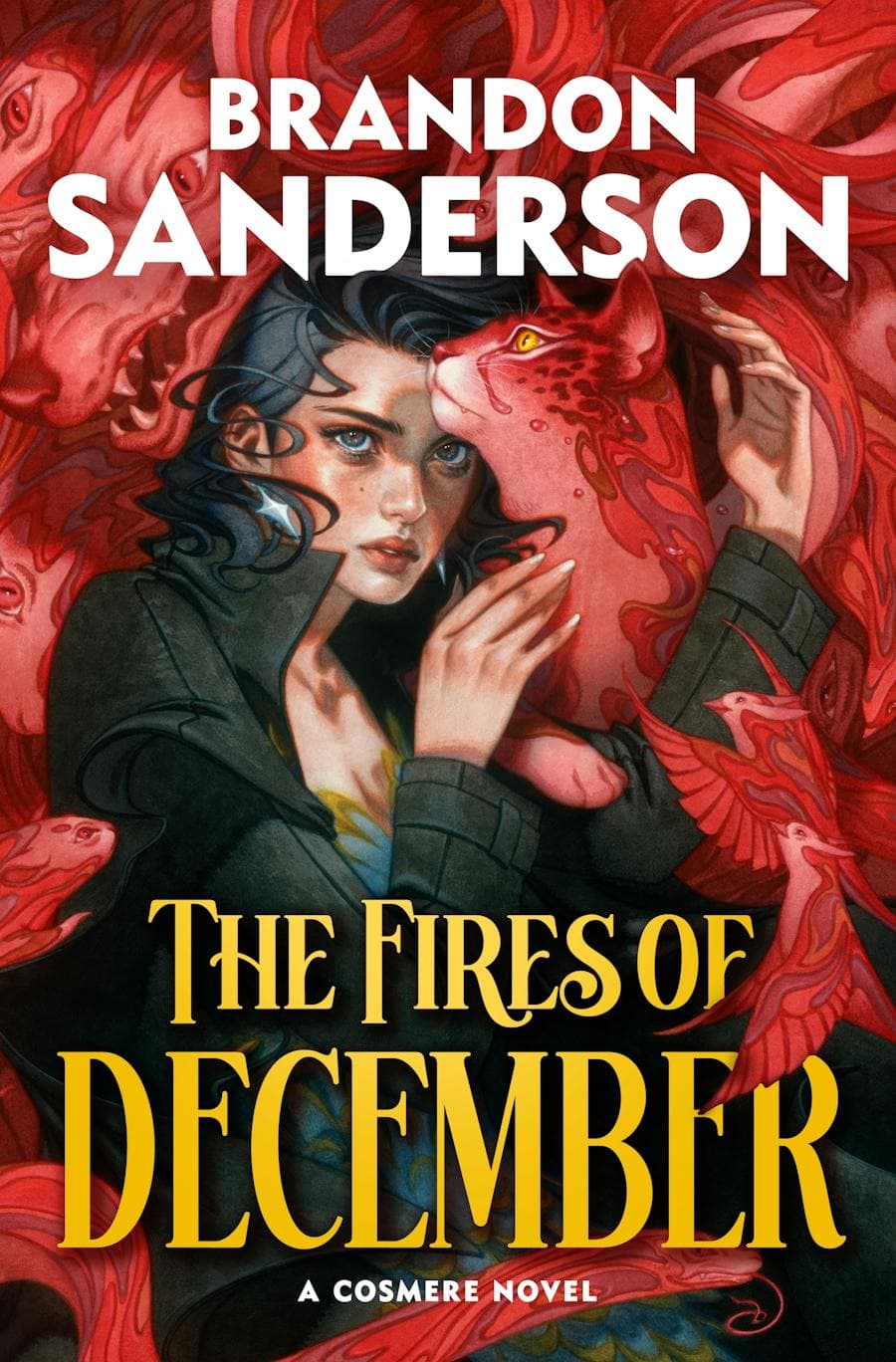
Should you read The Fires of December?
What works
The colored blood rivers give the kingdom a visual identity and a frightening vulnerability. December's struggle to trust her own authority makes the coming disaster personal before it becomes a problem for the court.
What may not work for you
The middle loses momentum, and Sanderson's habit of explaining a point after it has already landed can blunt the tension. Hoid's interruptions will also test anyone who prefers a narrator to stay out of the way.
What may test your patience
The opening establishes December and the danger forcefully. The journey's middle is less even: conversation and explanation sometimes delay the pressure that the plague should keep on the story.
Does the ending reward the effort?
The journey is worth the uneven middle. My 4/5 reflects the novel as a whole, including that payoff, rather than a claim that its conclusion makes every pacing problem disappear.
Reading The Fires of December closely
The rivers are made of demon blood, but the part of The Fires of December that holds my attention is a woman trying to make people listen. Sanderson gives December a warning no kingdom can afford to ignore, then places her in a society that has already decided what sort of person she is allowed to be. That friction gives the extravagant setting something human to work against. I give it 4 out of 5: an inventive, worthwhile standalone with a compelling central problem and a middle that does not always carry its share of the urgency.
December is an orphan from a riverside town whose insight exceeds what anyone expects from her age or position. When she learns that a plague threatens the kingdom, she heads up the River Violet to warn the king's court. A talkative priestess and an aspiring fashion designer accompany her; skeptical officials and a roguish count complicate the mission. That is enough premise to take into the book. The circumstances behind December's unusual wisdom are better discovered in the story, rather than explained before its opening has had a chance to work.
The setting has the immediate visual force I want from one of Sanderson's smaller Cosmere novels. Colored rivers of demon blood are memorable on sight, but they also sustain ordinary life. Once those rivers can be threatened, a beautiful impossibility becomes a shared weakness. The worldbuilding works because the same image carries wonder and danger. I find that more persuasive than an exotic landscape whose only purpose is to supply a new collection of magical terms.
December gives that danger its scale. She is not simply waiting for the world to recognize a hidden talent. She has to decide how much confidence she can place in herself when the people around her keep offering smaller, more convenient identities. Her wisdom does not automatically make her feel entitled to speak. There is something painfully recognizable in that gap between having something to offer and believing you have the right to offer it. The fantasy makes room for an existential kind of impostor feeling without reducing her to a contemporary diagnosis.
Hoid is a large part of the pleasure and a fair part of the risk. He addresses his audience, qualifies his own telling, and makes room for a joke where another narrator might simply move on. I like the sense of a person shaping the tale in front of us. His charm also changes how the darkness lands: a playful voice can introduce painful material before the reader has fully prepared for it. The novel becomes serious quickly, and its narrator's mischief should not be mistaken for a promise of a gentle story.
The familiar Sanderson habits remain. His clarity makes an unfamiliar world easy to enter, and the connection between an idea and its practical consequences stays visible. But clarity can become insistence. When an explanation repeats what the situation already makes plain, it narrows the room for the reader to make the connection. Hoid's performance does not erase that tendency. If Sanderson's explicitness has always irritated you, this book offers a different setting rather than an entirely different writer.
The pacing is my clearest reservation. The opening gives December's situation real force; the middle occasionally lets that force slacken as the journey makes room for more explanation and conversation. A threatened plague provides an obvious source of pressure, so pauses are especially noticeable when they do not deepen either the danger or the person carrying the warning. The trip remains worth taking. I would still have preferred a tighter passage through its central stretch, with greater trust in what had already been established.
My recommendation rests on that balance. The visual invention, December's uncertain authority, and the pleasure of Hoid's voice outweigh the drag. The payoff makes the journey worthwhile without turning it into a flawless book, and I would not spoil its shape to argue for an extra half star. This is a strong fit if you like Sanderson's combination of an unusual premise and an emotionally legible central conflict. It is a weaker fit if you want understated narration, relentless pace, or prose that leaves its meanings mostly unspoken.
December, her companions, and the roles people choose for her
The central relationship is between December and a world eager to explain her to herself. An orphan can be assigned work, a young woman can be assigned expectations, and a warning can be dismissed because the speaker seems wrong for it. Sanderson gets a useful contradiction out of giving her unusual insight without making social permission arrive alongside it. I find that contradiction more interesting than competence alone.
The priestess, fashion designer, and count widen the social world around her. Their different positions give the journey more texture than a lone messenger moving between obstacles. I would approach the romantic thread as one part of December's larger problem of belonging and self-definition, rather than expect the book to organize itself around a courtship. The threat to the kingdom remains the premise driving the trip.
Tress, Yumi, and the larger Cosmere
Tress of the Emerald Sea is the natural comparison for an unfamiliar watery world filtered through Hoid's storytelling. Yumi and the Nightmare Painter is the other Hoid's Travails companion, with a stronger emphasis on art and the developing relationship between its two leads. December's particular appeal is the clash between a woman's private authority and the roles a community is willing to recognize.
I would not use Wind and Truth as a preparation step. That is the fifth Stormlight Archive novel, built around years of accumulated character and series history. December offers a self-contained story; familiarity with the Cosmere adds connections and recognition rather than an entrance requirement. Our Hoid's Travails reading guide helps you choose among the three standalones. For a broader introduction, see where to start with Brandon Sanderson.
Questions before you start
Do you need to read Tress before The Fires of December? No. Hoid's Travails consists of independent stories narrated by Hoid. Tress of the Emerald Sea and Yumi and the Nightmare Painter are companions, not prerequisites.
Is The Fires of December a good first Cosmere book? You can start here without a Cosmere reading list. Choose it if a playful narrator, a strange river world, and December's struggle for credibility appeal to you. Experienced readers can appreciate additional connections.
Why are there October and December release dates? The ebook and audiobook were published on October 6, 2026. The US Tor hardcover has a December 8, 2026 publication date. The print schedule does not apply to the digital editions.
How long is The Fires of December? Macmillan lists 384 pages for the US Tor Books hardcover, ISBN 9781250462657. That count is specific to the print edition; Kindle pagination and audiobook length are different measures.
Does Hoid narrate The Fires of December? Yes, Hoid is the fictional storyteller. Michael Kramer is the performer credited for the Macmillan audiobook. Those are different kinds of narration.
As an Amazon Associate, I earn from qualifying purchases.
Choosing a format
The ebook and audiobook were published on October 6, 2026. The US Tor Books hardcover follows on December 8, 2026. Its 384-page count belongs to that print edition, not to every version of the story. Tran Nguyen is the illustrator, and Macmillan Audio credits Michael Kramer as the audiobook reader.
The Amazon link on this page opens the Dragonsteel Kindle edition. Check the selected format before buying if you want print or audio instead. The cover shown here is the official Tor hardcover artwork; the December print date does not mean the digital novel is still awaiting publication.
What I would read next
For another world whose physical rules threaten the people living in it, try The Sunlit Man. For an adult fairy tale about a woman refusing the role a kingdom has reserved for her, Nettle & Bone makes a sharper change of voice. Our Books Like The Fires of December compares five specific routes, including what each leaves behind. The Brandon Sanderson author hub brings together the books covered here.
Publication and editions
The Fires of December release dates by format
The ebook and audiobook were published October 6, 2026. The Tor Books US hardcover is scheduled for December 8, 2026. These are separate format dates for the same standalone Cosmere novel.
- Ebook
- October 6, 2026; the linked Amazon edition is Dragonsteel Kindle
- Audiobook
- October 6, 2026; Macmillan Audio, read by Michael Kramer
- US hardcover
- December 8, 2026; Tor Books; 384 pages; ISBN 9781250462657
- Series and universe
- Hoid's Travails, in the Cosmere; a standalone narrated by Hoid, readable in any order
- Illustrator
- Tran Nguyen
Primary sources: Tor Books: US hardcover, December 8, 2026, Macmillan Audio: October 6, 2026, Brandon Sanderson: Cosmere standalones, Brandon Sanderson: Hoid's Travails and reading order
Three useful comparisons
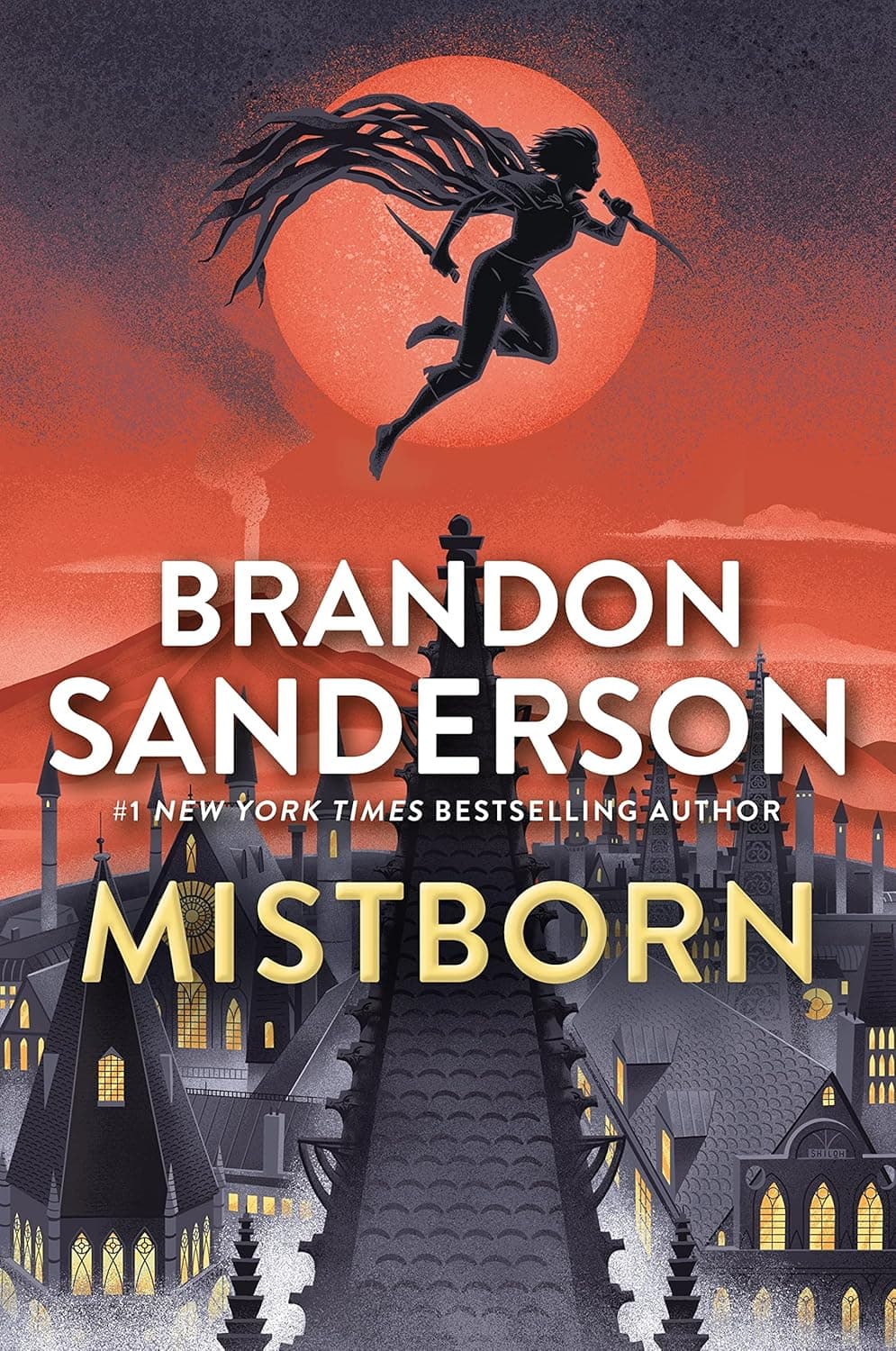
Mistborn: The Final Empire
Mistborn: The Final Empire also places an underestimated young woman against a hierarchy that thinks it knows her worth. Its heist crew and metal-based combat provide a firmer action line than December's journey toward the court.
Best for: A welcoming epic fantasy with rule-based magic, found family, political rebellion, and a complete first-volume payoff.
As an Amazon Associate, I earn from qualifying purchases.

The Sunlit Man
The Sunlit Man makes a hostile world's physical rules an immediate survival clock. Choose it for sustained speed; December leaves more space for social identity and Hoid's storytelling.
Best for: Cosmere readers wanting a fast planetary survival adventure and newcomers comfortable not understanding every connection.
As an Amazon Associate, I earn from qualifying purchases.
Isles of the Emberdark
Isles of the Emberdark moves from a threatened island culture into a much wider Cosmere adventure. December is the more contained choice if you want one woman's struggle for credibility to anchor the fantasy.
Best for: Cosmere readers who enjoy exploration, flying ships, hidden connections, and accessible action-forward fantasy. Newcomers can follow the immediate adventure, but should start elsewhere if they want Sanderson's clearest introduction.
As an Amazon Associate, I earn from qualifying purchases.
Make the next decision