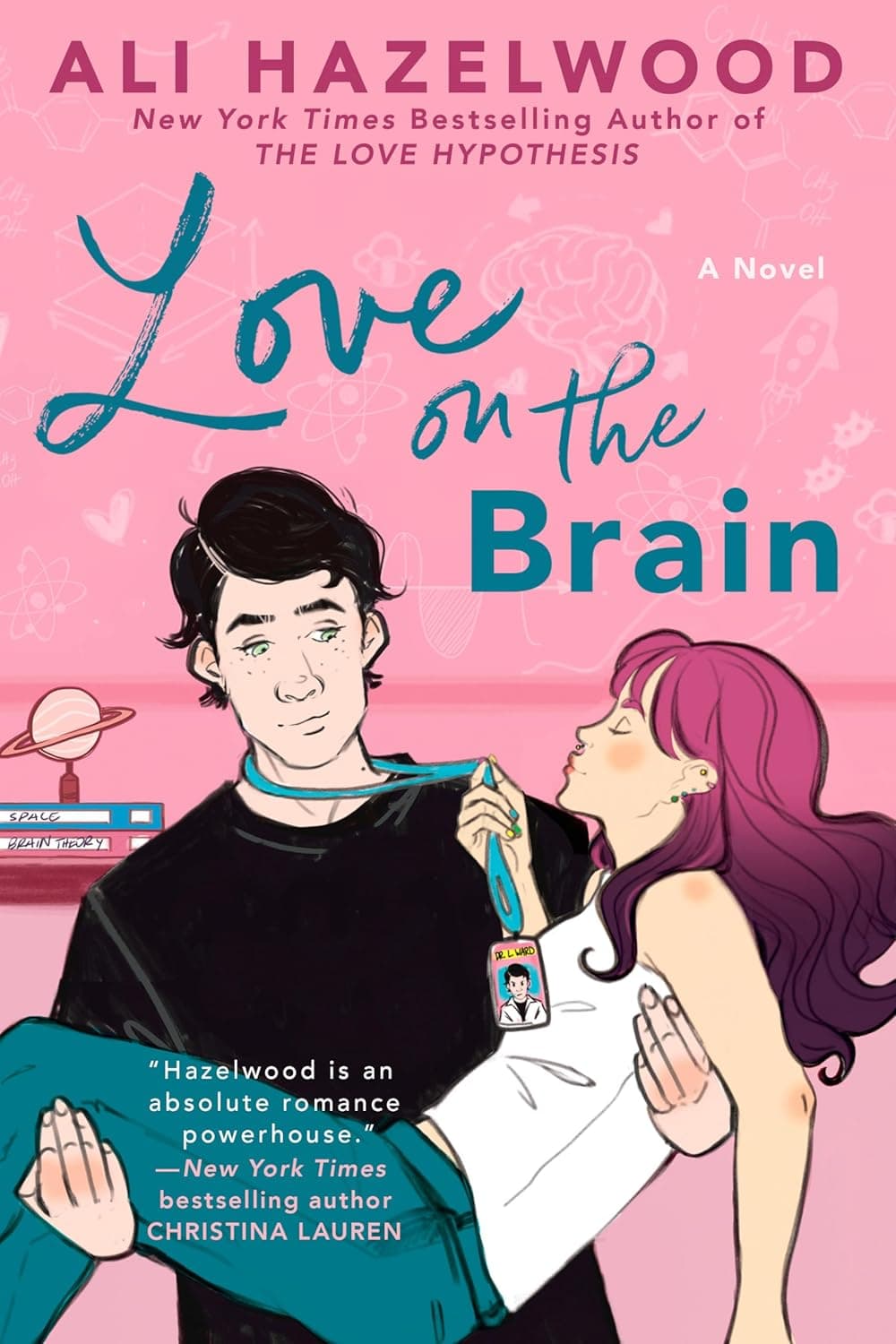
Should you read Love on the Brain?
What works
Bee's neuroscience career, NASA project, social-media advocacy, and conflict with Levi give the romance a workplace structure beyond attraction.
What may not work for you
The central misunderstanding lasts too long, Levi is idealized, body-size repetition is distracting, and the thriller turn is excessive.
What may test your patience
Bee continues interpreting Levi through old assumptions after his actions make another explanation increasingly obvious.
Does the ending reward the effort?
The romance closes satisfyingly, but the sabotage climax resolves professional conflict through melodrama rather than institutional realism.
Reading Love on the Brain closely
Bee Königswasser sees a NASA neuroengineering project as the chance to lead work that matters. The catch is Levi Ward, the engineer she remembers as a hostile graduate-school colleague, has been assigned to co-lead it. Their shared objective gives the romance a useful source of pressure: missing equipment, blocked access, and uncooperative staff threaten Bee's professional credibility before she can determine whether Levi is part of the problem.
The workplace material is most convincing when Bee must separate personal dislike from institutional resistance. She advocates for women in science online, recognizes how easily a man's silence is treated as authority, and knows that being labeled difficult can damage her career. Levi's practical support gradually contradicts the villain Bee has constructed from old encounters. That correction drives the romance, but it also makes her continued certainty frustrating once the evidence has shifted.
Bee's first-person voice uses Marie Curie as an imaginary adviser, turning scientific history into a running test of courage and common sense. The device gives her anxiety a comic rhythm and connects ambition with grief rather than presenting STEM details as decoration. Hazelwood is good at the instant when a technical problem becomes personal. She is less disciplined when every observation circles back to Levi's height, muscles, or physical proximity, a pattern that narrows an otherwise lively voice.
The attraction has energy, especially when Bee and Levi solve practical problems together, but the emotional conflict depends too heavily on a mistaken reading that the audience can resolve early. Levi is also so consistently competent and devoted that the enemies-to-lovers premise loses friction before Bee admits it. Their chemistry remains pleasurable; the difficulty is believing that an observant neuroscientist would ignore the accumulating behavioral evidence for quite so long.
A late turn toward conspiracy and physical danger raises the volume without deepening the book's best conflict. The professional obstacles would have supported a more grounded climax about credit, trust, and scientific institutions. Even so, the project is not forgotten once the romance becomes explicit, and Bee's career retains real weight in the resolution. Choose this for a funny, explicit workplace romance with science and a high-concept setting, not for a realistic account of NASA or a subtle mystery.
Three useful comparisons
Deep End
Deep End offers more athletic and sexual specificity with less workplace thriller plotting.
Best for: Adult romance readers wanting college athletics, STEM pressure, explicit kink, consent, and high-achieving protagonists.
Check & Mate
Check & Mate is YA, chess-centered, and gentler in both conflict and intimacy.
Best for: YA romance readers wanting chess, gifted rivals, family pressure, banter, and low-spice emotional payoff.
Funny Story
Funny Story gives its community and emotional transition greater realism and narrative space.
Best for: Adult romance readers wanting forced proximity, small-city community, humor, books, friendship, and emotionally available growth.