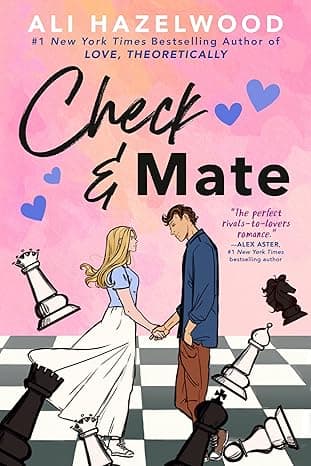
Should you read Check & Mate?
What works
Mallory's family responsibility, return to competition, and rivalry with Nolan give attraction a shared language of preparation, risk, and public expectation.
What may not work for you
Miscommunication stretches, chess brilliance is sometimes asserted rather than shown, and secondary problems align neatly around the romance.
What may test your patience
Mallory repeatedly avoids explaining why she left chess after the emotional reason is clear enough to require conversation.
Does the ending reward the effort?
Yes. The romantic and competitive resolutions allow Mallory to choose chess on new terms rather than treating love as her only prize.
Reading Check & Mate closely
Check & Mate is Ali Hazelwood's YA chess romance about Mallory, a former chess prodigy drawn back into competition against reigning champion Nolan Sawyer. The setup makes chess a source of rivalry rather than a barrier: the book uses accessible match summaries and emotional stakes, so readers do not need board-analysis expertise to follow what the games mean.
Its strongest move is turning preparation, risk, and public expectation into a shared language for attraction. Mallory's family responsibility and return to competition give the rivalry weight beyond teasing, while Hazelwood's close contemporary voice and rapid banter keep the romance moving toward a low-spice emotional payoff.
The tradeoff is convenience. Mallory's brilliance is sometimes asserted rather than demonstrated, and the repeated reluctance to explain her break with chess can stretch the miscommunication. Choose Check & Mate if you want gifted rivals, chess pressure, family stakes, and a gentler YA romance; skip it if you need detailed chess instruction or little patience for secrecy. If that makes it the right book, see current formats on Amazon.
How the chess romance works
Chess is central to the tension, but not presented as a technical manual. Match summaries prioritize the emotional choice and changing trust between the rivals over move-by-move explanation.
That makes the book a useful choice for readers who want a chess romance with the competitive charge of sports romance, but a gentler, low-spice YA focus.
Where the setup asks for patience
The novel's prodigy framing can feel convenient when Mallory's chess ability is stated more often than dramatized through the games.
Its secrecy also lasts beyond the point where a direct conversation would help, so readers who prefer low-conflict romance may find the middle less persuasive.
Three useful comparisons
Love on the Brain
Love on the Brain is adult STEM romance with more explicit attraction and workplace conspiracy.
Best for: Adult romance readers wanting enemies-to-lovers energy, neuroscience, NASA, workplace sexism, banter, and explicit chemistry.
Deep End
Deep End is adult college romance with athletics, kink, and heavier emotional material.
Best for: Adult romance readers wanting college athletics, STEM pressure, explicit kink, consent, and high-achieving protagonists.
Divine Rivals
Divine Rivals offers gentler fantasy war, letters, and richer lyrical atmosphere.
Best for: Gentle enemies-to-lovers tension meets magical correspondence, grief, war, and lyrical YA romantasy.