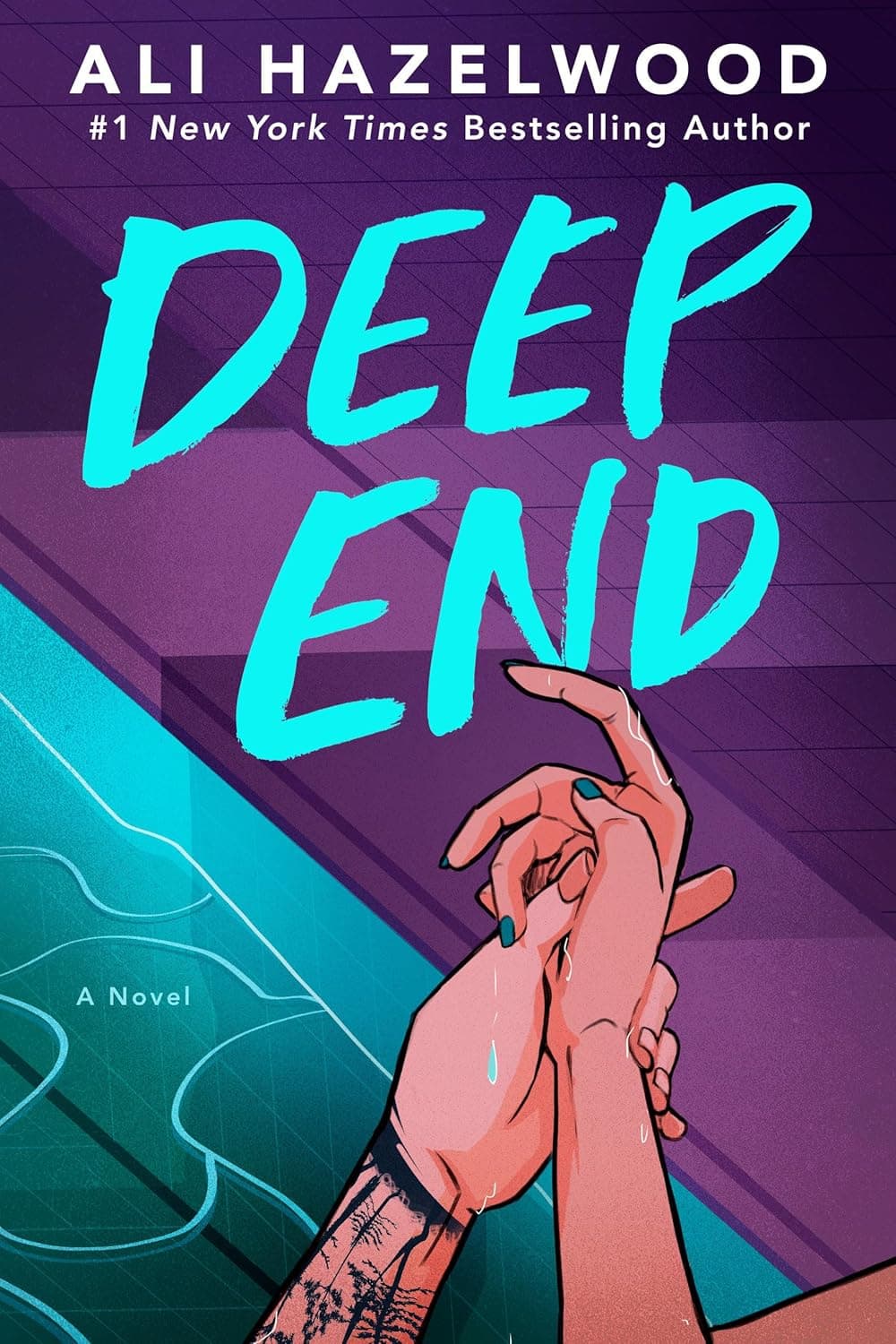
Should you read Deep End?
What works
Diving, swimming, recovery, academic pressure, and explicit communication around sex give the relationship practical boundaries and bodily stakes.
What may not work for you
The setup depends on awkward connections, conflict is prolonged through withholding, and secondary competitors remain functional.
What may test your patience
The arrangement and private rules occupy substantial early space before emotional attachment becomes more than controlled experimentation.
Does the ending reward the effort?
The couple and athletic choices receive clear, affirming closure, with communication improving enough to justify the payoff.
Reading Deep End closely
College diver Scarlett “Vandy” Vandermeer is trying to recover her form while Swedish Olympic swimmer Lukas Blomqvist trains inside the same high-pressure athletic world. Practices, trials, and meet schedules leave them unusually aware of discipline, pain, and bodily control before their private arrangement begins.
Vandy and Lukas discuss boundaries, safewords, and aftercare explicitly. That negotiation is not decorative reassurance; it exposes how differently Vandy handles control in sex, diving, and the rest of her life. The training schedule also limits when they can meet and what physical risks either athlete can dismiss.
Deep End includes frequent explicit scenes tied directly to BDSM power dynamics. There is still banter, vulnerability and character growth, but the sexual content is not fade to black and the language around it is direct.
Content warnings include explicit BDSM, impact play, control and restraint within a negotiated framework, emotional neglect, body-image anxiety, and the pressure of elite sport. This is a sex-forward adult romance, not a light campus comedy.
You do not need to read any other Ali Hazelwood books in order before Deep End. It stands alone, with a fresh cast and a sports focused setting instead of the STEM and workplace backdrops that made her earlier romances famous. If you liked Check & Mate or The Love Hypothesis, you will recognize the sharp internal monologue and intense chemistry, but you can treat this as a self contained experiment in what happens when Hazelwood combines Olympic level bodies, a coaching environment and her boldest exploration of kink so far.
Three useful comparisons
Check & Mate
Check & Mate is younger, sweeter, chess-focused, and much less explicit.
Best for: YA romance readers wanting chess, gifted rivals, family pressure, banter, and low-spice emotional payoff.
Love on the Brain
Love on the Brain uses adult workplace STEM and a mystery plot instead of elite sport.
Best for: Adult romance readers wanting enemies-to-lovers energy, neuroscience, NASA, workplace sexism, banter, and explicit chemistry.
Funny Story
Funny Story offers stronger social ensemble and emotional recovery with less professional specialization.
Best for: Adult romance readers wanting forced proximity, small-city community, humor, books, friendship, and emotionally available growth.