Portrait of Ali Hazelwood

Author profile

Ali Hazelwood: books, reviews, and where to start

Ali Hazelwood turned the pressures of scientific work into the social machinery of popular romance, pairing high-achieving heroines with stories about credibility, ambition, desire, and institutional power.

Born 1989writerprofessorneuroscientist

Biography and criticism

The scientist who made the laboratory romantic

Hazelwood's novels are easy to recognize, but their repeated ingredients matter because they expose who is believed, protected, and permitted to take up space in competitive institutions.

From neuroscience to a breakout romance

Ali Hazelwood was born in Italy in 1989, lived in Japan and Germany, and moved to the United States for graduate study. She trained in neuroscience and became a professor, a background that gave her unusual familiarity with laboratories, academic hierarchies, grant pressure, conferences, mentoring, and the fragile status of early-career researchers. She first built a readership through fan fiction. The Love Hypothesis, published in 2021, transformed that online momentum into a major commercial career.

The novel's success was not simply a matter of putting white coats on a familiar fake-dating plot. Olive's professional insecurity and romantic confusion arise in the same environment. Laboratories depend on collaboration but distribute credit unevenly. A student may be technically capable and still vulnerable to a senior researcher's reputation. Hazelwood turns those conditions into obstacles a romance reader can understand immediately: who has authority, who can risk honesty, and whose account of an encounter will an institution accept.

The pleasures and limits of repetition

Hazelwood's recognizable pattern includes brilliant women, physically imposing and emotionally guarded men, professional rivalry, forced proximity, misread signals, and heroines who do not understand how desirable they appear to everyone else. The pattern works because she writes forward motion cleanly. Banter, workplace problems, and escalating intimacy are arranged so that a reader rarely wonders what kind of pleasure the book intends to deliver. The scientific settings also provide concrete tasks, making attraction share space with experiments, deadlines, competitions, and career decisions.

Repetition becomes a weakness when exceptional competence turns into idealization and communication problems survive only because the plot protects them. Across Love on the Brain and the Loathe to Love You novellas, similar body contrasts and romantic misunderstandings become easier to see. Hazelwood's heroes can appear designed to satisfy before they feel independently alive. Her funniest professional details and most persuasive observations about precarity are therefore important counterweights. They give the fantasy resistance.

Deep End moves into elite athletics and a more explicitly negotiated sexual relationship. Check & Mate uses chess to explore prodigy, family responsibility, and the fear of returning to a talent that has become painful. Bride crosses into paranormal romance, where species difference and political alliance replace the laboratory while Hazelwood retains her interest in guarded competence. These changes show a writer testing how far her central dynamics can travel.

Consent in Hazelwood's fiction is often connected to expertise. Characters become attractive through careful attention: they remember constraints, ask what is wanted, respect a professional boundary, or understand the work someone else has been performing invisibly. This can make the books reassuring even when the external plot introduces sabotage, hostility, or danger. The erotic ideal is not chaos. It is controlled risk with a person observant enough to make vulnerability survivable.

Why the work found its audience

Hazelwood arrived when romance readers were actively discussing workplace harassment, unequal credit, and the exhausting expectation that women prove both competence and likability. Her novels do not offer institutional reform programs, but they recognize the emotional texture of those pressures. A heroine may be able to solve the scientific problem and still need someone to confirm that the hostile room is not evidence of her own inadequacy.

The Love Hypothesis remains the clearest starting point because it contains the appeal and the limitations in their most influential form. Check & Mate is better for readers who want less sexual emphasis and a strong competitive framework. Deep End suits those interested in explicit negotiation and athletic discipline. Reading several titles close together makes the formula visible, but it also shows why the formula lasts: Hazelwood understands that professional recognition and romantic recognition are different desires, even when her characters pursue both at once.

The books in context

How the work develops on the page

These notes connect the biography to specific choices in the books. Each title links to the full spoiler-free review.

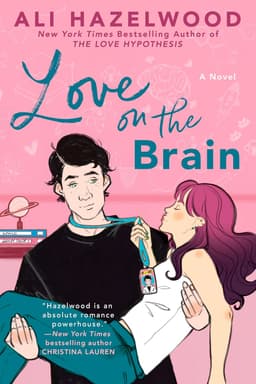
Bee Königswasser sees a NASA neuroengineering project as the chance to lead work that matters. The catch is Levi Ward, the engineer she remembers as a hostile graduate-school colleague, has been assigned to co-lead it. Their shared objective gives the romance a useful source of pressure: missing equipment, blocked access, and uncooperative staff threaten Bee's professional credibility before she can determine whether Levi is part of the problem.

The workplace material is most convincing when Bee must separate personal dislike from institutional resistance. She advocates for women in science online, recognizes how easily a man's silence is treated as authority, and knows that being labeled difficult can damage her career. Levi's practical support gradually contradicts the villain Bee has constructed from old encounters. That correction drives the romance, but it also makes her continued certainty frustrating once the evidence has shifted.

Bee's first-person voice uses Marie Curie as an imaginary adviser, turning scientific history into a running test of courage and common sense. The device gives her anxiety a comic rhythm and connects ambition with grief rather than presenting STEM details as decoration. Hazelwood is good at the instant when a technical problem becomes personal. She is less disciplined when every observation circles back to Levi's height, muscles, or physical proximity, a pattern that narrows an otherwise lively voice.

The attraction has energy, especially when Bee and Levi solve practical problems together, but the emotional conflict depends too heavily on a mistaken reading that the audience can resolve early. Levi is also so consistently competent and devoted that the enemies-to-lovers premise loses friction before Bee admits it. Their chemistry remains pleasurable; the difficulty is believing that an observant neuroscientist would ignore the accumulating behavioral evidence for quite so long.

A late turn toward conspiracy and physical danger raises the volume without deepening the book's best conflict. The professional obstacles would have supported a more grounded climax about credit, trust, and scientific institutions. Even so, the project is not forgotten once the romance becomes explicit, and Bee's career retains real weight in the resolution. Choose this for a funny, explicit workplace romance with science and a high-concept setting, not for a realistic account of NASA or a subtle mystery.

Hazelwood uses first-person comic anxiety, science references, and rapid banter, often letting attraction derail Bee's stated professional focus.

Bee's neuroscience career, NASA project, social-media advocacy, and conflict with Levi give the romance a workplace structure beyond attraction.

The central misunderstanding lasts too long, Levi is idealized, body-size repetition is distracting, and the thriller turn is excessive.

Read the complete review

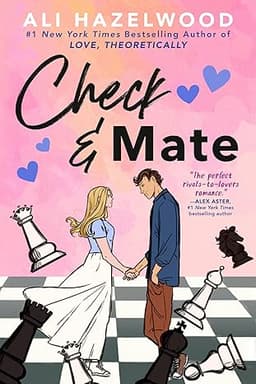
Check & Mate is Ali Hazelwood's YA chess romance about Mallory, a former chess prodigy drawn back into competition against reigning champion Nolan Sawyer. The setup makes chess a source of rivalry rather than a barrier: the book uses accessible match summaries and emotional stakes, so readers do not need board-analysis expertise to follow what the games mean.

Its strongest move is turning preparation, risk, and public expectation into a shared language for attraction. Mallory's family responsibility and return to competition give the rivalry weight beyond teasing, while Hazelwood's close contemporary voice and rapid banter keep the romance moving toward a low-spice emotional payoff.

The tradeoff is convenience. Mallory's brilliance is sometimes asserted rather than demonstrated, and the repeated reluctance to explain her break with chess can stretch the miscommunication. Choose Check & Mate if you want gifted rivals, chess pressure, family stakes, and a gentler YA romance; skip it if you need detailed chess instruction or little patience for secrecy. If that makes it the right book, see current formats on Amazon. For Hazelwood in a more explicit adult workplace romance, try our Love on the Brain review, or browse Ali Hazelwood's books.

Hazelwood uses close contemporary voice, rapid banter, and match summaries that emphasize emotional decision more than full board analysis.

Mallory's family responsibility, return to competition, and rivalry with Nolan give attraction a shared language of preparation, risk, and public expectation.

Miscommunication stretches, chess brilliance is sometimes asserted rather than shown, and secondary problems align neatly around the romance.

Mallory repeatedly avoids explaining why she left chess after the emotional reason is clear enough to require conversation.

Yes. The romantic and competitive resolutions allow Mallory to choose chess on new terms rather than treating love as her only prize.

Chess is central to the tension, but not presented as a technical manual. Match summaries prioritize the emotional choice and changing trust between the rivals over move-by-move explanation.

That makes the book a useful choice for readers who want a chess romance with the competitive charge of sports romance, but a gentler, low-spice YA focus.

The novel's prodigy framing can feel convenient when Mallory's chess ability is stated more often than dramatized through the games.

Its secrecy also lasts beyond the point where a direct conversation would help, so readers who prefer low-conflict romance may find the middle less persuasive.

Ali Hazelwood's YA chess romance follows a retired chess prodigy returning to competition against the sport's reigning champion.

Read the complete review

Where to begin

A good place to start with Ali Hazelwood

Cover of Check & Mate
Our highest-rated review

Check & Mate

4 / 5

Check & Mate is a warm, accessible YA romance that uses chess pressure effectively, though its prodigy plot and secrecy remain highly convenient.

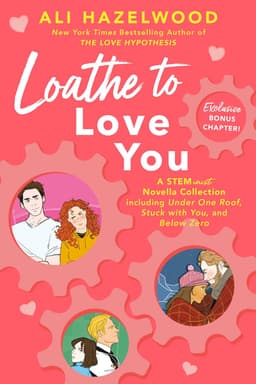
Cover of Loathe to Love You
Most recently added

Loathe to Love You

3.8 / 5

Loathe to Love You is a playful STEM-romance collection whose banter is reliable but whose repeated character types become obvious across three novellas.

Bibliography

Books by Ali Hazelwood

Reviewed titles open directly on Book Review Guide. Other editions and works remain marked until a full review is published.

Cover of Mate

Not reviewed yet

Mate

Cover unavailable

Not reviewed yet

Novia

Bibliographic records: Open Library.

Reviewed bibliography

Ali Hazelwood books reviewed here

Every title below has a complete, spoiler-free review. Scores are our editorial ratings, not visitor averages.

Cover of Check & Mate

20234 / 5

Check & Mate

A Rivals-to-Lovers Chess Romance

Check & Mate is a warm, accessible YA romance that uses chess pressure effectively, though its prodigy plot and secrecy remain highly convenient.

Read the review
See current formats on Amazon

As an Amazon Associate, I earn from qualifying purchases.

Cover of Deep End

20253.9 / 5

Deep End

A Novel

Deep End gives athletic discipline and negotiated desire real specificity, but familiar secrecy and exceptional-achiever dynamics make the romance feel overengineered.

Read the review
See current formats on Amazon

As an Amazon Associate, I earn from qualifying purchases.