Portrait of Emily Henry

Author profile

Emily Henry: books, reviews, and where to start

Emily Henry writes romances about people who already understand narrative for a living, then discovers how badly professional fluency can fail when applied to grief, ambition, family, and love.

Born 1991authorwriternovelist

Biography and criticism

The romance novelist of work, wit, and emotional revision

Henry's adult novels became publishing events because they deliver comedy and desire while taking creative labor, friendship, and the fear of an unlived life seriously.

Young-adult beginnings and an adult breakthrough

Emily Henry was born in 1991, studied creative writing at Hope College, and published several young-adult novels before Beach Read appeared in 2020. The earlier books already combined speculative or heightened premises with emotional intimacy. Beach Read redirected those instincts into adult romance through two novelists with different commercial identities, both blocked by grief and assumption.

The breakthrough established a Henry pattern without fixing one formula. Her protagonists edit, write, market, teach, travel, or otherwise confront the gap between a life imagined as a story and the life being lived. Work is not decorative proof of competence. It shapes schedules, self-worth, rivalry, and the language characters use to avoid plain confession.

Banter that carries biography

Henry's dialogue is fast and polished, but the jokes usually contain social history. A teasing name records an earlier intimacy. An argument reveals which version of the past each person has been preserving. Attraction grows through the relief of being understood by someone capable of answering at the same verbal speed.

The polish can become a limitation when every character sounds ready for quotation or when emotional explanation arrives too perfectly shaped. Henry is strongest when comedy fails and a character must speak without the protection of genre awareness. Book Lovers uses publishing conventions to question the roles women are assigned in romance. Funny Story turns an embarrassing shared premise into a study of chosen community. Great Big Beautiful Life places competing writers around a guarded life story, making biography itself a contest over ownership.

More than the vacation cover

Henry's covers and settings promise pleasure, but the novels repeatedly circle grief, parental absence, unstable friendship, and the compromises required by creative work. Happily Ever After does not mean a life without those conditions. It means characters have stopped treating uncertainty as proof that love is fraudulent.

Beach Read remains the clearest entrance. Book Lovers offers the sharpest conversation with romance convention, while People We Meet on Vacation emphasizes long friendship and accumulated timing. Henry's success rests on balance: enough self-awareness to satisfy readers fluent in the genre, enough sincerity to let the genre still do its emotional work.

The books in context

How the work develops on the page

These notes connect the biography to specific choices in the books. Each title links to the full spoiler-free review.

This spoiler free People We Meet on Vacation review focuses on what actually helps you decide in 2026: the tone, the chemistry, and whether it is worth reading before the Netflix movie. Instead of recapping every stop on Poppy and Alex's trips, it explains why this friends to lovers travel romance hits so hard when you like slow burn tension and emotional honesty.

The setup is simple and addictive. Poppy is a restless travel writer chasing novelty, while Alex is a steady, routine-loving teacher who would rather stay home with a book. They reconnect through annual vacations, and the story moves across different summers like a highlight reel of inside jokes, almost moments, and the one thing neither of them dares to say out loud until the cost of silence starts feeling heavier than rejection.

On content, this is written as adult contemporary romance, not a clean teen love story. The spice is present but not extreme, with intimacy that leans more emotional than graphic. Expect swearing, drinking, and heavier feelings under the comedy, including grief and mental health themes that show up in a grounded, character driven way.

If you are deciding between the book and the Netflix adaptation, the book gives you the full inner voice and the slow build that makes the payoff feel earned, while the movie is built for momentum and visual charm. Netflix has already signaled some book to screen differences, including shifting parts of the setting and adding new scenes, so reading first is the best way to enjoy the comparison without feeling like you missed the deeper context. If you want to start it now, you can grab People We Meet on Vacation on Amazon, then browse our contemporary romance picks for more banter heavy, character led love stories.

Henry contrasts bright travel episodes with the hotter, more constrained present trip, using recurring jokes to show intimacy before direct confession.

Poppy and Alex's contrasting temperaments, annual travel, inside jokes, and changing adult lives make attraction inseparable from friendship and time.

The reason for their estrangement is held back too long, some destinations are scenic shorthand, and late conflict follows expected romance timing.

Yes. The couple must address compatible daily lives rather than treating vacation chemistry as sufficient proof of a future.

A smart vacation timeline structure that keeps you turning pages because every trip adds context to the present day tension.

A payoff that lands because the book stays honest about fear, timing, and the quiet damage of not saying the thing.

If you want truly clean romance, this will feel too open. If you want moderate spice with real feelings, it fits.

The Netflix film release is set for January 9, 2026, so it is a perfect read before you stream.

Some locations and moments have been adjusted for the screen, which should make the movie feel fresh even for readers.

Read first if you care about slow burn interiority. Watch first if you just want the romcom ride and the visuals.

Read our Great Big Beautiful Life review if you like romance with a bigger personal stakes backdrop.

Check our Check & Mate review if you want a commercial, fast moving romance with a strong hook and lots of chemistry.

This spoiler free review of People We Meet on Vacation by Emily Henry focuses on the one decision most readers are making right now: read it before the Netflix movie, or just stream it. It breaks down the vibe, the age comfort level, the spice, and what the book does best so you can pick the version that fits you.

Read the complete review

This spoiler free Funny Story review focuses on Daphne, a children’s librarian whose carefully planned life implodes when her fiancé leaves her for another woman, and on Miles, the chaotic roommate she ends up sharing a tiny lakeside apartment with. The book leans into forced proximity, fake dating and rebound chaos, but underneath the hook it is about rebuilding a sense of self after a breakup.

Emily Henry keeps the humor and banter front and center, yet gives Daphne a grounded inner voice that sits with grief, jealousy and the awkwardness of starting over in a town that never really felt like hers. Miles is not just the messy gamer ex of her ex’s new partner; over late night talks, boat rides and bar trivia, he becomes the person who sees the parts of Daphne she has been hiding under politeness and people pleasing.

Readers who worry about spice level and age rating will want to know that Funny Story is an adult contemporary romance with open door sex scenes and a fair bit of swearing. It is generally best for older teens and adult readers who are comfortable with explicit intimacy framed around consent, communication and emotional vulnerability, rather than for younger or very sensitive readers.

Beyond the romantic tension, the novel digs into found family, small town expectations and the way friendships can quietly save you when you feel unmoored. There are content notes for alcohol use, parental estrangement and emotionally manipulative exes, but the tone stays hopeful, warm and often very funny. By the end, the title pays off as Daphne learns to tell the funny story of how she and Miles met without erasing the pain that came before.

Funny Story works best for readers who want a character-driven romantic comedy with a life beyond the central couple. Its breakup setup, library work, friendships, and local community turn the romance into a story about choosing a life that fits rather than preserving one that merely looked right from the outside.

Henry uses quick observational humor in dialogue, then slows into concrete local rituals and work scenes when Daphne begins to feel rooted.

Daphne's library work, Miles's local ties, their exes, and new friendships make the town and chosen routines part of emotional recovery.

The setup is highly convenient, late insecurity produces expected conflict, and the exes remain sharper catalysts than full people.

The pretend-dating and roommate boundaries take time to give way after mutual attraction is already clear to the reader.

A breakup setup that throws Daphne and Miles into forced proximity and fake dating, then lets their chemistry grow through quiet domestic moments as much as big gestures.

A balance of sharp, self aware humor with sincere conversations about loneliness, family baggage and what it means to build a home from scratch.

Adult level spice with a focus on consent and emotional connection, making the steamy scenes feel earned rather than added for shock value.

Adult and new adult readers who enjoy contemporary romance with banter, forced proximity and found family, but who still want the characters to wrestle honestly with anxiety, insecurity and messy exes.

Read the complete review

Where to begin

A good place to start with Emily Henry
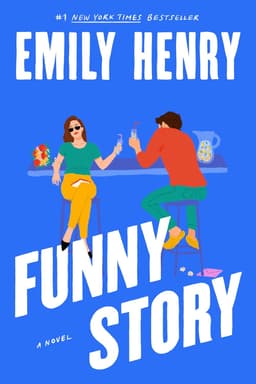
Cover of Funny Story
Our highest-rated review

Funny Story

4.4 / 5

Funny Story turns an absurd roommate arrangement into a generous romance about rebuilding community rather than merely replacing one partner with another.
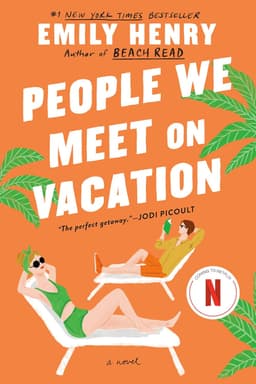
Cover of People We Meet on Vacation
Most recently added

People We Meet on Vacation

4.3 / 5

People We Meet on Vacation gives friends-to-lovers real accumulated history, though its withheld rupture and alternating trips delay an answer readers can predict.
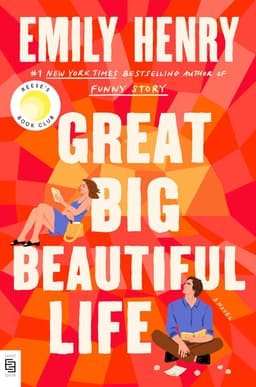
Cover of Great Big Beautiful Life
Another route in

Great Big Beautiful Life

4.2 / 5

Great Big Beautiful Life blends biographical mystery and adult romance with emotional confidence, though the famous-life frame sometimes overarranges revelation.

Reading order and buying help

Reading guides featuring Emily Henry

Reading dataReading pace by genreReading dataRomance, difficulty, and ratings

Bibliography

Books by Emily Henry

Reviewed titles open directly on Book Review Guide. Other editions and works remain marked until a full review is published.

Bibliographic records: Open Library.

Reviewed bibliography

Emily Henry books reviewed here

Every title below has a complete, spoiler-free review. Scores are our editorial ratings, not visitor averages.

Cover of Funny Story

20244.4 / 5

Funny Story

A Novel

Funny Story turns an absurd roommate arrangement into a generous romance about rebuilding community rather than merely replacing one partner with another.

Read the review
See current formats on Amazon

As an Amazon Associate, I earn from qualifying purchases.