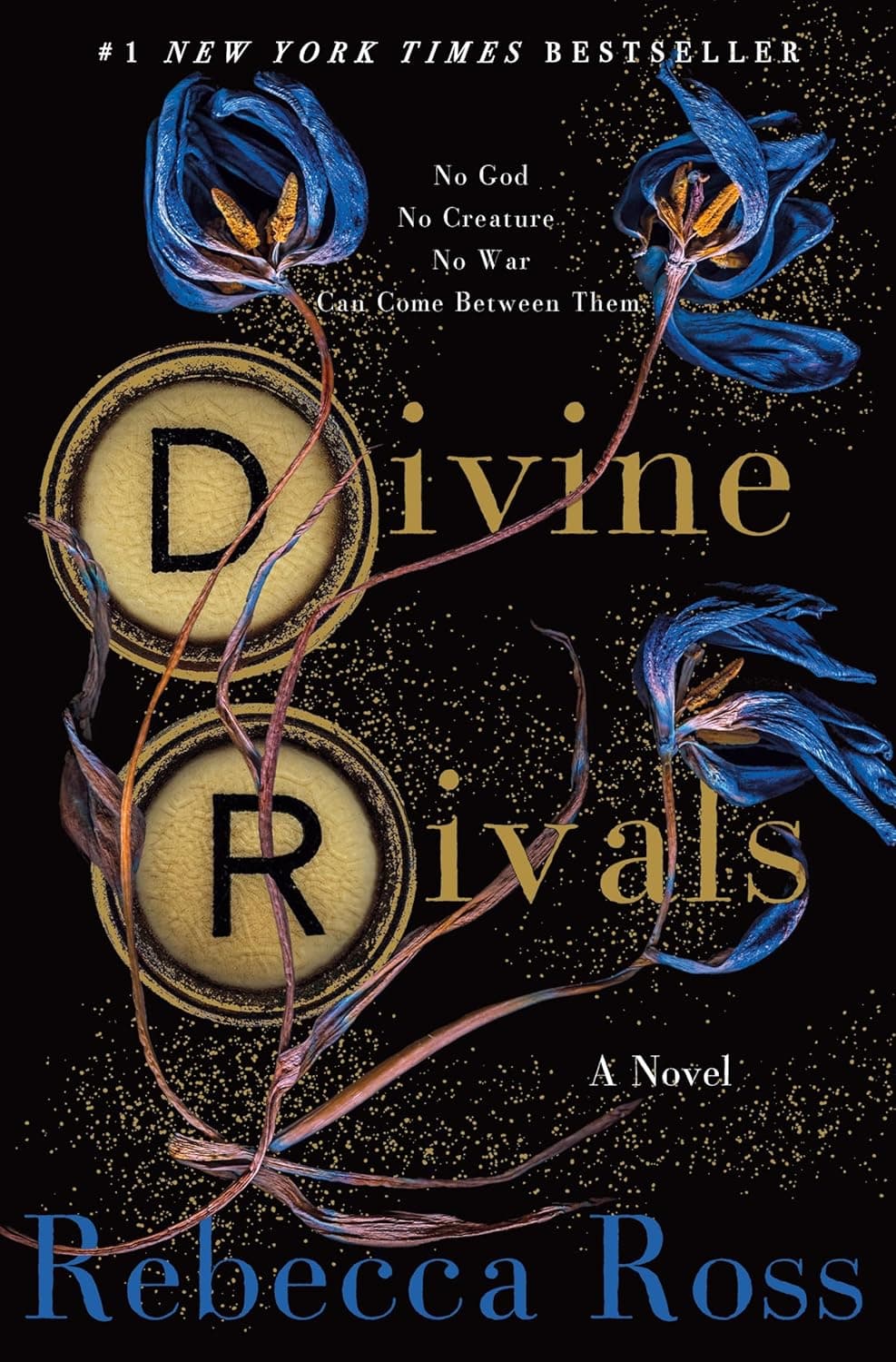
Should you read Divine Rivals?
What works
Iris and Roman know each other differently on paper and in person, allowing intimacy to grow through voice, grief, competition, and mistaken distance.
What may not work for you
The war's politics are vague, the divine conflict stays backgrounded, and the late action moves faster than the careful correspondence.
What may test your patience
The newsroom opening develops family and professional stakes before the front and magical war become immediate.
Does the ending reward the effort?
The emotional commitment lands, but the ending is deliberately painful and incomplete, functioning as a direct bridge to book two.
Reading Divine Rivals closely
Divine Rivals introduces Iris Winnow and Roman Kitt, rival young journalists at the Oath Gazette in a war-torn city. As waking gods pull human nations into conflict, Iris hides her grief in letters to her brother at the front. Those letters slip through a wardrobe door into Roman's hands, and professional rivalry slowly gives way to intimacy.
Rebecca Ross balances the ache of trench warfare, addiction at home, and god driven destruction with a warm, epistolary romance built on shared words. The tone is wistful rather than grimdark; scenes of shelling, injuries and loss are present but framed through Iris's compassion, Roman's guilt, and the messy hope of young adults trying to do the right thing. If you want clear emotional stakes, lush atmosphere, and a romance that grows out of mutual respect and shared trauma, Divine Rivals delivers without relying on nonstop twist reveals.
Violence focuses on the horror of war, death of loved ones, and a few intense battlefield moments rather than gore for its own sake. The romance is central and includes one open door scene that is tender and not highly explicit, plus plenty of tension, kisses, and longing. Addiction and alcohol abuse appear in the background alongside mild language and heavy grief.
Divine Rivals is the first main book in the Letters of Enchantment storyline and leads directly into Ruthless Vows, which answers the large questions left hanging at the end. Read later prequel material after Iris, Roman, and the war between the gods have established the world.
Three useful comparisons
Ruthless Vows
Ruthless Vows continues immediately and gives the war greater space, though the letters lose some novelty.
Best for: Divine Rivals readers wanting direct continuation, wartime separation, recovered intimacy, and complete duology closure. It is not an entry point.
Fourth Wing
Fourth Wing is hotter, faster, and more violent, with dragons and a much heavier rule system.
Best for: Come for dragons, lethal academy competition, disability-aware adaptation, explicit romance, and fast cliffhanger plotting.
The Book Thief
The Book Thief offers richer wartime civilian life and reading themes without central romance or fantasy gods.
Best for: Best for older teens and adults who want a slow, lyrical wartime novel about a foster family, the uses of language, and the cost of small acts of decency.
Make the next decision