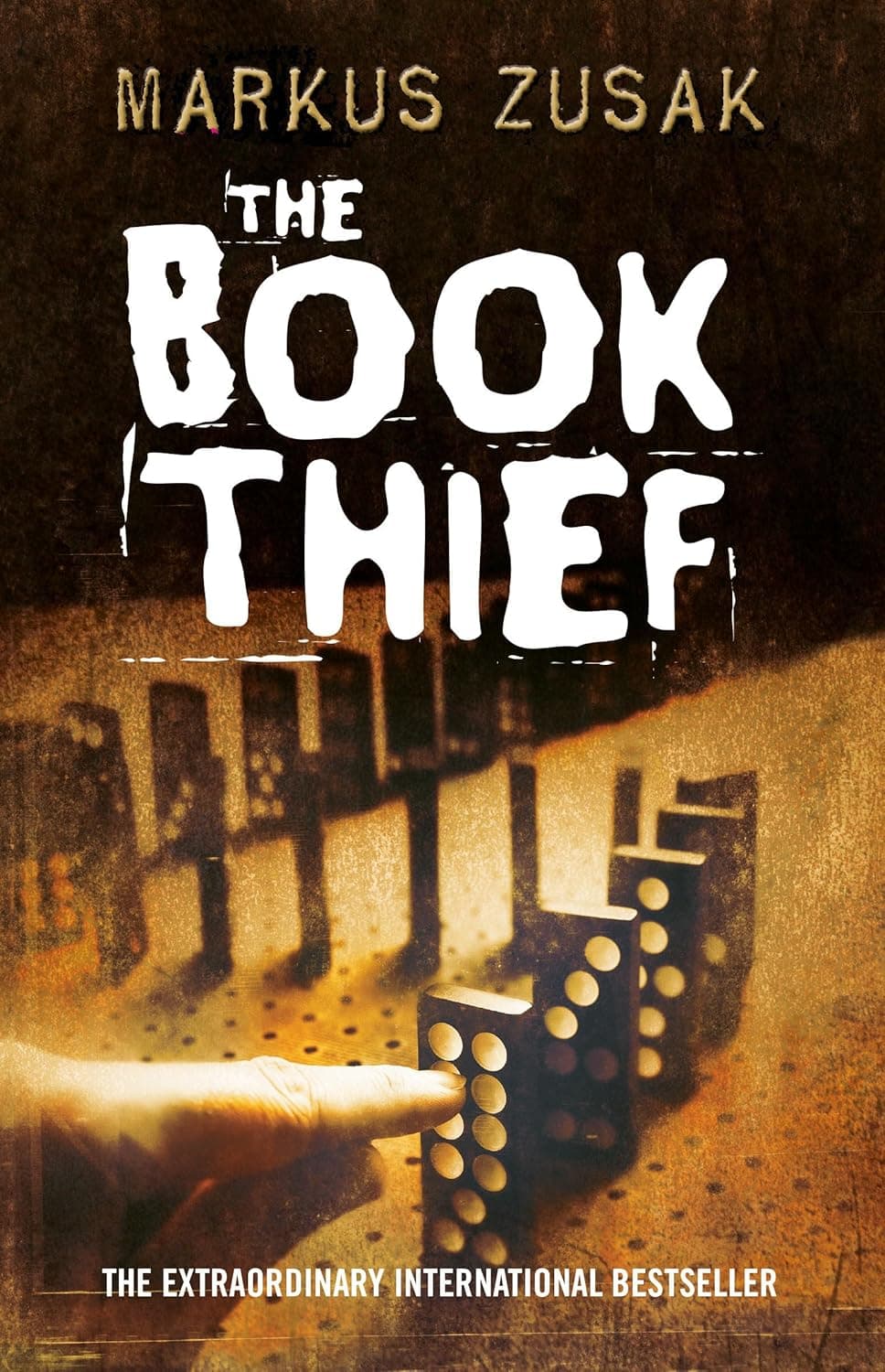
Should you read The Book Thief?
What works
Books keep changing meaning as Liesel grows. They are stolen prizes, lessons with Hans, Nazi propaganda, gifts for Max, and finally a way for her to tell the truth herself.
What may not work for you
Death's narration sometimes announces emotion before a scene can create it, and the typographical interruptions can feel designed to underline meanings already visible.
What may test your patience
Himmel Street takes time to fill with neighbors, chores, insults, and football games. The war tightens its grip gradually, so the quiet opening matters more in retrospect.
Does the ending reward the effort?
Yes. Death tells us early that terrible losses are coming, and the ending still hurts because the book has made daily life on Himmel Street so specific.
Reading The Book Thief closely
Death narrates The Book Thief, a choice that first looks like a stunt and soon becomes the novel's organizing voice. He is weary, nosy, and often moved despite himself. From that distance, Zusak follows Liesel Meminger into a foster home on Himmel Street, where grief slowly makes room for lessons with Hans, arguments with Rosa, races with Rudy, and stolen books.
The novel is strongest when words have a practical use. Hans teaches Liesel to read on a painted basement wall. Propaganda turns language into a weapon, while Liesel's readings during an air raid steady a frightened room. Her friendship with Max makes stories into gifts and a private form of resistance. The symbolism is clear, but it grows from scenes rather than sitting above them.
Rosa's insults and fierce care, Rudy's doomed loyalty, and Hans's quiet decency give the book its emotional strength. Death sometimes tells us too insistently how to feel, and the boldface interruptions can underline a point twice. Even so, the people on Himmel Street are vivid enough that knowing their fate in advance does not blunt the ending. It makes every ordinary afternoon more painful.
Death as narrator
Death's dry, compassionate voice lets Zusak announce losses before they happen. The suspense comes from attachment, not surprise.
The metaphors can be beautiful and occasionally overdone, but the voice gives the novel a character of its own.
Where the novel hits hardest
The Hubermanns' basement brings the book's central ideas together: reading, shelter, danger, and the cost of protecting Max.
Small kindnesses matter here precisely because they do not stop the war or guarantee anyone's safety.
Three useful comparisons
Fahrenheit 451
Fahrenheit 451 treats books as resistance in a faster dystopian parable; The Book Thief gives reading a fuller emotional and historical life.
Best for: Pick it for a short, lyrical dystopia about censorship, media saturation, and the cost of paying attention.
To Kill a Mockingbird
Both use childhood perspective to expose normalized injustice, but The Book Thief is more stylized and shaped by wartime loss.
Best for: Readers and classrooms prepared to value Scout's moral growth while also discussing the novel's limited perspective on Black experience.
A Tale of Two Cities
A Tale of Two Cities offers revolution, sacrifice, and historical crisis through a denser adult melodrama rather than a child's reading life.
Best for: Choose it for revolution, sacrifice, courtroom suspense, family devotion, and a shorter but denser Dickens novel.