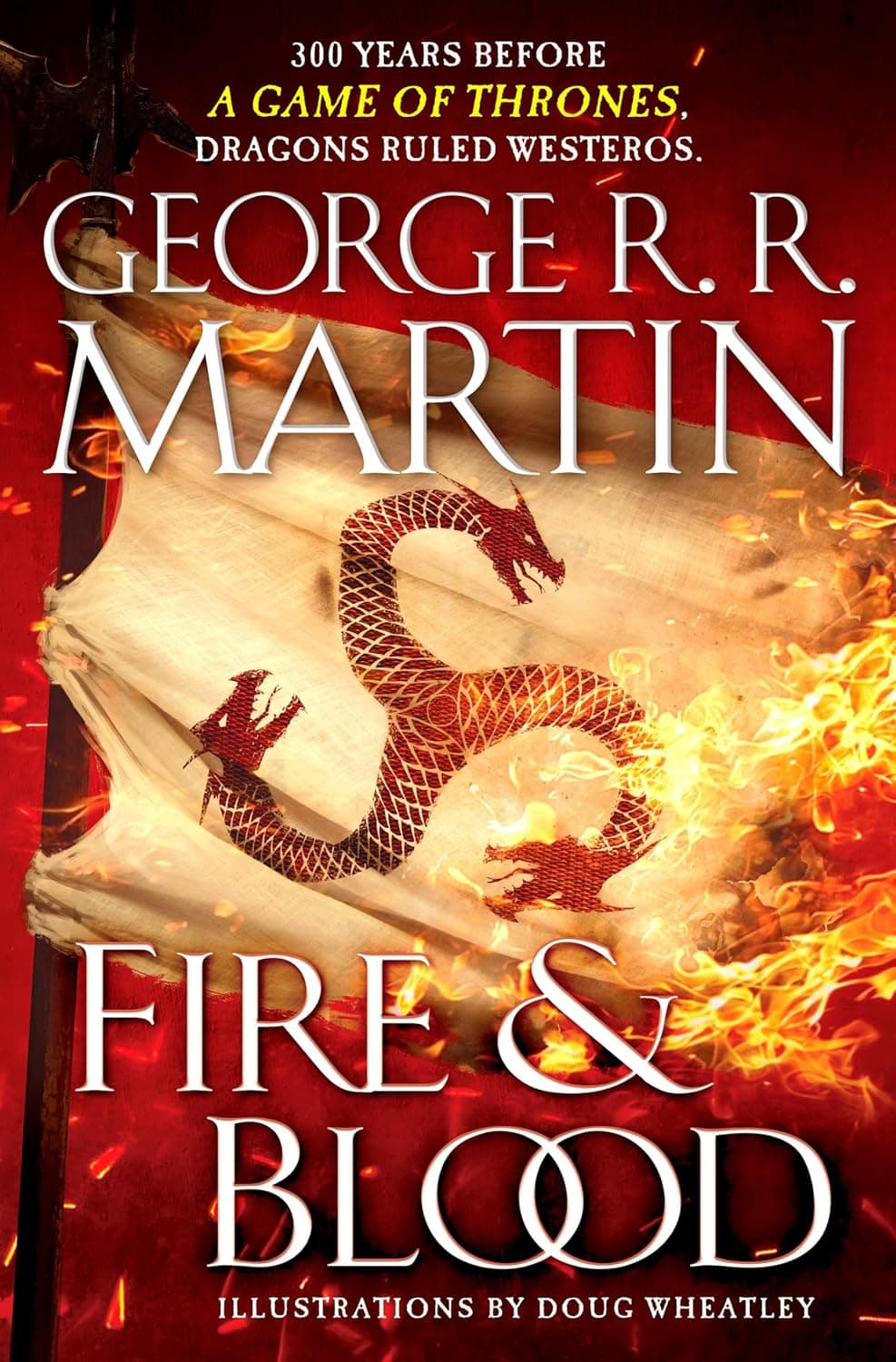
Should you read Fire and Blood?
What works
The Dance of the Dragons gains scale from disputed testimony, political marriages, succession law, and the chronicler's inability to settle motive.
What may not work for you
Long reign summaries create distance, women are repeatedly filtered through sexual rumor, and readers expecting a conventional novel may find the archive cold.
What may test your patience
The quieter reigns between conquest and civil war accumulate offices, heirs, and building projects before the central dynastic catastrophe.
Does the ending reward the effort?
The first volume closes its major civil conflict but not the dynasty's history, leaving a deliberate continuation rather than full historical completion.
Reading Fire and Blood closely
Fire & Blood is a sprawling history of House Targaryen written like a lively, biased medieval chronicle. It is not a traditional novel; it gives a long account of kings, queens, wars, and uneasy peaces, with conflicting sources where a viewpoint character would normally stand.
The book covers the conquest and the reigns that follow, but the Dance of the Dragons gives it a tragic center. Succession law, marriage, resentment, and access to dragons turn a family dispute into civil war. The damage feels larger because the chronicler cannot give any participant a clean motive.
The competing sources are the real pleasure. An official account, a septon's judgment, and a fool's scandalous version may describe the same event, leaving the reader to notice who benefits from each story. That uncertainty is more interesting than the stretches that simply list heirs, offices, and building projects.
This is not the definitive truth about the Targaryens, and the book is better once that becomes clear. It is an invented history shaped by deference, gossip, and missing testimony. Anyone wanting intimate viewpoint chapters should start with A Game of Thrones instead.
History without a neutral witness
The Targaryen timeline becomes less certain, not more, when the sources disagree about motive and blame.
The Dance has enough political and personal momentum to survive the chronicle's deliberate distance.
Three useful comparisons
The World of Ice & Fire
World of Ice & Fire is broader and more visual; Fire & Blood is narrower and more dramatically continuous.
Best for: Established A Song of Ice and Fire readers who enjoy maps, dynasties, artwork, and invented historiography, and want a browsable companion rather than a required continuation or character-led novel.
The Silmarillion
The Silmarillion presents mythic history with greater thematic unity and less gossip-driven source conflict.
Best for: Committed Middle-earth readers who enjoy mythology, tragic history, invented languages, and repeated reading more than conventional character access.
SPQR: A History of Ancient Rome
SPQR is real history that openly teaches source criticism, a useful companion to Martin's fictional chroniclers.
Best for: General readers wanting a serious Roman history attentive to evidence, citizenship, and social life rather than only battles.
Make the next decision