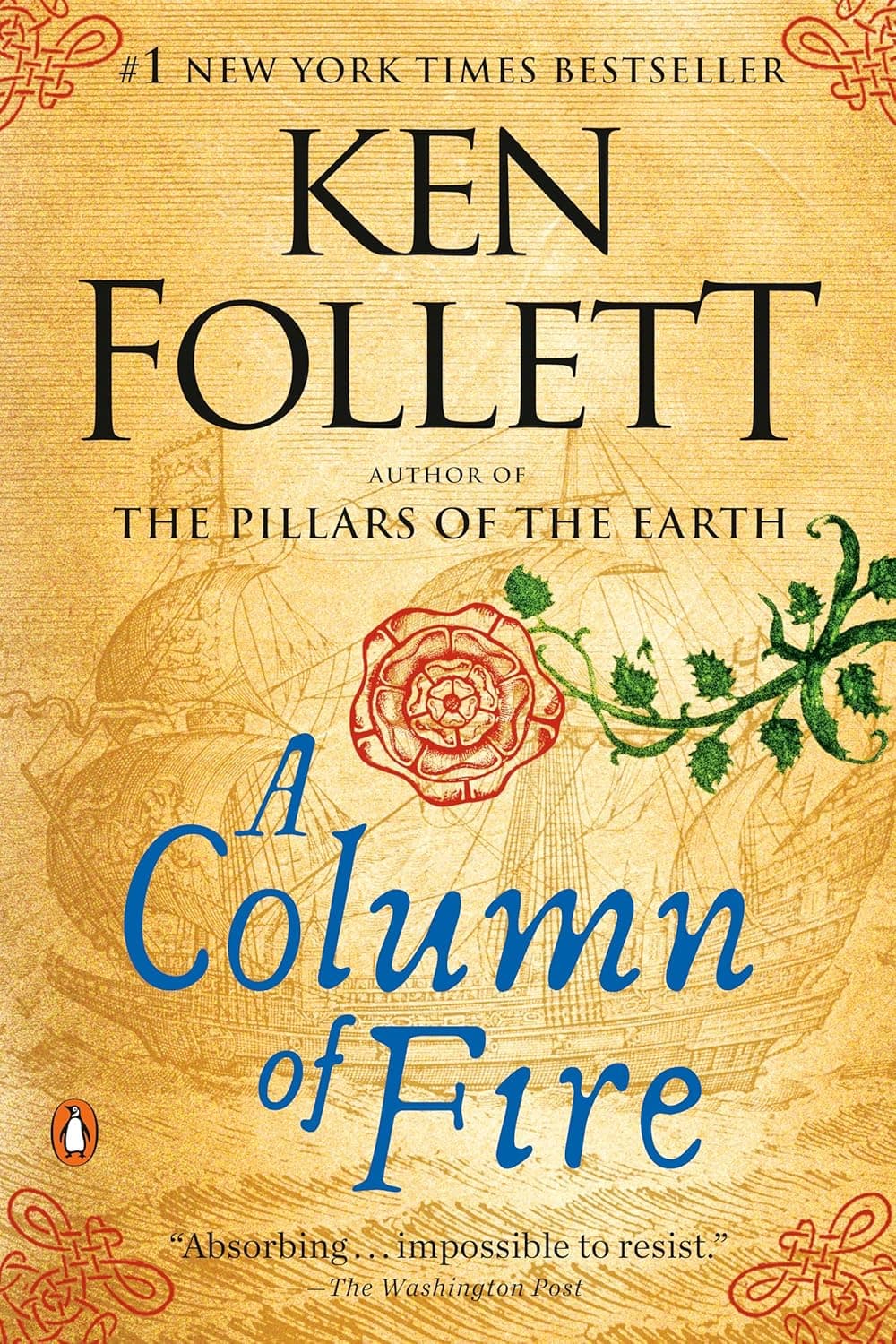
Should you read A Column of Fire?
What works
Ned and Margery make religious allegiance a question of marriage, work, secrecy, and survival across England and continental politics.
What may not work for you
The timespan is vast, historical cameos can feel scheduled, villains remain simple, and distance weakens some relationships.
What may test your patience
International movement and repeated political assignments interrupt the Kingsbridge center and require frequent reorientation.
Does the ending reward the effort?
Ned and Margery's long story reaches a firm ending. The religious and succession conflicts continue beyond any one life, but the book does not leave its main relationships hanging.
Reading A Column of Fire closely
A Column of Fire moves Kingsbridge into the reign of Elizabeth I. Ned Willard leaves home for royal courts and intelligence work, while Margery Fitzgerald tries to hold on to her beliefs, duties, and private loyalties as England's official religion changes around her.
The story ranges across England, France, Spain, and the Low Countries. Merchant ledgers, shipyards, and printing houses matter because religious policy decides which books can be printed, which ships can trade, and which family member may be accused of treason or heresy.
Ned learns to work inside a network built on letters, informants, and partial trust. Margery has less freedom to move and must make decisions inside marriage and household expectations. Follett's villains are often simpler than the people resisting them, and the international travel can make the main relationships feel distant.
This book does something different from The Pillars of the Earth. Building remains important in Kingsbridge, but information has become the crucial craft: writing, copying, hiding, intercepting, and deciding who may read. The huge cast and historical cameos can feel arranged, yet Ned and Margery give the religious conflict a clear personal cost. Browse our historical fiction archive for related reviews.
What A Column of Fire does well
Ned's assignments make secret letters, informants, and intercepted plans part of the action.
Margery's marriage and household duties show how religious policy limits a life far from court.
Hidden presses, merchant ledgers, and ships connect belief to money and legal danger.
Three useful comparisons
The Pillars of the Earth
Pillars is more grounded in one place, craft, and construction, with stronger architectural identity.
Best for: Settle in for a long, accessible medieval saga about cathedral building, family, politics, violence, romance, and clear heroes and villains.
The Evening and the Morning
The prequel returns to local institution building and a smaller political world.
Best for: Choose it to watch Edgar build, Ragna fight through a hostile legal system, and Aldred protect learning in a settlement controlled by a corrupt bishop.
The Great Train Robbery
Great Train Robbery offers a tighter historical thriller with stronger procedural discipline.
Best for: Readers who enjoy procedural heists, Victorian settings, and research woven into the mechanics of a crime.
Make the next decision