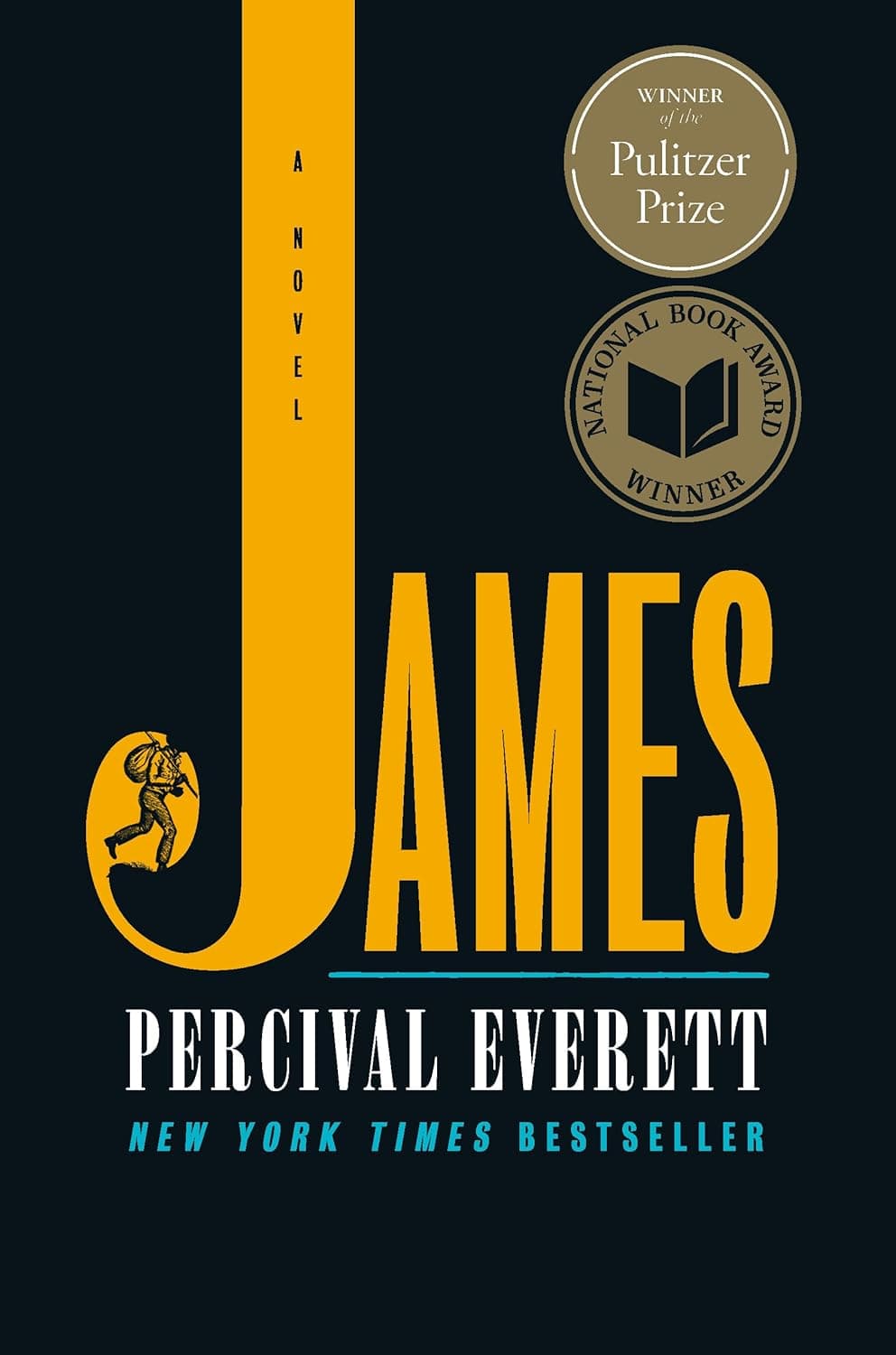
Should you read James?
What works
Jim's public dialect and private voice expose language as a survival performance, while Everett keeps the river journey tense, funny, and morally severe.
What may not work for you
A few late reversals push the novel toward thriller mechanics, and readers closely attached to Twain may resist how decisively Everett changes familiar events.
What may test your patience
The book initially mirrors recognizable episodes closely enough that its larger departure can seem delayed, but the accumulating differences are the point.
Does the ending reward the effort?
Yes. The conclusion accepts the cost of rewriting a national classic and gives James choices that the source novel withheld from him.
Reading James closely
Percival Everett's novel James takes one of the most famous journeys in American literature and hands the steering wheel to Jim. Seen through his eyes, the Mississippi becomes less of a boy's adventure and more of a dangerous road where every word can mean survival or disaster. The book keeps its big turns close to the chest, relying instead on voice, tension, and quiet humor to pull you along.
What stands out most is how clearly the story names cruelty without turning into a lecture. Violence often comes in small humiliations, in who is allowed to speak and who is expected to stay silent. When kindness appears, it feels earned. Huck and Tom are recognisable and flawed, but the emotional center stays with James and the impossible decisions he makes for himself and his family.
Everett keeps the chapters tight and the scenes almost cinematic, full of small details about tools, food, river travel, and work that make the setting feel lived in. The language moves easily from sharp wit to ache-in-the-throat tenderness.
The result is a retelling that feels both respectful and corrective. It speaks to readers who grew up with Twain's classic and to those meeting this world for the first time, inviting them to think about who gets to tell the story and what changes when that voice finally shifts.
Three useful comparisons
To Kill a Mockingbird
To Kill a Mockingbird filters racial injustice through a white child's moral education; James gives the endangered Black character full narrative control and far less comforting irony.
Best for: Readers and classrooms prepared to value Scout's moral growth while also discussing the novel's limited perspective on Black experience.
Yellowface
Yellowface also asks who profits from telling another person's story, but turns that question into contemporary publishing satire rather than historical reclamation.
Best for: Readers of literary satire, unreliable narrators, publishing stories, social-media anxiety, cultural appropriation debates, and fast books built for argument.
A Tale of Two Cities
A Tale of Two Cities offers broader historical melodrama and revolutionary spectacle; James is shorter, sharper, and more concentrated on language as a tool of survival.
Best for: Choose it for revolution, sacrifice, courtroom suspense, family devotion, and a shorter but denser Dickens novel.
Make the next decision