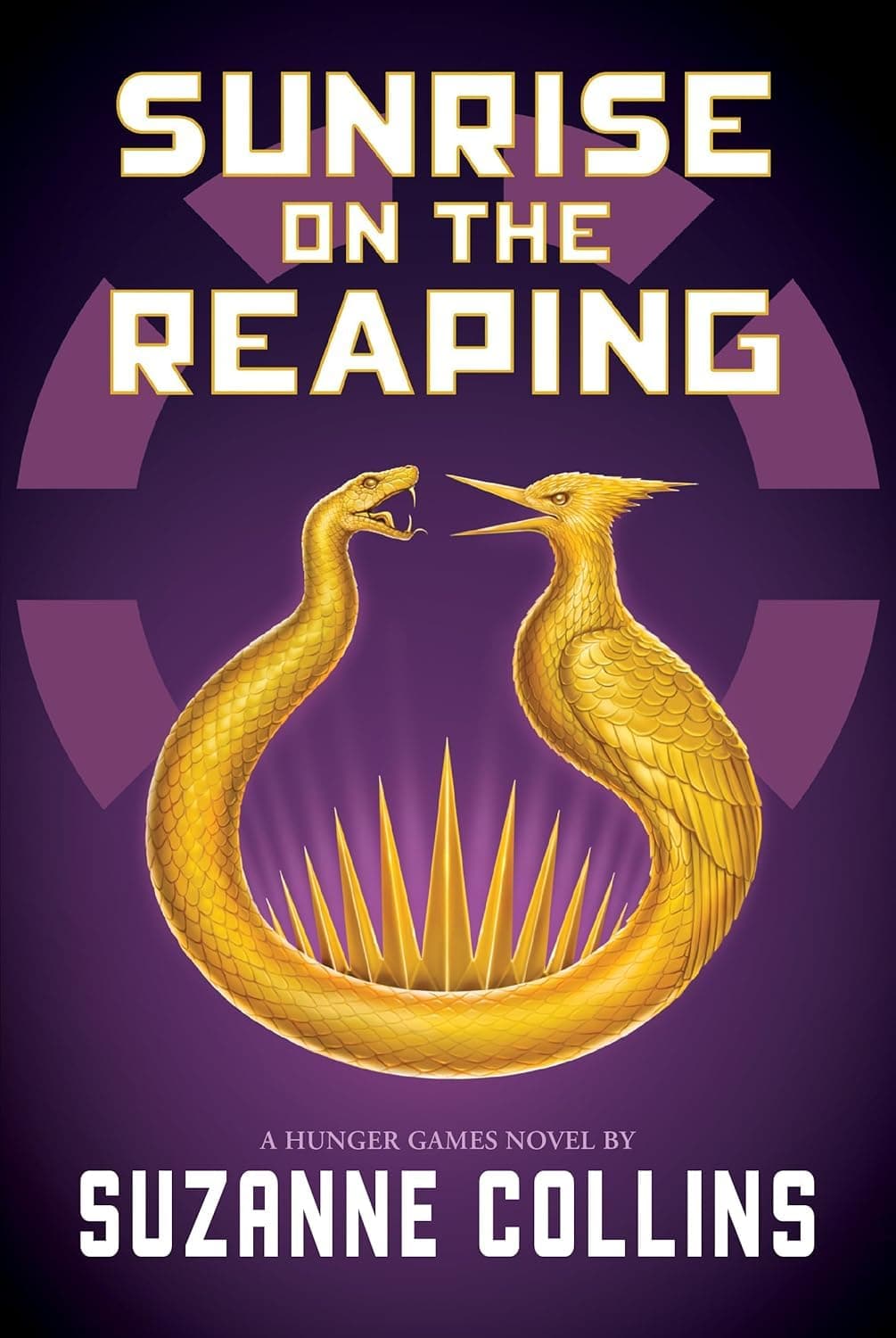
Should you read Sunrise on the Reaping?
What works
The familiar Games machinery gains new force through predetermined loss and the gap between lived experience and the version preserved for future audiences.
What may not work for you
Connections to later characters occasionally feel arranged for recognition, and foreknowledge can make secondary deaths function as expected tragedy.
What may test your patience
The opening must establish another reaping, preparation, and arena despite readers already knowing the institutional sequence.
Does the ending reward the effort?
Yes. The conclusion turns survival into a compromised record and clarifies Haymitch's later behavior without reducing him to one explanatory trauma.
Reading Sunrise on the Reaping closely
Sunrise on the Reaping returns to Panem through Haymitch Abernathy's eyes and follows his path to the Fiftieth Hunger Games, also known as the Second Quarter Quell. His familiar cynicism has not formed yet, which makes the younger voice especially painful.
Haymitch narrates with dry humor that often hides fear and anger. He notices small things like laundry tubs, moonshine runs, and fading propaganda posters that most people stop seeing. Those details create worldbuilding that feels lived in and grounded, echoing the way survival tactics gave weight to books like A Game of Thrones in a different corner of the genre. Family obligations and first love balance the steady march toward the arena.
Collins structures the book with short chapters and rising tension. Each scene pushes Haymitch a little closer to the machinery that turns children into broadcast entertainment. The epigraphs about truth and control frame a conversation about propaganda, resilience, and who gets to tell the story of Panem.
Readers who want extra context can look at Lionsgate's official franchise hub at Lionsgate's Hunger Games portal for visual timelines that match the events without giving away key twists. It pairs well with the novel's focus on how media reframes history.
By the final chapters, Sunrise on the Reaping adds to the Hunger Games canon without simply repeating earlier beats. It offers grit, vulnerability, and a reminder that resistance can begin as soon as someone names what is really happening in their own district.
Three useful comparisons
The Hunger Games
The original remains the necessary entry and offers the cleanest introduction to the Games' media logic.
Best for: Teens and adults wanting fast dystopian suspense, political spectacle, survival, violence, and a guarded protagonist.
Catching Fire
Catching Fire also centers a Quarter Quell but has stronger forward uncertainty and established rebellion.
Best for: Readers continuing the trilogy who want broader rebellion, stronger alliances, and another tightly designed arena.
Mockingjay
Mockingjay is the strongest available comparison for propaganda and the long political cost of surviving the arena.
Best for: Series readers prepared for propaganda, trauma, moral ambiguity, war, and a less crowd-pleasing conclusion.
Make the next decision