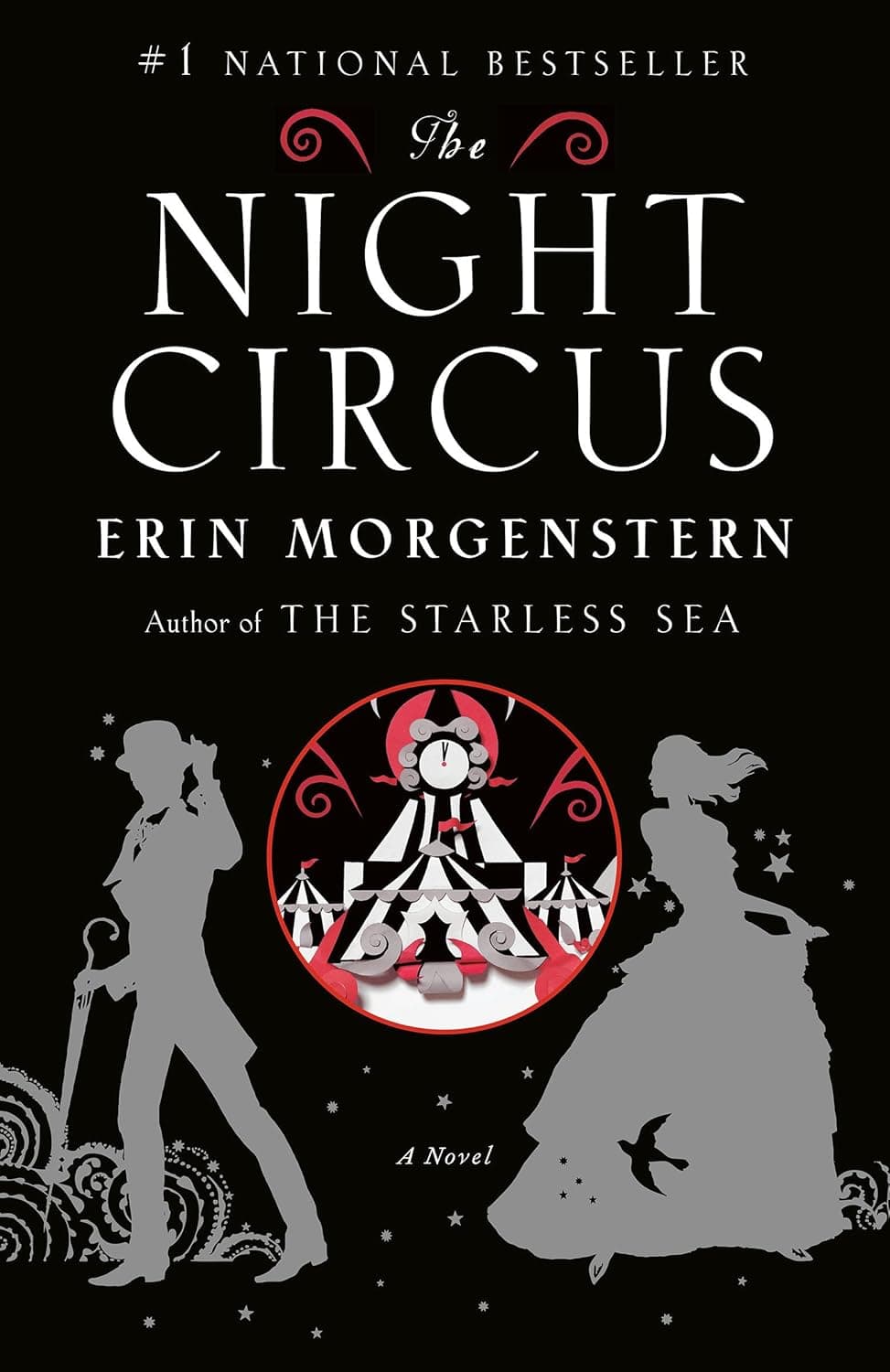
Should you read The Night Circus?
What works
The tents have tactile identities, and the alternating chronology turns the circus into a collaborative artwork whose details reveal how Celia and Marco answer one another.
What may not work for you
The central romance is more aesthetically matched than deeply developed, while the rules and stakes of the contest remain vague enough to weaken urgency.
What may test your patience
The nonlinear opening introduces performers, patrons, builders, and future visitors before clarifying their connection. If you want a direct plot, the first section may feel unmoored.
Does the ending reward the effort?
Mostly. The solution preserves the circus and fits its magical logic, although the emotional resolution depends on a romance the novel has described more beautifully than examined.
Reading The Night Circus closely
A long-running contest between two magicians unfolds inside a traveling circus that appears without warning and opens only at night. The book reads like a series of visits to elaborate tents, mixing romance and mystery into a deliberately slow-building experience.
The supposed duel between Celia and Marco gradually shifts into a kind of collaboration, as each illusion they design responds to the other. That twist quietly questions what competition really means and suggests that art grows richer when rivalry softens into partnership. Characters like Chandresh, Tsukiko, and Bailey show the different ways people react to wonder, from exploitation and obsession to quiet caretaking.
Erin Morgenstern gives Le Cirque des Rêves more narrative weight than a conventional backdrop. The nonlinear timeline and short scenes gradually reveal how the performers, patrons, and devoted rêveurs depend on the circus. Readers who prioritize plot speed may find the structure distant; readers who enjoy setting-led fantasy are more likely to appreciate it. Browse the Erin Morgenstern bibliography or compare books like The Night Circus for a different balance of atmosphere and momentum.
Atmosphere, romance, and pace
The circus tents, performances, and visual contrasts receive sustained attention, while the central contest develops through creation and response rather than frequent direct confrontation.
The romance grows gradually within that contest. The setting and sensory detail remain more prominent than rapid plot turns.
Nonlinear structure and reader fit
Dates and viewpoints shift across the novel, so the relationships between events become clear gradually rather than in strict chronological order.
Choose it for patient, setting-led fantasy, not a fast magical competition driven by constant conflict.
Three useful comparisons
The Name of the Wind
The Name of the Wind offers more explicit magical learning and a stronger narrative voice, but asks for a much longer commitment.
Best for: Choose it for musical prose, a university setting, magical study, and a gifted but questionable narrator. Skip it if an unfinished larger story will sour the experience.
The Picture of Dorian Gray
Dorian Gray shares beauty, secrecy, and moral cost, then delivers sharper social wit and a darker causal line.
Best for: Readers who enjoy Gothic corruption, social wit, queer subtext, and novels suspicious of their own beautiful surfaces.
Alchemy of Secrets
Alchemy of Secrets is a more plot-forward choice for readers who want hidden magic and romantic intrigue with clearer momentum.
Best for: Adult fantasy readers wanting Los Angeles folklore, murder mystery, hidden magic, romantic suspicion, lush imagery, dangerous bargains, and frequent reversals.
Make the next decision