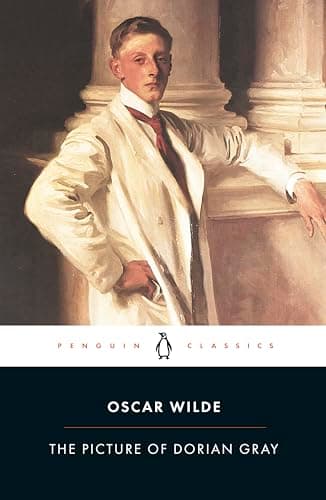
Should you read The Picture of Dorian Gray?
What works
The novel makes influence feel active. Lord Henry's epigrams entertain even as they give Dorian a vocabulary for treating other people as experiments and consequences as aesthetic inconveniences.
What may not work for you
The middle catalog of Dorian's collecting and private obsessions is overlong, while several harmed characters remain deliberately thinner than the man harming them.
What may test your patience
The chapter listing jewels, fabrics, perfumes, music, and historical curiosities brings the plot almost to a halt. Its excess reflects Dorian's appetite, but the point lands before the inventory ends.
Does the ending reward the effort?
Yes. The final act turns the portrait from a hidden record into the unavoidable logic of Dorian's evasions, and it closes with cruel formal neatness.
Reading The Picture of Dorian Gray closely
The Picture of Dorian Gray begins when Basil Hallward paints a portrait that captures Dorian's extraordinary beauty. Influenced by Lord Henry's seductive philosophy of sensation, Dorian wishes the painting would age instead, leaving his public appearance untouched by time and wrongdoing.
Oscar Wilde combines Gothic horror with epigrams, social comedy, and arguments about art. The portrait makes hidden consequence visible, but the novel never allows one simple explanation of whether art corrupts, reveals, or merely records its viewer.
Beauty without visible consequence
Dorian's unchanged face protects him inside a society eager to confuse appearance with virtue. The portrait becomes the private evidence that reputation excludes.
Wit, decadence, and horror
Long conversations and aesthetic arguments sometimes outweigh action, yet Wilde's wit keeps them lively. The horror grows from secrecy and moral disintegration rather than constant supernatural spectacle.
Three useful comparisons
Frankenstein
Frankenstein treats a created body as a demand for responsibility; Dorian Gray treats a magical object as permission to avoid it. Choose Wilde for wit and decadence, Shelley for grief and ethical argument.
Best for: Readers interested in responsibility, isolation, unreliable self-justification, and Gothic philosophy more than conventional horror.
The Great Gatsby
The Great Gatsby shares the seductive surface and moral vacancy but remains realistic and restrained. Choose it for class and reinvention; choose Dorian Gray for supernatural consequence.
Best for: Readers drawn to concise literary tragedy, unreliable admiration, class, reinvention, and prose that rewards rereading.
Dracula
Dracula externalizes corruption as an invading predator and organizes resistance through a team. Dorian Gray keeps the danger inside one beautiful social figure and makes complicity more intimate.
Best for: Readers willing to accept Victorian pacing for Gothic atmosphere, epistolary suspense, and the source of countless vampire conventions.
Make the next decision