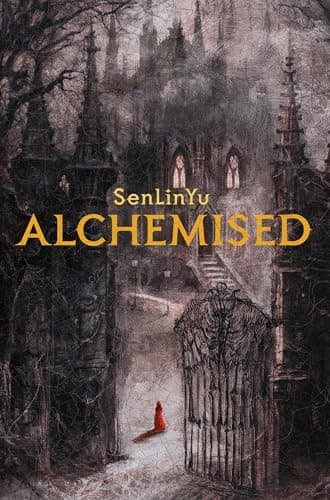
Should you read Alchemised?
What works
Helena's missing memory gives political history personal stakes, and the collision of healing, alchemy, and necromancy makes bodies both evidence and contested territory.
What may not work for you
At more than a thousand pages, repetition amplifies suffering without always deepening it, and the central relationship asks readers to tolerate coercion far beyond ordinary dark romance.
What may test your patience
The nonlinear recovery of wartime context deliberately delays orientation for hundreds of pages, which can feel immersive or exhausting depending on tolerance for uncertainty.
Does the ending reward the effort?
The ending is thematically consistent rather than comforting. It rewards attention to memory and compromise, but does not retroactively soften the book's violence.
Reading Alchemised closely
Alchemised opens after a civil war with Helena Marino imprisoned, her work as a resistance healer over and crucial parts of her memory missing. Authorities place her in the custody of a powerful necromancer who must recover what she knows, turning memory itself into a contested battlefield.
At over a thousand pages, the novel is dense, nonlinear, and emotionally punishing. Alchemy, necromancy, political history, captivity, and a dark central relationship unfold through recovered context rather than a simple chronological quest. It rewards patient readers but needs serious content-warning awareness.
Memory after war
Helena's missing history protects and imprisons her. As fragments return, the book asks whether remembering restores identity or forces a survivor to relive what survival required.
Three useful comparisons
Frankenstein
Frankenstein is shorter and philosophically concentrated on creation and abandonment; Alchemised expands bodily transgression into war, memory loss, and coercive attachment.
Best for: Readers interested in responsibility, isolation, unreliable self-justification, and Gothic philosophy more than conventional horror.
The Handmaid's Tale
The Handmaid's Tale is leaner and more politically controlled, while Alchemised uses elaborate magic and recovered history to sustain a far larger captivity narrative.
Best for: Readers interested in reproductive control, memory, religious authoritarianism, and narrators whose uncertainty is part of their resistance.
Bury Our Bones in the Midnight Soil
Bury Our Bones is also lush, violent, and interested in bodily appetite, but offers several women's lives and more lyrical movement across centuries.
Best for: Adult readers wanting sapphic vampires, historical settings, nonlinear structure, sensual prose, violence, hunger, toxic intimacy, and meditations on freedom.
Make the next decision