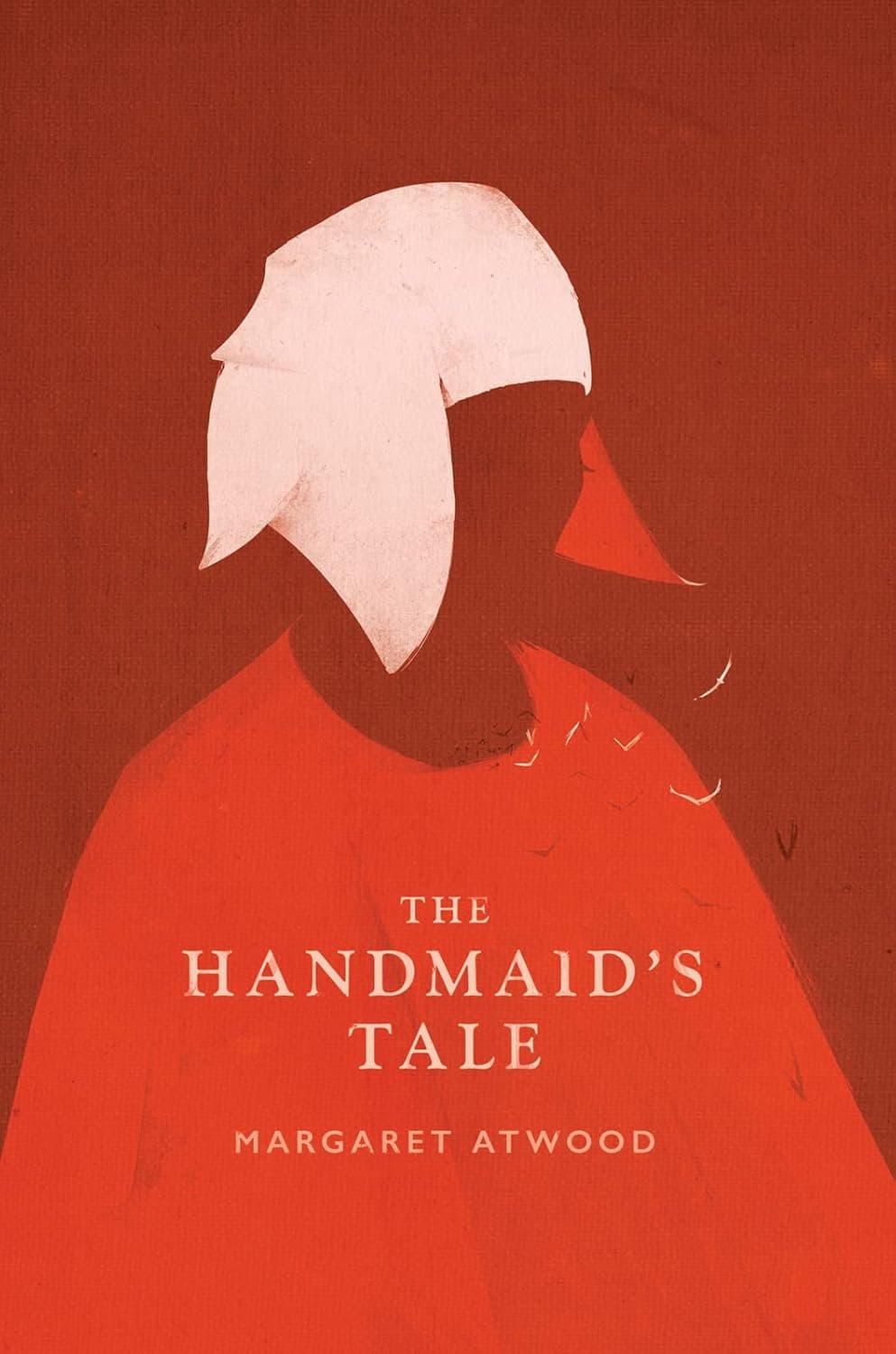
Should you read The Handmaid's Tale?
What works
Offred's attention to rooms, clothing, ritual phrases, and tiny exchanges shows how political power occupies ordinary life. Her uncertainty preserves both fear and a stubborn private self.
What may not work for you
The fragmented chronology can feel repetitive, and characters outside Offred's immediate memory remain necessarily partial. The racial politics of Gilead also receive far less attention than its gender system.
What may test your patience
The early chapters withhold names, institutions, and chronology while repeating domestic ceremonies. Orientation arrives slowly because Offred is protecting and revising her own account.
Does the ending reward the effort?
Yes. The final scholarly frame complicates the record without neutralizing it, exposing how future distance can turn a woman's danger into an object of clever professional discussion.
Reading The Handmaid's Tale closely
Offred's quiet, claustrophobic account of Gilead shows a theocratic state turning women's bodies into public property. Assigned to a Commander and his wife, she is forced into ritualized sex while remembering the marriage, child, and job she had before the coup.
Offred's narration moves back and forth between the time before and the present, so you see how small legal changes, media spin, and religious rhetoric slowly close every door around her. The voice is observant, darkly funny in flashes, and haunted by guilt about the loved ones she could not save. That focus on memory, storytelling, and unreliable detail means this is not just a plot driven dystopia but also a book about how people shape their own stories to stay sane.
If you are interested in the Handmaid's Tale themes of control and religion explained in more depth, the novel keeps showing how verses, symbols, and rituals are twisted to justify surveillance and reproductive control. Gilead is brutal, yet Atwood also pays attention to the shades of complicity and survival among women themselves, from Aunts and Wives to Marthas and Jezebels, so power never feels completely simple or one sided.
The Handmaid's Tale remains worth reading after watching the television series because the novel is tighter, more ambiguous, and more concerned with the pressure inside one person's mind than with large set pieces. The adaptation continues far beyond the original book, while the academic Historical Notes give Atwood's ending an irony and distance that the screen version cannot reproduce in the same way.
The Handmaid's Tale belongs beside 1984, Brave New World, and Fahrenheit 451 in any discussion of totalitarianism and private life. Our dystopian fiction collection and classic literature shelf trace those connections.
Three useful comparisons
1984
1984 maps ideological control more systematically and follows a male dissident toward direct confrontation. Atwood is more intimate about the body, domestic ritual, and unstable memory.
Best for: Readers interested in propaganda, surveillance, political language, and dystopias that offer pressure rather than escapism.
Brave New World
Brave New World controls reproduction through scientific conditioning and pleasure. The Handmaid's Tale uses scarcity, theology, and household hierarchy, with much greater emotional immediacy.
Best for: Readers who prefer idea-driven dystopia and social satire to intimate characterization or sustained suspense.
Never Let Me Go
Never Let Me Go also follows people raised inside a system that claims their bodies, but replaces open coercion with calm social acceptance. Choose it for quieter complicity and friendship.
Best for: Readers who value quiet speculative fiction, friendship, memory, and emotional implication over plot-driven rebellion.
Make the next decision