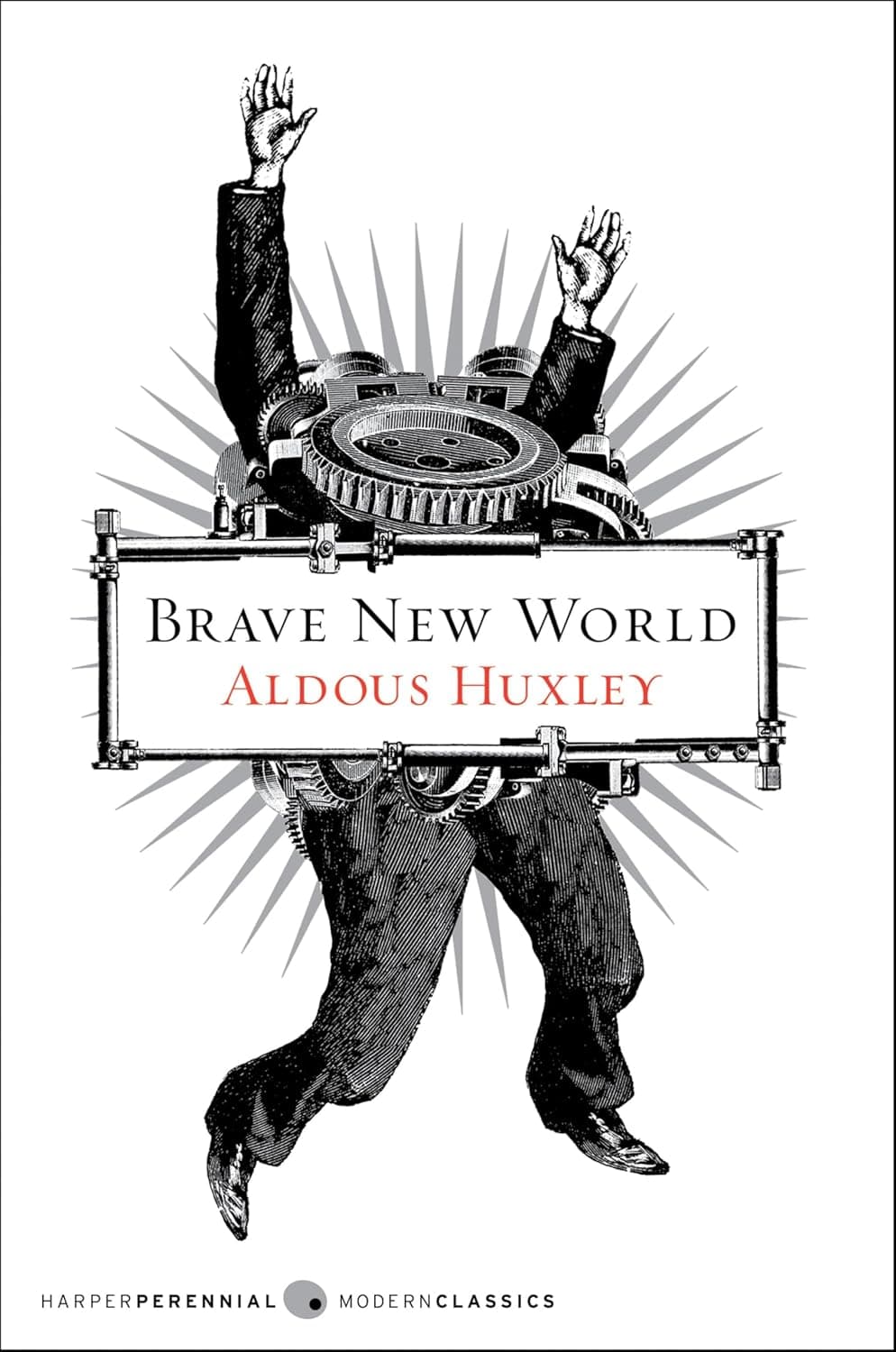
Should you read Brave New World?
What works
Huxley connects consumption, entertainment, sex, pharmaceuticals, and biological design into one coherent system. No single tyrant is required because citizens are conditioned to desire their assigned limits.
What may not work for you
The characters often function as positions in a debate, and the treatment of women and sexuality carries assumptions that now feel dated. The later philosophical exchange is intellectually clear but dramatically static.
What may test your patience
The early tour of hatcheries and conditioning methods arrives before there is anyone to care about. The satire becomes easier to inhabit once Bernard and Lenina begin moving through the world.
Does the ending reward the effort?
Yes, though the close is crueler than the book's comic opening suggests. It shows that private refusal can be absorbed and consumed by the society it rejects.
Reading Brave New World closely
Brave New World imagines a society engineered around comfort, conditioning, and consumption rather than freedom. Huxley's world still feels unsettling because its citizens have been trained to want the system that controls them.
Worldbuilding details like designer embryos, sleep teaching, and recreational soma give the novel a clinical sheen. Each element feeds a satirical critique of consumerist entertainment and state managed happiness, making it a smart companion to our dystopian fiction shelf.
Bernard, Helmholtz, and John never become conventional heroes. Their dissatisfaction exposes different limits in a society that treats discomfort as a defect and desire as something to be managed.
Why Brave New World still matters
Highlights the chilling balance between social engineering and surface level happiness.
Connects Huxley’s satire to modern conversations about technology, advertising, and control.
Helps readers frame the novel for book club discussions about individuality and conformity.
Three useful comparisons
1984
1984 imagines obedience maintained by terror and the destruction of truth. Brave New World is the better choice if manufactured pleasure and voluntary conformity interest you more than surveillance.
Best for: Readers interested in propaganda, surveillance, political language, and dystopias that offer pressure rather than escapism.
Never Let Me Go
Never Let Me Go explores a biologically ordered society through quiet friendship and loss rather than broad satire. Choose it for emotional intimacy and implication instead of public debate.
Best for: Readers who value quiet speculative fiction, friendship, memory, and emotional implication over plot-driven rebellion.
The Handmaid's Tale
The Handmaid's Tale centers reproductive control but refuses Huxley's detached comic distance. It is more personal, more historically grounded, and more attentive to how women remember life before the regime.
Best for: Readers interested in reproductive control, memory, religious authoritarianism, and narrators whose uncertainty is part of their resistance.