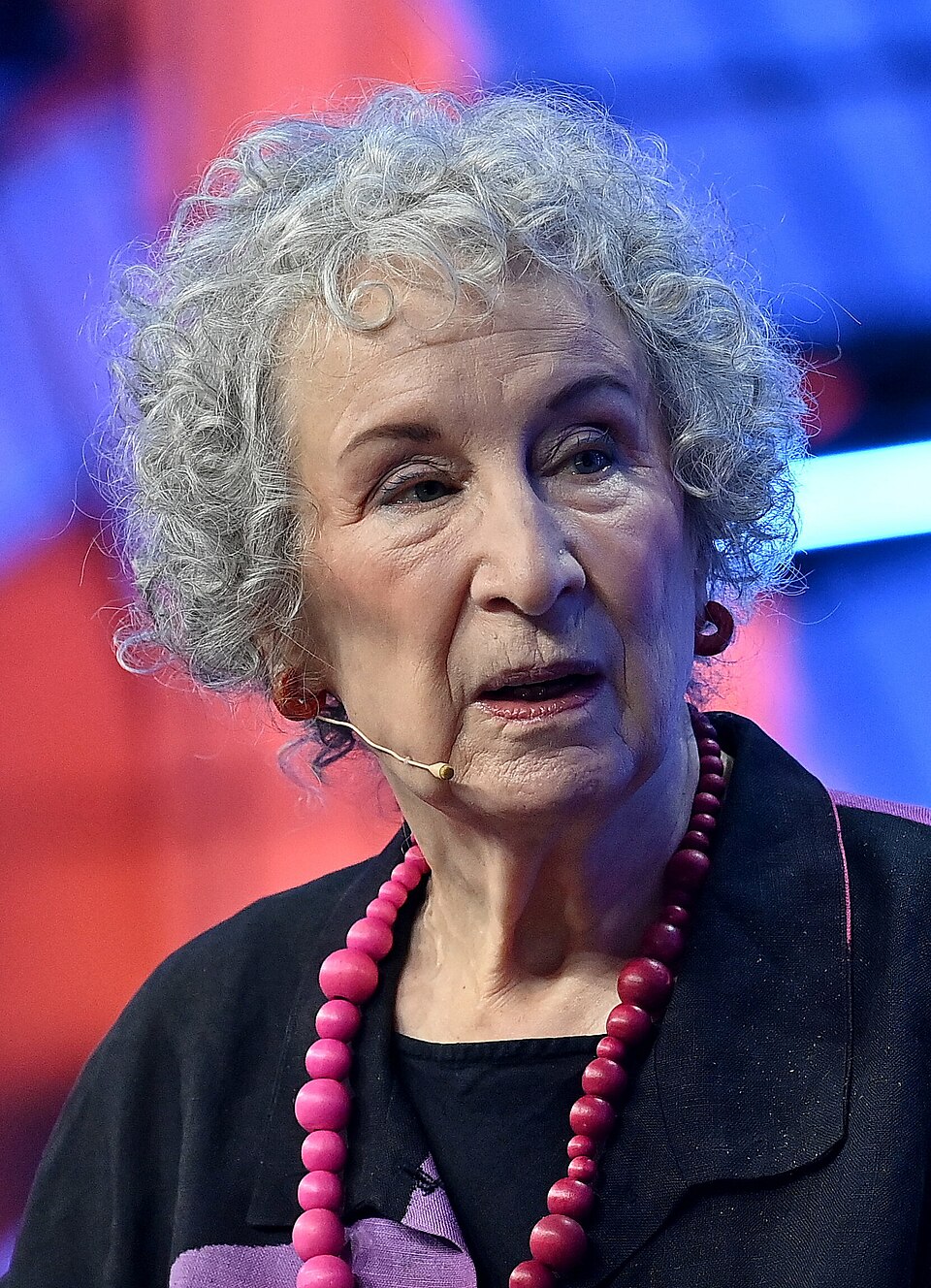
Portrait of Margaret Atwood
Photo: Collision Conf · CC BY 2.0

Author profile

Margaret Atwood: books, reviews, and where to start

Margaret Atwood writes across fiction, poetry, essays, and speculative forms, returning to power, gender, survival, ecology, and the unreliable stories people tell about their own innocence.

Born 1939writerpoetnovelist

Biography and criticism

Power observed from inside the room

Atwood's speculative worlds feel immediate because their technologies and punishments extend existing habits rather than arriving as remote inventions.

A Canadian literary life across forms

Margaret Atwood was born in Ottawa in 1939 and spent parts of childhood in northern environments because of her father's entomological work. She studied at Victoria College, University of Toronto, and Radcliffe, publishing poetry before novels brought wider recognition. Canadian landscape, survival, national identity, gender, and the politics of cultural authority shaped her early work without confining it.

Atwood's career moves easily among literary realism, historical fiction, myth revision, satire, and speculative futures. The Edible Woman, Surfacing, Cat's Eye, Alias Grace, The Blind Assassin, and the MaddAddam books are not variations on one dystopia. They share an interest in the story a person constructs to make complicity disappear.

Gilead and the historical present

The Handmaid's Tale gives Offred a voice constrained by surveillance and retrospective uncertainty. Gilead's practices draw on historical forms of patriarchal and religious control. This grounding is why the novel remains politically usable, though broad use can flatten its specific attention to race, class, fertility, and who is assigned which form of coercion.

Atwood's prose is sharp, image-rich, and often darkly comic. Wordplay is survival and evidence; a familiar phrase can reveal the ideology hidden inside ordinary language. The Testaments expands Gilead through multiple voices and more direct plot mechanics. Begin with The Handmaid's Tale, but read Alias Grace to see her historical ambiguity and Oryx and Crake for ecological and biotechnological satire. Atwood's great subject is not that power lies. It is that power recruits language people already know.

The books in context

How the work develops on the page

These notes connect the biography to specific choices in the books. Each title links to the full spoiler-free review.

This spoiler aware but careful review of The Handmaid's Tale by Margaret Atwood looks at how Offred's quiet, claustrophobic story inside Gilead shows what happens when a theocratic regime turns women's bodies into state property. You follow a single Handmaid assigned to a Commander and his wife, forced to undergo ritualized sex in the hope of becoming pregnant while remembering the ordinary marriage, child, and job she had before the coup.

Offred's narration moves back and forth between the time before and the present, so you see how small legal changes, media spin, and religious rhetoric slowly close every door around her. The voice is observant, darkly funny in flashes, and haunted by guilt about the loved ones she could not save. That focus on memory, storytelling, and unreliable detail means this is not just a plot driven dystopia but also a book about how people shape their own stories to stay sane.

If you are interested in the Handmaid's Tale themes of control and religion explained in more depth, the novel keeps showing how verses, symbols, and rituals are twisted to justify surveillance and reproductive control. Gilead is brutal, yet Atwood also pays attention to the shades of complicity and survival among women themselves, from Aunts and Wives to Marthas and Jezebels, so power never feels completely simple or one sided.

The Handmaid's Tale remains worth reading after watching the television series because the novel is tighter, more ambiguous, and more concerned with the pressure inside one person's mind than with large set pieces. The adaptation continues far beyond the original book, while the academic Historical Notes give Atwood's ending an irony and distance that the screen version cannot reproduce in the same way.

If you want more books like The Handmaid's Tale and 1984 about totalitarianism and control of private life, this novel sits comfortably alongside titles such as 1984, Brave New World, and Fahrenheit 451 in our shelves. Once you finish Offred's story, you can browse our dystopian fiction collection or look at Atwood's related work in classic literature. When you are ready to pick up the book, you can grab your copy of The Handmaid's Tale on Amazon and read it with those connections in mind.

Atwood lets Offred revise a sentence after writing it, offer alternate versions, or dwell on the sound inside a forbidden word. The prose makes narration itself one of the few actions still under her control.

Offred's attention to rooms, clothing, ritual phrases, and tiny exchanges shows how political power occupies ordinary life. Her uncertainty preserves both fear and a stubborn private self.

The fragmented chronology can feel repetitive, and characters outside Offred's immediate memory remain necessarily partial. The racial politics of Gilead also receive far less attention than its gender system.

The early chapters withhold names, institutions, and chronology while repeating domestic ceremonies. Orientation arrives slowly because Offred is protecting and revising her own account.

Yes. The final scholarly frame complicates the record without neutralizing it, exposing how future distance can turn a woman's danger into an object of clever professional discussion.

1984 maps ideological control more systematically and follows a male dissident toward direct confrontation. Atwood is more intimate about the body, domestic ritual, and unstable memory.

Brave New World controls reproduction through scientific conditioning and pleasure. The Handmaid's Tale uses scarcity, theology, and household hierarchy, with much greater emotional immediacy.

Never Let Me Go also follows people raised inside a system that claims their bodies, but replaces open coercion with calm social acceptance. Choose it for quieter complicity and friendship.

A tightly focused feminist dystopia that shows how everyday freedoms can vanish under the cover of religion and security.

A first person voice that blends fear, dark humor, and longing, making Offred feel painfully human rather than symbolic.

An ending that uses a future academic framing to question who gets to tell history and how regimes are remembered.

Readers who want a character driven dystopian novel that sits next to 1984 and Brave New World but puts reproductive rights at the center.

Viewers of the TV series who are curious about the original tone, structure, and book ending that inspired the adaptation.

Book clubs, students, and teachers looking for rich themes of gender, religion, power, and resistance to unpack in discussion.

Compare Offred's memories of the time before with her life in Gilead to track how quickly normal rights can disappear.

Map the different roles women hold in Gilead, from Handmaids and Wives to Aunts and Jezebels, and discuss how each role supports or undermines the system.

Pair The Handmaid's Tale with another totalitarian novel, such as 1984 or Fahrenheit 451, and talk about what each book suggests is most at risk when a regime takes over.

This The Handmaid's Tale review follows Offred inside the theocratic state of Gilead, where fertility becomes a tool of control and quiet acts of memory and resistance matter as much as open rebellion.

Read the complete review

Where to begin

A good place to start with Margaret Atwood

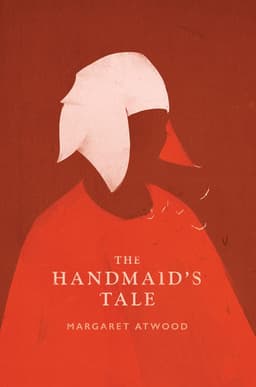
Cover of The Handmaid's Tale
Our highest-rated review

The Handmaid's Tale

4.6 / 5

The Handmaid's Tale makes authoritarianism frightening through routines, omissions, and compromised memories rather than through a distant catalogue of laws.

Reading order and buying help

Reading guides featuring Margaret Atwood

Reading dataDarkest genres

Bibliography

Books by Margaret Atwood

Reviewed titles open directly on Book Review Guide. Other editions and works remain marked until a full review is published.

Bibliographic records: Open Library.

Reviewed bibliography

Margaret Atwood books reviewed here

Every title below has a complete, spoiler-free review. Scores are our editorial ratings, not visitor averages.