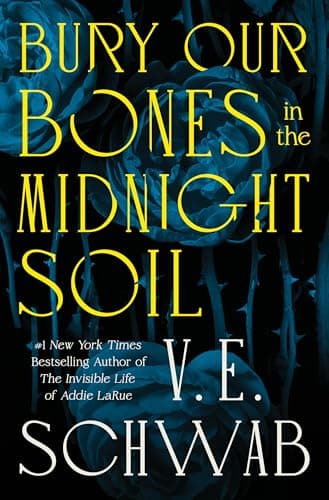
Should you read Bury Our Bones in the Midnight Soil?
What works
María, Charlotte, and Alice make immortality mean something different in each century, allowing desire, reinvention, predation, and loneliness to echo without collapsing into one moral.
What may not work for you
The recurring cycles of hunger and abandonment are intentionally patterned but can feel repetitive, and one timeline gains emotional force sooner than the others.
What may test your patience
The novel withholds the full relationship among its three stories, asking readers to live with separate beginnings before the lineage becomes visible.
Does the ending reward the effort?
Yes. The conclusion brings the patterns together without turning immortality into either uncomplicated liberation or automatic punishment.
Reading Bury Our Bones in the Midnight Soil closely
Bury Our Bones in the Midnight Soil follows women in different centuries whose attempts to escape the lives assigned to them lead toward immortality and a hunger that can never be neatly satisfied. María's sixteenth-century Spain, Charlotte's nineteenth-century London, and Alice's modern story gradually reveal a lineage shaped by desire, violence, and reinvention.
V. E. Schwab treats vampirism less as a system of powers than as a language for appetite and freedom. The novel is lush, nonlinear, sapphic, and deliberately repetitive in the way its characters circle similar needs under different social rules.
Three lives joined by hunger
The timelines echo rather than duplicate one another. Each woman gains freedom at a cost, and immortality preserves old wounds as readily as beauty or strength.
Three useful comparisons
Dracula
Dracula treats the vampire as an external invasive threat through documents and pursuit; Schwab centers the women who become hungry and lets desire shape the history.
Best for: Readers willing to accept Victorian pacing for Gothic atmosphere, epistolary suspense, and the source of countless vampire conventions.
The Picture of Dorian Gray
Dorian Gray is shorter and sharper about beauty, influence, and hidden corruption; Bury Our Bones gives immortality a wider female and historical range.
Best for: Readers who enjoy Gothic corruption, social wit, queer subtext, and novels suspicious of their own beautiful surfaces.
The Sirens
The Sirens also links women across time through bodily folklore, but favors family mystery and the sea over predation and erotic hunger.
Best for: Readers of atmospheric women's fiction wanting sisters, Australian coast, historical timelines, sea folklore, family inheritance, and light speculative horror.
Compare 10 more books like Bury Our Bones in the Midnight Soil