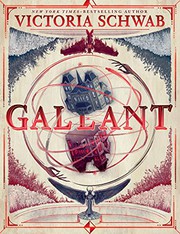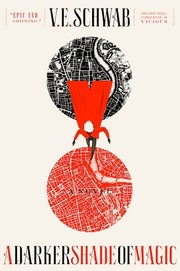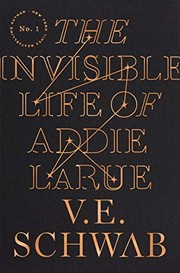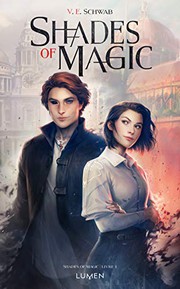
Portrait of V. E. Schwab

Author profile

V. E. Schwab: books, review, and bibliography

V. E. Schwab writes fantasy about identity, ambition, memory, desire, and people who refuse the roles assigned to them, even when freedom produces a new form of hunger.

Born 1987writerchildren's writernovelist
View 1 reviewed book

Biography and criticism

Doors, doubles, bargains, and the cost of being remembered

Schwab's career spans age categories and pen-name presentation, but the recurring drama is consistent: a character wants more life than the available world permits.

A career across shelves

Victoria Schwab was born in California in 1987, studied at Washington University in St. Louis, and began publishing young-adult fiction before building a broad adult fantasy readership. Books have appeared under Victoria Schwab and V. E. Schwab, distinctions associated with market and age category rather than separate creative identities.

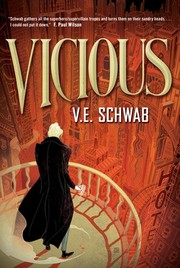
Vicious turns superhero power into rivalry, moral vanity, and resurrection. The Shades of Magic trilogy builds parallel Londons with different relationships to magic, anchored by travelers and a thief unwilling to remain small. The Invisible Life of Addie LaRue makes remembrance the price inside a centuries-long bargain.

The seductive rule and its loophole

Schwab favors clear magical premises with emotional consequences. A power, door, shadow, or bargain creates immediate desire, then reveals the person shaped by living under its rule. Her prose is atmospheric and quotable, sometimes repeating an image until symbolism becomes too explicit.

Bury Our Bones in the Midnight Soil uses vampire hunger across women's lives and historical constraints. Escape from prescribed identity brings appetite, freedom, and new forms of captivity. Vicious is the sharp entry for moral conflict, A Darker Shade of Magic for adventure, Addie LaRue for lyrical memory, and Bury Our Bones for Gothic desire. Schwab's enduring question is not whether a boundary can be crossed. It is what crossing teaches a person to consume.

Freedom is not the end of Schwab's bargain

Schwab's protagonists often begin with a restriction clear enough to oppose: a closed world, a mortal life, an assigned role, a body governed by another power. Crossing the boundary creates the story rather than resolving it. Freedom brings appetite, loneliness, responsibility, and the discovery that limitless movement can prevent lasting attachment.

Addie LaRue's bargain makes this pattern explicit. She escapes one prescribed future at the price of being forgotten. The curse grants time but attacks continuity, forcing her to leave traces without ordinary recognition. The novel is most persuasive when art becomes indirect memory and less persuasive when long life appears socially narrower than its premise permits.

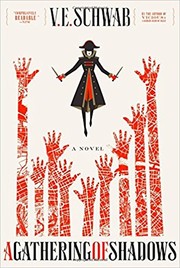
The Shades of Magic books use parallel cities to make access political. Kell's ability to travel is rare, useful, and controlled by royal obligation. Lila wants more than the life available to her, but daring alone does not make every risk harmless. Their attraction grows partly from recognizing the other's refusal to remain assigned.

Bury Our Bones in the Midnight Soil gives freedom a predatory body. Women escaping social confinement become capable of imposing confinement on others through hunger. Schwab does not withdraw the exhilaration of transformation; she lets exhilaration become evidence in the moral case. A power can be liberating and still demand an answer for what it consumes.

Narrative time and the cost of being remembered

Schwab often places a clean rule around time. A life may continue without memory, parallel worlds may be reached by a rare traveler, or immortality may preserve hunger while ordinary relationships disappear. The rule gives the story an immediate shape, but its purpose is emotional measurement. Time reveals which desire survives repetition and which identity depended on another person remembering it.

Her prose favors short emphatic units, recurring images, and chapter endings that keep long books moving. That accessibility can lead to reiteration after an image has already landed, especially when the narrative wants a feeling to acquire mythic weight. The stronger passages allow the rule to produce an unforeseen daily inconvenience: a signature that cannot remain, a door that no longer opens, a body whose freedom requires another body. Schwab's work is most distinctive when the elegant premise stops looking elegant from inside the life compelled to obey it.

Where to begin

The V. E. Schwab book reviewed here
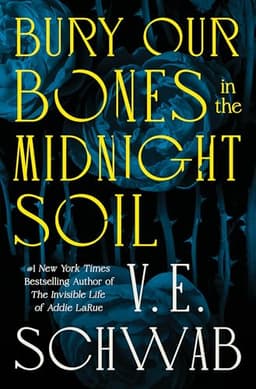
Cover of Bury Our Bones in the Midnight Soil
Reviewed on this site

Bury Our Bones in the Midnight Soil

4.4 / 5

Bury Our Bones in the Midnight Soil is a lush vampire novel about women escaping prescribed lives only to discover that limitless appetite creates its own form of captivity.

Bibliography

Books by V. E. Schwab

Reviewed titles open directly on Book Review Guide. Other editions and works remain marked until a full review is published.

Cover unavailable

Not reviewed yet

Warm Up

Bibliographic records: Open Library.

Reviewed bibliography

V. E. Schwab books reviewed here

Every title below has a complete, spoiler-free review. Scores are our editorial ratings, not visitor averages.