
Author profile
Tamika Thompson: books, review, and bibliography
Tamika Thompson writes horror about houses where family rules, old records, and a possible ghost all point toward something people have agreed not to discuss.
Biography and criticism
The family learned to ignore the haunting
In her fiction, a locked room or changed object matters because somebody already has a reason to deny what another person noticed.
Dark fiction across forms
Tamika Thompson is an American writer and editor of dark fiction whose work includes short stories and longer horror. She writes about Black lives, family history, and places where the official account leaves out what residents remember.
The Curse of Hester Gardens makes the estate's layout part of that history. Who could enter a room, whose account was dismissed, and which relative learned to keep quiet all matter before an apparition appears.
What the house says before the ghost appears
Thompson builds dread one household detail at a time. A room or object becomes troubling when it confirms something about how the family behaves. The older history matters because it explains who owned the house, who worked in it, and whose version of events survived.
Her best scenes tie a sound, object, or change in the building to a decision about whom to believe. Start with The Curse of Hester Gardens for the full haunted-estate story, then look to the shorter fiction for different approaches. The house becomes frightening well before anyone can prove there is a ghost.
What the rooms at Hester Gardens remember
A haunted house can offer a locked door, a cold room, and a sound upstairs as separate scares. Thompson is more interested in why the family has agreed not to open the door. Access, cleaning, inheritance, and privacy show who maintained Hester Gardens and whose experience was dismissed as an inconvenient rumor.
The historical strand matters because an estate does not become haunted at the moment a modern protagonist arrives. Wealth, land, race, and family legitimacy determine which account survived long enough to be called history. Thompson lets the supernatural disturb that official record, but she does not ask a ghost to provide the only proof. Material details and repeated behavior already indicate that something was arranged to disappear.
A character can notice a pattern and still know that speaking will invite an old accusation of instability, ingratitude, or disloyalty. Saying what happened is risky before any apparition attacks. The family already has words ready to explain why the witness should not be trusted.
The prose sometimes stays with the atmosphere after the point is clear, which slows the escalation. That patience also shows how ordinary the silence has become. Hester Gardens is frightening because the household seems to have practiced denying this problem for generations.
Household rules before supernatural proof
Keys, rooms, meals, repairs, old objects, and rules about where a guest should not go establish who controls the household before the haunting is confirmed. They show who is expected to serve, who may interrupt, and whose discomfort counts as bad manners. The house is already capable of hurting people before anything supernatural presses against those rules.
Thompson is patient with sounds and the physical marks of age. That patience can become repetitive once suspicion has turned into certainty. The better returns change something: a noise prompts a lie, an object alters an inheritance story, or a remembered phrase identifies the person left out of the official family account. The ghost matters because it makes polite denial harder to maintain.
Her short fiction helps explain that control. A short horror story cannot wait long before an object or gesture starts to look dangerous. Hester Gardens keeps some of that compression even at a slower pace. One family phrase can reveal who has practiced denying a problem, and one change in a familiar room can expose the history somebody tried to freeze.
Where to begin
The Tamika Thompson book reviewed here
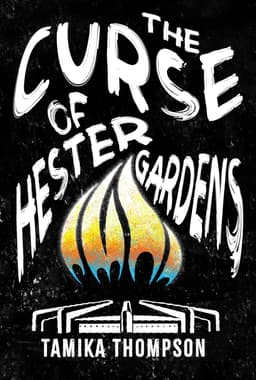
The Curse of Hester Gardens
4 / 5The Curse of Hester Gardens understands that a haunted estate is most frightening when its rooms preserve a family's habits of silence, not merely its ghosts.
Bibliography
Books by Tamika Thompson
Reviews and book guides open on Book Review Guide. The full list comes from the linked bibliography source.
Reviewed
The Curse of Hester Gardens

Not reviewed yet
Error Code
Not reviewed yet
Building

Not reviewed yet
Unshod, Cackling, and Naked
Not reviewed yet
Poems of Purpose and Position
Not reviewed yet
Graffiti
Not reviewed yet
Salamander Justice
Bibliographic source: Open Library.
Books on this site
Tamika Thompson reviews and guides
20264 / 5
The Curse of Hester Gardens
A Novel
As an Amazon Associate, I earn from qualifying purchases.
Keep exploring