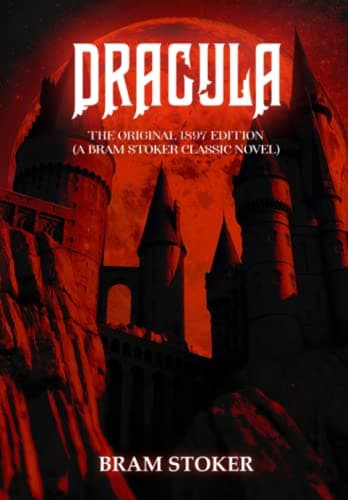
Should you read Dracula?
What works
The threat becomes credible through accumulation. Journals, letters, newspaper reports, ship logs, and medical notes let different witnesses record pieces of a danger none can initially name.
What may not work for you
The middle slows after the intensity of Jonathan's stay at the castle, and the group's repeated praise of one another can become tedious. Several gender assumptions are inseparable from the period.
What may test your patience
The extended medical watch over Lucy repeats visits, transfusions, and temporary recoveries. The delay builds helplessness, but it is the section most likely to test a modern reader's patience.
Does the ending reward the effort?
Mostly. The pursuit gathers the documents and characters into one urgent line, though the final confrontation is surprisingly brief after such a long preparation.
Reading Dracula closely
Dracula assembles Jonathan Harker's journal, letters, newspaper reports, recordings, and medical notes into a shared record of Count Dracula's arrival in England. No single narrator understands the threat at first; the group survives by combining evidence that modern institutions initially keep separate.
The epistolary form produces both immediacy and uneven pacing. The opening in Transylvania is concentrated Gothic terror, while later sections become investigation, pursuit, and anxious debate about technology, sexuality, blood, and invasion.
A vampire reconstructed from documents
Dracula rarely explains himself. His power grows through the traces, absences, and bodily changes recorded by other people, preserving mystery around an extremely familiar cultural figure.
Victorian attitudes and modern readers
The novel contains sexism, xenophobia, colonial anxiety, and dated medical ideas. Context helps readers examine these features without treating them as neutral truths.
Three useful comparisons
Frankenstein
Frankenstein is more philosophically intimate and gives its supposed monster a voice. Dracula offers a broader team, a clearer external threat, and more procedural pursuit.
Best for: Readers interested in responsibility, isolation, unreliable self-justification, and Gothic philosophy more than conventional horror.
The Shining
The Shining keeps supernatural danger inside one family and one hotel, with addiction and resentment sharpening the haunting. Choose it for psychological closeness and a faster modern style.
Best for: Readers who want a long haunted-house novel grounded in addiction, family fear, and a child's vulnerable perception.
What Moves the Dead
What Moves the Dead compresses Gothic illness, a decaying estate, and documentary observation into a novella. It is a useful choice when you want similar unease without Dracula's long campaign.
Best for: Best for anyone who wants a short Gothic retelling, fungal horror, body unease, and a practical narrator with flashes of dry humor.
Make the next decision