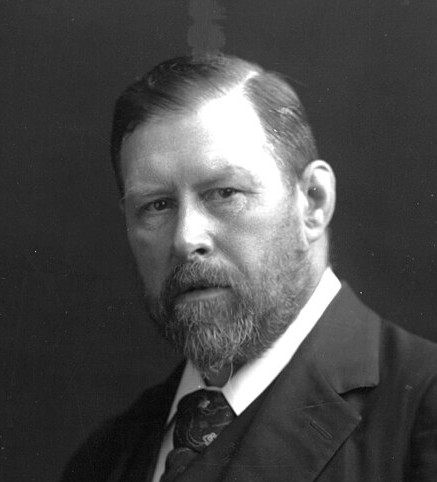
Portrait of Bram Stoker

Author profile

Bram Stoker: books, review, and bibliography

Bram Stoker spent much of his working life managing Henry Irving's theatrical career, yet one strange, documentary Gothic novel made his name inseparable from the modern vampire.

1847-1912writerjournalistnovelist
View 1 reviewed book

Biography and criticism

The theatre manager who assembled Dracula

Stoker's biography reveals a practical man of the theatre, not an isolated occult dreamer. Dracula emerged from research, performance culture, technological anxiety, and a gift for arranging voices.

Illness, Dublin, and an unexpected physical life

Abraham Stoker was born in Clontarf, Dublin, in 1847. He was seriously ill during much of his early childhood and spent years confined to bed, listening to stories told by his mother. He later recovered, attended Trinity College Dublin, and became notably active in athletics as well as university debating and historical societies. The contrast between childhood immobility and adult physical confidence is tempting material for easy psychological explanations, but the safer conclusion is practical: Stoker knew both the inward world of enforced stillness and the social discipline of institutions.

After university he entered the Irish civil service and wrote theatre criticism for the Dublin Evening Mail. His admiration for the actor Henry Irving changed his life. Stoker became Irving's business manager and later managed London's Lyceum Theatre, work that demanded scheduling, touring, publicity, money, correspondence, diplomacy, and constant attention to performance. He was close to celebrity without primarily being the celebrity. That position, half inside the spectacle and half responsible for keeping it functional, illuminates the careful stage management of his fiction.

Writing around the Lyceum

Stoker wrote novels, stories, nonfiction, and theatre-related work while managing a punishing professional life. Dracula, published in 1897, was not his only novel and did not immediately make him wealthy or universally celebrated. It emerged from years of notes and reading that brought together vampire folklore, travel writing, medical ideas, contemporary technology, and the geography of Whitby and Transylvania. The historical Vlad III contributed a name and suggestive associations, but the Count is a literary construction rather than a disguised biography of the Wallachian ruler.

The Lyceum years also taught Stoker how an entrance works. Dracula is often absent while other characters describe the effects of his presence. Rooms are prepared, documents arrive, witnesses disagree, and a threat acquires authority through anticipation. Like an actor whose reputation reaches the audience before he steps onstage, the Count is built by reaction. The novel's theatricality does not make it shallow. It makes fear a collaborative production.

A novel assembled from evidence

Dracula is composed from journals, letters, telegrams, newspaper reports, memoranda, phonograph recordings, and other documents. This form lets Stoker move among perspectives while asking the reader to perform investigative labor. The characters copy, compare, order, and circulate records until scattered private experiences become a common case. Modern tools do not defeat ancient evil automatically. They become useful only when people share information across the boundaries of profession and gender.

The documentary structure also creates productive instability. Every account is shaped by fear, limited knowledge, and social convention. The men repeatedly misread women's strength while depending on Mina's organizational intelligence. Medical authority confronts events it cannot classify. Foreignness, sexuality, blood, disease, immigration, and inheritance gather around the vampire in ways that reflect Victorian anxieties without resolving into one code. Attempts to declare the Count a single symbol usually reduce the novel's crowded energy.

Uneven prose, durable architecture

Stoker's prose can be melodramatic, repetitive, and burdened by phonetic dialect. The middle of Dracula slows as characters restate evidence and praise one another's virtue. Yet the novel's architecture remains remarkably effective. Jonathan Harker's opening journey narrows freedom one polite step at a time. The Demeter sequence creates horror through an official log whose entries become increasingly impossible. Lucy's decline turns care, medicine, and voyeurism into an unsettling shared ritual. Mina's records then transform victimized observation into organized resistance.

Stoker died in 1912, before Dracula became the immense cultural property it is now. Stage and film adaptations simplified, altered, and popularized the Count, often making him suave, romantic, or centrally visible in ways the novel does not. Returning to Stoker reveals a stranger book: technologically alert, structurally experimental, anxious about bodies and borders, and powered by teamwork as much as pursuit. Its influence survives because each generation can recognize a different fear in the same assembled evidence.

Where to begin

The Bram Stoker book reviewed here
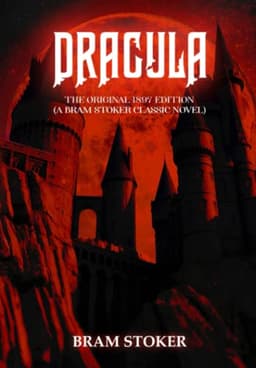
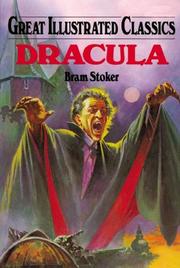
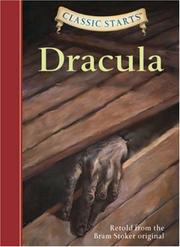
Cover of Dracula
Reviewed on this site

Dracula

4.3 / 5

Dracula is uneven and occasionally repetitive, but its documentary structure still turns scattered clues into exceptionally durable dread.

Reading order and buying help

Reading guides featuring Bram Stoker

Reading dataDarkest genres

Bibliography

Books by Bram Stoker

Reviewed titles open directly on Book Review Guide. Other editions and works remain marked until a full review is published.

Bibliographic records: Open Library.

Reviewed bibliography

Bram Stoker books reviewed here

Every title below has a complete, spoiler-free review. Scores are our editorial ratings, not visitor averages.

Cover of Dracula

18974.3 / 5

Dracula

A Novel

Dracula is uneven and occasionally repetitive, but its documentary structure still turns scattered clues into exceptionally durable dread.

Read the review
See current formats on Amazon

As an Amazon Associate, I earn from qualifying purchases.