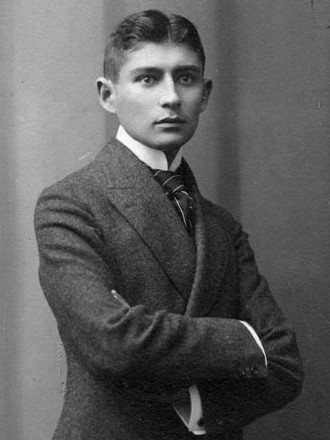
Portrait of Franz Kafka
Photo: Atelier Jacobi: Sigismund Jacobi (1860–1935) · Public domain

Author profile

Franz Kafka: books, reviews, and where to start

Franz Kafka turned offices, families, law, shame, and unexplained authority into lucid nightmares whose comedy is as important as their dread.

1883-1924novelistshort story writer

Biography and criticism

The exact sentence inside the impossible situation

Kafka's reputation for darkness can hide the social precision, irony, and self-conscious performance of a writer who knew bureaucracy from the inside.

Prague, work, and the pressure of family

Franz Kafka was born in Prague in 1883 into a German-speaking Jewish family. He studied law and worked mainly for the Workers' Accident Insurance Institute, where he dealt with industrial injury, prevention, reports, and administrative systems. The job was not simply dead time stolen from literature. It gave him exact knowledge of how institutions classify damage and how responsibility can dissolve inside procedure.

His relationship with his forceful father Hermann, his attachments and broken engagements, his friendships, Jewish identity, and uncertainty about marriage all enter the diaries and fiction without mapping neatly onto allegory. Letter to His Father is an extraordinary act of self-analysis and rhetorical arrangement, not an objective transcript of family life. Kafka wrote largely outside public fame and died of tuberculosis in 1924.

Plain language, impossible premises

The Metamorphosis begins by stating Gregor Samsa's transformation with grammatical calm. The story does not spend its energy proving how a man became an insect-like creature. It follows work anxiety, family adaptation, money, care, disgust, and the speed with which a dependent household turns its provider into an obstruction. The impossibility is stable; ordinary behavior becomes the horror.

The Trial and The Castle use unfinished structures to place protagonists inside systems whose authority is everywhere and whose rules remain inaccessible. Kafka's prose is precise rather than misty. Officials explain, assistants arrive, rooms fill, and each practical attempt deepens uncertainty. The situations are also comic. Characters argue over procedure with desperate seriousness while the arrangement becomes absurd. Laughter prevents the works from becoming solemn codes with one secret answer.

The afterlife Max Brod chose

Kafka asked his friend Max Brod to destroy much of his unpublished writing. Brod refused and prepared the unfinished novels and other works for publication. The decision made Kafka's global reputation possible while creating a permanent ethical problem around authorial intention and editorial intervention. Later scholarship has worked to clarify manuscript order and remove some of Brod's interpretive framing.

The Metamorphosis is the accessible beginning. The Trial supplies the central image of accusation without intelligible charge. The Castle is slower and more socially comic, while the short parables reveal how much pressure Kafka can place on a few sentences. His influence survives whenever power demands compliance before explanation and the accused person begins searching himself for the rule he must somehow have broken.

The books in context

How the work develops on the page

These notes connect the biography to specific choices in the books. Each title links to the full spoiler-free review.

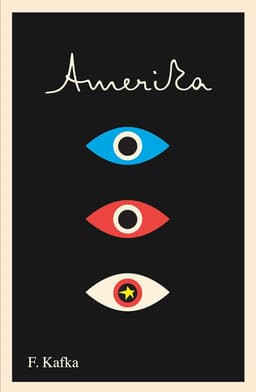
In this spoiler free look at Amerika (The Man Who Disappeared), Franz Kafka imagines the United States as a shifting, dreamlike place seen through the eyes of young Karl Rossmann. Sent overseas after a scandal, Karl moves from one strange environment to another while chasing stability and recognition.

America appears as grand hotels, endless ships, crowded boarding houses, and vast workplaces, all described through Karl's uncertain perceptions. Technology, corporate structures, and social hierarchies loom large, but opportunities constantly change shape or collapse at the last minute.

Karl is earnest, passive, and eager to do the right thing, which makes him a useful lens for exploring class tension and casual cruelty. People who seem generous can turn exploitative quickly, and small misunderstandings have big consequences, keeping the tone on the edge between comedy and menace.

Because Kafka left Amerika unfinished, the famous Nature Theatre of Oklahoma sequence has sparked decades of interpretation about what it means for Karl's future. That open ending helps the novel function as both a social satire and a strangely hopeful story about reinvention.

Kafka imagines America from secondhand material, so geography and scale behave like dream logic. Practical details are precise within scenes even when the larger country makes no realistic sense.

Karl is repeatedly welcomed, employed, judged, and expelled by institutions whose rules he learns too late. The constant changes of fortune give exploitation the rhythm of adventure.

The episodic structure lacks a cumulative center, some comic figures stretch into grotesque caricature, and the surviving manuscript stops just as the Nature Theatre opens a new direction.

The prolonged service under Brunelda traps Karl in a deliberately humiliating domestic arrangement. The farce repeats its power imbalance after the point is clear.

No complete ending survives. The Nature Theatre fragment offers a striking, unexpectedly open horizon, but it remains a beginning to a final movement rather than a payoff.

The Trial is more claustrophobic and formally coherent, with one accusation organizing every encounter. Amerika is younger, looser, and more interested in employment and movement.

The Castle fixes its outsider in one village and one impossible petition. Amerika keeps changing institutions, making dependence feel mobile rather than frozen.

A Hunger Artist and Other Stories offers Kafka's ideas in tighter, completed forms. Choose the collection if Amerika's episodic incompleteness is more frustrating than intriguing.

A dreamlike tour of an imagined United States that mixes satire, modernist experimentation, and coming of age energy.

Map Karl's journey from city to city to see how each move changes his social and economic position.

Compare key episodes with historical accounts of early twentieth century immigration to check where Kafka exaggerates or captures real dynamics.

Discuss the Nature Theatre of Oklahoma chapters as a group and consider why they feel both hopeful and unsettling.

Kafka reimagines the United States as a shifting dream where young Karl Rossmann navigates ambition, exploitation, and fragile hope.

Read the complete review

This spoiler free review of The Metamorphosis focuses on how Franz Kafka turns a single strange event into an intense, claustrophobic story about family and work. Gregor Samsa wakes up transformed, and from that moment the novella treats the impossible in a calm, matter of fact tone that makes it even more unsettling.

Kafka's sentences are clean and controlled, which lets ordinary objects carry most of the emotional weight. Doors, keys, furniture, and scraps of food become symbols for exclusion, duty, and disgust. The apartment feels smaller with every page, mirroring Gregor's shrinking place in the household.

The Metamorphosis is short but rich with ideas about alienation, burnout, and how quickly "useful" people are discarded when they can no longer work. It is also a great introduction to modernist literature, since it is easier to read than many long novels but leaves a lasting impression.

For extra context on Kafka's influence and different interpretations of this story, you can visit the essays at FranzKafka.net, which collect criticism, biography, and background material.

Kafka reports the impossible transformation in exact, practical sentences and lets Gregor worry first about missing work. The neutral syntax refuses the emotional response the premise seems to demand.

Kafka treats transformation as an immediate household problem. Work, rent, food, doors, furniture, and embarrassment make the fantastic premise feel brutally administrative.

The family's cruelty can become schematically complete, and the women around Gregor are filtered through his guilt and need rather than granted equal interior depth.

The middle routine of feeding, hiding, and overhearing deliberately traps the story in Gregor's room. Its repetition is suffocating, though the novella is short enough that it never becomes unmanageable.

Yes. The family's relief is more disturbing than a tragic lament would have been because it exposes the economic judgment present from the first page.

The Trial expands Kafka's logic of unexplained accusation across courts, offices, and a city. Choose it for bureaucratic sprawl; choose The Metamorphosis for concentrated family pressure.

Frankenstein gives the rejected being eloquent self-analysis and a creator to confront. Gregor remains trapped in domestic misunderstanding, making abandonment quieter and more mundane.

Animal Farm also uses nonhuman bodies to expose human systems, but its allegory is historically legible and public. Kafka's target remains intimate, unstable, and resistant to one interpretation.

Students looking for a short, influential text that is accessible in translation but offers a lot to analyze.

Use a notebook to track how Gregor, Grete, and the parents change roles and attitudes throughout the story.

Read the complete review

Our The Castle book review stays spoiler free while sketching the basic setup: a land surveyor known as K. arrives in a snowbound village dominated by a distant Castle whose officials control every aspect of local life. From there, the book becomes a study of bureaucracy, longing, and frustration.

The setting is a major part of the experience. Inns, schools, cramped offices, and private homes constantly shift in importance as letters arrive, decisions are reversed, and rules are quietly rewritten. Everything seems to depend on the Castle, yet it remains just out of reach.

K. is stubborn, flawed, and determined to claim his position, which turns even simple conversations into clashes between personal logic and collective obedience. Side characters like Barnabas, Frieda, and the ever present assistants complicate alliances and make the village feel alive rather than purely symbolic.

Readers who want more context can visit Kafka Online's The Castle overview for historical background and critical commentary on this unfinished novel.

Read the complete review

Where to begin

A good place to start with Franz Kafka

Cover of The Metamorphosis
Our highest-rated review

The Metamorphosis

4.6 / 5

The Metamorphosis is terrifying because Gregor's impossible body changes less than his family's practical calculation of what he is worth.
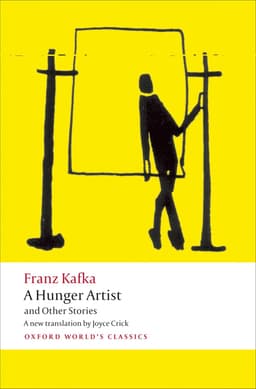
Cover of A Hunger Artist and Other Stories
Most recently added

A Hunger Artist and Other Stories

4.4 / 5

A Hunger Artist and Other Stories shows Kafka at his most concentrated, where one impossible situation can expose an entire economy of shame, attention, and authority.
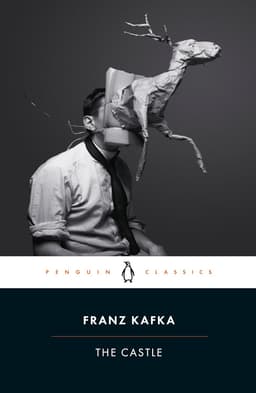
Cover of The Castle
Another route in

The Castle

4.2 / 5

The Castle is exhausting by design, turning the desire to belong and be recognized into an endless negotiation with absent authority.

Reading order and buying help

Reading guides featuring Franz Kafka

Classic author starting guideWhere to start with Franz KafkaWeekend readingWeekend reads

Bibliography

Books by Franz Kafka

Reviewed titles open directly on Book Review Guide. Other editions and works remain marked until a full review is published.

Cover unavailable

Not reviewed yet

Amerika

Cover unavailable

Not reviewed yet

Dava

Cover unavailable

Not reviewed yet

Qaṣr

Cover unavailable

Not reviewed yet

America

Cover unavailable

Not reviewed yet

Castle

Cover unavailable

Not reviewed yet

Heizer

Cover unavailable

Not reviewed yet

Trial

Cover unavailable

Not reviewed yet

Prozeß

Cover unavailable

Not reviewed yet

Bau

Cover unavailable

Not reviewed yet

Schloß

Cover unavailable

Not reviewed yet

Urteil

Bibliographic records: Open Library.

Reviewed bibliography

Franz Kafka books reviewed here

Every title below has a complete, spoiler-free review. Scores are our editorial ratings, not visitor averages.

Cover of The Castle

19984.2 / 5

The Castle

Kafka Review of Bureaucratic Surrealism

The Castle is exhausting by design, turning the desire to belong and be recognized into an endless negotiation with absent authority.

Read the review
See current formats on Amazon

As an Amazon Associate, I earn from qualifying purchases.

Cover of The Trial

19984.5 / 5

The Trial

Kafka Review of Existential Legal Dread

The Trial turns bureaucracy into a social atmosphere so complete that Josef K. cannot tell whether resistance, cooperation, and self-defense are different acts.

Read the review
See current formats on Amazon

As an Amazon Associate, I earn from qualifying purchases.