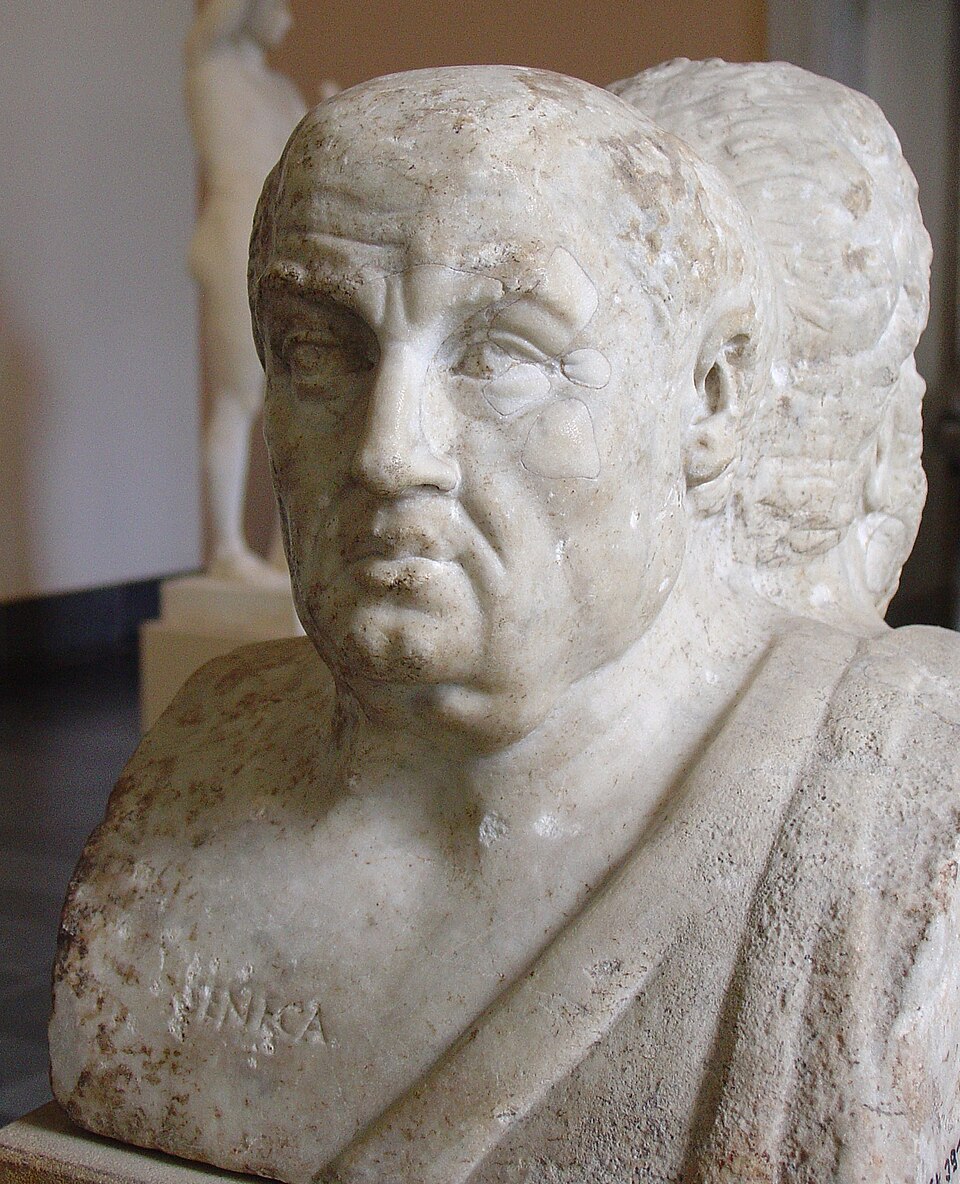
Portrait of Seneca
Photo: Calidius · CC BY-SA 3.0

Author profile

Seneca: books, reviews, and where to start

Seneca wrote practical advice about anger, fear, time, wealth, and death while living close to Roman imperial power and benefiting greatly from it. The contradiction belongs in any honest reading.

playwrightpoetphilosopher
View 7 reviewed books

Biography and criticism

Stoic discipline written from inside imperial power

The essays and letters still feel practical because Seneca talks directly about problems people actually have. His own wealth and political compromises do not cancel the advice, but they do test it.

Exile, return, and the court of Nero

Lucius Annaeus Seneca was born in Corduba around the beginning of the Common Era and educated in Rome. He pursued rhetoric, philosophy, public office, and writing while managing serious illness. Exiled to Corsica under Claudius, he was later recalled and became tutor and adviser to the young Nero. For a period he helped govern near the center of imperial power and accumulated great wealth.

That position complicates every modern image of Seneca as a detached teacher of simple living. He advocated restraint while benefiting from empire, wrote consolation during exile while seeking recall, and eventually tried to withdraw from Nero's court. Accused of involvement in the Pisonian conspiracy, he was ordered to die in 65 CE and compelled to take his own life.

Advice from someone still practicing

Letters on Ethics is addressed to Lucilius, but Seneca writes like a teacher trying the lesson alongside you. He moves from short advice about time, friendship, illness, fear, slavery, travel, reading, and death into harder arguments about what makes a life good. The sentences are memorable, but he does not pretend that writing the right sentence means he has finished the work.

On Anger treats rage as a process that can be interrupted, not as a noble force that takes control all at once. On Benefits looks at giving and gratitude, including the damage done when every gift becomes a calculation. Natural Questions connects the physical world with human conduct, though the science belongs to antiquity. The tragedies, especially Thyestes and Phaedra, are far more extreme than the calm essays. Hardship and Happiness is the easiest collection to start with; Letters on Ethics gives the fullest picture. Read Seneca as neither a perfect sage nor a hypocrite worth dismissing. He knew how easily philosophy becomes decoration when the person quoting it is comfortable and powerful.

Where to begin

A good place to start with Seneca
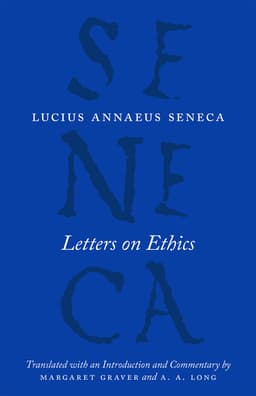
Cover of Letters on Ethics
Highest rated here

Letters on Ethics

4.8 / 5

Letters on Ethics is Seneca's most complete encounter with a reader. The 124 letters move from time, friendship, illness, and fear into demanding arguments about virtue, while retaining the pressure of a person trying to make philosophy answer to a life.
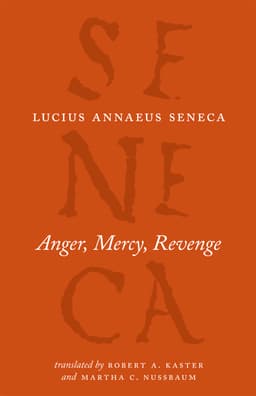
Cover of Anger, Mercy, Revenge
Most recently added

Anger, Mercy, Revenge

4.5 / 5

Anger, Mercy, Revenge is an unusually honest introduction to Seneca's contradictions. It condemns rage, instructs a young ruler in restraint, and then closes with a savage satire that enjoys humiliating a dead emperor.
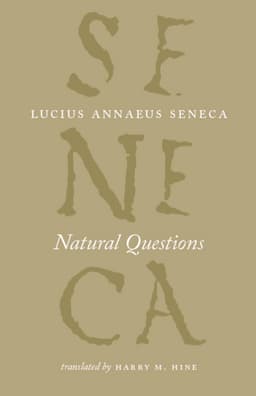
Cover of Natural Questions
Another place to start

Natural Questions

4.3 / 5

Natural Questions is most rewarding when Seneca lets physical inquiry enlarge the scale of human life. Its science is historical, but the urgency with which it joins observation, wonder, and moral judgment still feels alive.

Bibliography

Books by Seneca

Reviews and book guides open on Book Review Guide. The full list comes from the linked bibliography source.
Cover unavailable

Not reviewed yet

Seneca

Cover unavailable

Not reviewed yet

Opera

Bibliographic source: Open Library.

Books on this site

Seneca reviews and guides

Cover of Anger, Mercy, Revenge

20104.5 / 5

Anger, Mercy, Revenge

On Anger, On Clemency, and The Pumpkinification of Claudius

Anger, Mercy, Revenge is an unusually honest introduction to Seneca's contradictions. It condemns rage, instructs a young ruler in restraint, and then closes with a savage satire that enjoys humiliating a dead emperor.

Read the review
See current formats on Amazon

As an Amazon Associate, I earn from qualifying purchases.

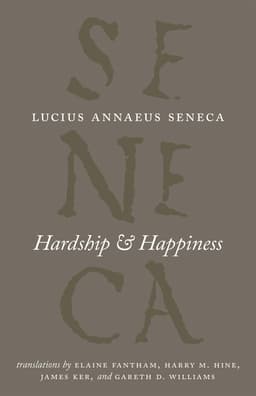
Cover of Hardship and Happiness

20144.7 / 5

Hardship and Happiness

Nine Essays on Consolation and the Good Life

Hardship and Happiness is the best single-volume introduction to Seneca's essays. Its consolations and arguments about time, tranquility, leisure, happiness, and providence show both the practical force of Stoicism and the political compromises of its author.

Read the review
See current formats on Amazon

As an Amazon Associate, I earn from qualifying purchases.

Cover of Letters on Ethics

20154.8 / 5

Letters on Ethics

To Lucilius

Letters on Ethics is Seneca's most complete encounter with a reader. The 124 letters move from time, friendship, illness, and fear into demanding arguments about virtue, while retaining the pressure of a person trying to make philosophy answer to a life.

Read the review
See current formats on Amazon

As an Amazon Associate, I earn from qualifying purchases.

Cover of Natural Questions

20104.3 / 5

Natural Questions

Translated by Harry M. Hine

Natural Questions is most rewarding when Seneca lets physical inquiry enlarge the scale of human life. Its science is historical, but the urgency with which it joins observation, wonder, and moral judgment still feels alive.

Read the review
See current formats on Amazon

As an Amazon Associate, I earn from qualifying purchases.

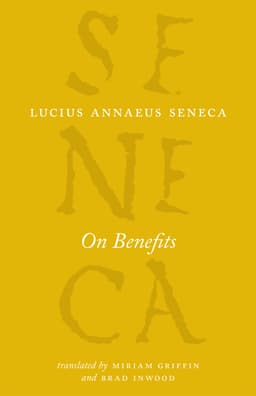
Cover of On Benefits

20114.2 / 5

On Benefits

Translated by Miriam Griffin and Brad Inwood

On Benefits turns the ordinary favor into a demanding ethical relationship. Its distinctions can be repetitive, but few books examine so carefully how generosity is corrupted by display, calculation, resentment, and the wish to own another person's gratitude.

Read the review
See current formats on Amazon

As an Amazon Associate, I earn from qualifying purchases.

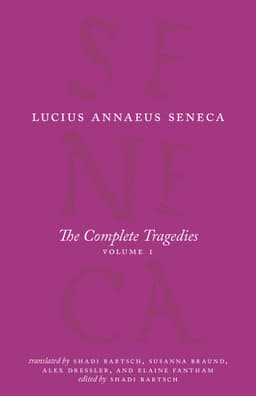
Cover of The Complete Tragedies, Volume 1

20174.6 / 5

The Complete Tragedies, Volume 1

Medea, The Phoenician Women, Phaedra, The Trojan Women, Octavia

Volume 1 gives Medea, Phaedra, and the women of Troy language fierce enough to contest the powers destroying them. Its incomplete and disputed works make the collection uneven, but they also show how Senecan tragedy became a political form beyond Seneca.

Read the review
See current formats on Amazon

As an Amazon Associate, I earn from qualifying purchases.

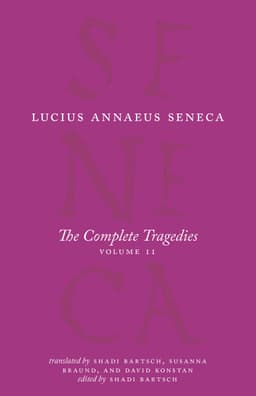
Cover of The Complete Tragedies, Volume 2

20174.6 / 5

The Complete Tragedies, Volume 2

Oedipus, Hercules Mad, Hercules on Oeta, Thyestes, Agamemnon

Volume 2 contains Seneca's most horrifying play in Thyestes and his most bruising studies of heroic collapse. The verse translations are forceful, although five tragedies of relentless extremity are better read separately than consumed as one continuous book.

Read the review
See current formats on Amazon

As an Amazon Associate, I earn from qualifying purchases.