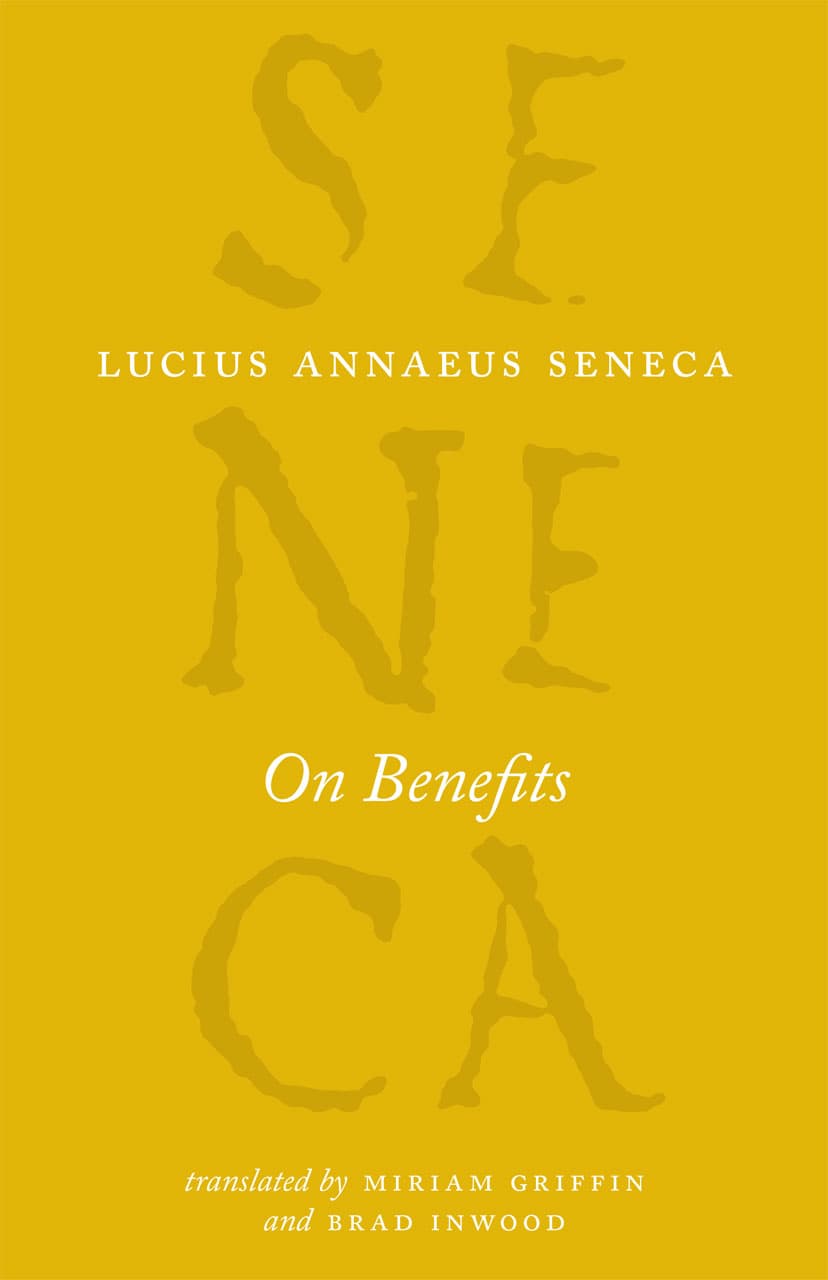
Should you read On Benefits?
What works
Seneca insists that a benefit lies chiefly in the giver's intention rather than the object transferred. That principle lets him separate gratitude from exact repayment and expose gifts designed as social traps. Griffin and Inwood make the argumentative turns clear while preserving their Roman stakes.
What may not work for you
Seven books generate many hypothetical exceptions after the main insight is established. More seriously, the discussion observes hierarchy, patronage, and enslavement without fully challenging the system that gives elite benefactors so much control over who can give, receive, and be considered ungrateful.
What may test your patience
Books four through six revisit failed gifts, forgetful recipients, repayment, and competing duties through tightly distinguished cases. Readers need to enjoy moral classification and argument by example rather than expect a continuously developing thesis.
Does the ending reward the effort?
Yes. The final book returns the long debate to character: the good person gives well without demanding control and receives gratefully without converting every human relationship into an account to be balanced.
Reading On Benefits closely
On Benefits examines what happens after one person does something for another. A gift may look simple, but Seneca sees a field of intention, timing, recognition, status, memory, and expectation. The seven books ask when giving becomes generous, when receiving becomes grateful, and how both actions are damaged when repayment is treated as ownership.
The central distinction separates the material object from the benefit itself. Money, access, protection, advice, or service can carry a benefit, but the ethical act lies in a will directed toward another person's good. A costly gift offered to display superiority may be worse than a small gift chosen with attention. An unreturned object does not automatically prove an ungrateful mind.
This approach gives Seneca room to handle difficult cases. What if the recipient later becomes an enemy? Can someone unknowingly provide a benefit? Should a favor be returned to a bad person? Is gratitude still owed when the giver's motive was corrupt? The imagined objections make the work more flexible than a manual of Roman etiquette, although they also produce considerable repetition.
Roman patronage is never far away. Benefits helped organize relations among friends, clients, political allies, households, and people with sharply unequal power. Seneca recognizes the humiliation caused by a giver who advertises a debt, but he does not fully interrogate the hierarchy that makes some people habitual benefactors and others dependent recipients. His ethics can humanize the exchange without democratizing it.
Miriam Griffin and Brad Inwood provide a strong introduction to that social world and a translation able to carry fine distinctions without becoming lifeless. On Benefits is not the first Seneca book I would hand to a casual reader, but it is unusually relevant to philanthropy, professional favors, family obligation, and every gift offered with an invisible invoice attached.
The benefit is an intention, not an object
A transferred thing can be measured, lost, or returned. The ethical benefit is the giver's deliberate concern for the recipient, which is why price alone cannot determine generosity or gratitude.
Gratitude is not exact repayment
Treating every favor as a debt converts relationship into bookkeeping. Seneca asks for a grateful disposition and good judgment about response rather than a mechanically equal return.
Hierarchy remains the unresolved problem
The treatise sees how public giving can shame and control a recipient, but its examples assume Roman structures of patronage, household authority, and enslavement more readily than they challenge them.
Three useful comparisons
Letters on Ethics
The Letters revisit gratitude, friendship, wealth, and benefits inside varied personal situations, especially the discussion of how to judge a favor already received. On Benefits is more systematic and repetitive. Choose the Letters for range and intimacy; choose this treatise when gift exchange itself is the question you want examined.
Best for: Readers who want the complete Letters rather than a selection, a sustained introduction to Stoic ethics, Roman daily life, friendship, mortality, education, literary criticism, and enough scholarly support to follow the later technical arguments.
Great Expectations
Great Expectations dramatizes how an unknown benefactor can shape identity, ambition, shame, and imagined debt. Dickens provides the more emotionally immediate account of receiving. Seneca supplies the analytic vocabulary for asking whether a gift remains good when secrecy, status, or expectation controls the recipient's life.
Best for: An accessible Dickens novel about class, guilt, love, money, and a narrator learning to read his own past.
Hardship and Happiness
Hardship and Happiness contains shorter works with more varied emotional situations and is the friendlier first Seneca volume. On Benefits stays with one subject across seven books, testing every distinction between intention, transfer, gratitude, obligation, and repayment at length.
Best for: Readers new to Seneca, students seeking complete essays rather than selections, and anyone interested in grief, exile, time, tranquility, leisure, happiness, adversity, and the tension between Stoic principle and political life.