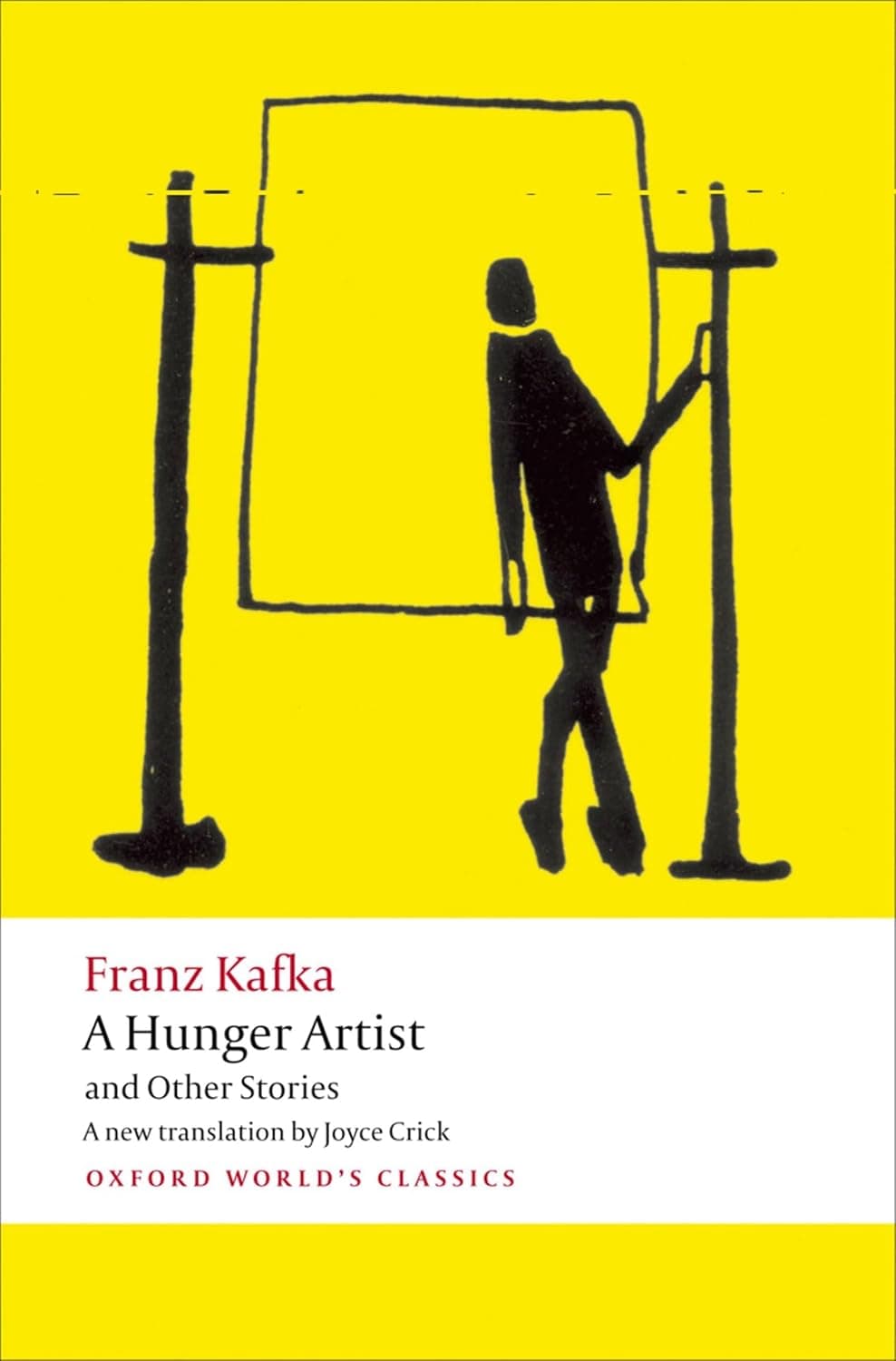
Should you read A Hunger Artist and Other Stories?
What works
The short forms end before their central images can become ordinary, leaving the cage, burrow, bridge, or transformed body charged with several incompatible meanings.
What may not work for you
Collection contents vary by edition, and the slighter fragments can feel like workshop pieces beside The Metamorphosis or A Hunger Artist.
What may test your patience
The difficulty is cumulative rather than local: reading many parables in sequence can make their deliberate opacity feel monotonous, so the book benefits from pauses.
Does the ending reward the effort?
The strongest stories close with ruthless precision, while unfinished fragments naturally offer less satisfaction; the collection works better as a range than a single arc.
Reading A Hunger Artist and Other Stories closely
Franz Kafka's collection A Hunger Artist and Other Stories gathers brief, concentrated pieces about art, isolation, and the need to be seen. Most of the stories are short enough for a single sitting, but they leave a strange aftertaste that sticks in the mind.
The language feels simple on the surface, yet ordinary objects - a cage, a burrow, a dim performance space - take on heavy symbolic weight. Kafka lets the symbolism grow quietly out of plain description instead of calling attention to it, so readers can enjoy the stories on a literal level or lean into close analysis.
Because the collection shifts between different narrators and moods, it works both as a first step into Kafka and as extra depth for readers who already know his novels. Humor and bleakness sit side by side, with the title story's fading spectacle echoing other tales of people and creatures who cannot explain themselves to the world around them.
The stories are short enough to discuss one at a time, but they resist a single clean interpretation. A cage can be workplace, stage, prison, or refuge depending on who is watching. That ambiguity gives a class or book club something concrete to argue about instead of merely naming broad themes.
Tips for Discussing Kafka's Short Stories
Focus on one story at a time and compare first impressions before moving to detailed interpretation.
Track recurring images like hunger, confinement, and performance to see how they change across the collection.
Pair the book with other modernist short fiction to compare narrative tone, structure, and use of allegory.
Three useful comparisons
The Metamorphosis
The Metamorphosis offers the fullest union of Kafka's family pressure and impossible premise; start there for one sustained emotional line.
Best for: A strong choice for a brief, strange classic about labor, family obligation, shame, disability, and conditional love.
The Trial
The Trial expands opaque authority across a novel and gives frustration more social breadth, but less formal concentration.
Best for: Choose it if an unfinished, darkly funny legal nightmare can hold your attention even when every promised answer becomes another appointment.
Amerika (The Man Who Disappeared)
Amerika is looser and more openly comic, useful when you want Kafka's institutional absurdity attached to movement and adventure.
Best for: Kafka readers interested in labor, migration, comic humiliation, and unfinished novels whose instability is part of their appeal.
Compare 10 more books like A Hunger Artist and Other Stories
Make the next decision