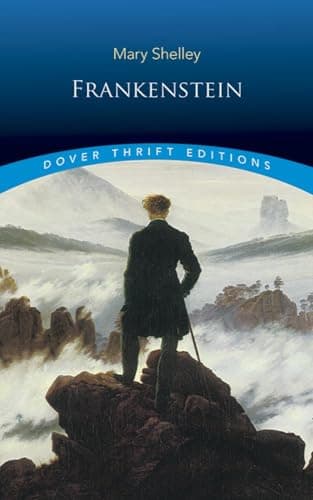
Should you read Frankenstein?
What works
The creature's education transforms the moral balance of the novel. Once he can describe beauty, exclusion, and his desire for companionship, Victor's horror no longer controls the reader's judgment.
What may not work for you
The nested narratives create distance at moments of crisis, and Victor's repeated collapses can feel melodramatic. Some major events are reported after the fact rather than dramatized.
What may test your patience
Victor's early family history and scientific formation take time before the creation scene arrives. The framing matters later, but first-time readers expecting immediate Gothic horror may find the approach indirect.
Does the ending reward the effort?
Yes. The final pursuit does not simplify blame or offer clean justice; it leaves creator and creation bound by the damage of abandonment.
Reading Frankenstein closely
Frankenstein frames Victor Frankenstein's confession within Robert Walton's Arctic letters and the creature's own account. Victor achieves the creation he desires, recoils from the living being before him, and spends the rest of the novel treating abandonment as though it were an external catastrophe.
Mary Shelley gives the creature intelligence, eloquence, and a painful education in human rejection. The result is not a simple warning against science but a tragedy about responsibility, isolation, ambition, and the violence produced when a creator refuses care.
The creature is not the popular monster
He is articulate and initially seeks companionship. His later violence is real, but the novel insists readers understand the abandonment and repeated rejection preceding it.
Science fiction and Gothic tragedy
Scientific ambition starts the plot, while sublime landscapes, pursuit, death, and nested testimony give it a Gothic form. Both genres are essential to its effect.
Three useful comparisons
The Picture of Dorian Gray
The Picture of Dorian Gray also turns a supernatural creation into evidence of moral evasion, but its style is wittier and its social world more decadent. Choose Frankenstein for grief and responsibility.
Best for: Readers who enjoy Gothic corruption, social wit, queer subtext, and novels suspicious of their own beautiful surfaces.
What Moves the Dead
What Moves the Dead is a much shorter biological Gothic mystery with a practical narrator. Choose it for quick dread and explanation; choose Frankenstein for layered testimony and ethical argument.
Best for: Best for anyone who wants a short Gothic retelling, fungal horror, body unease, and a practical narrator with flashes of dry humor.
Never Let Me Go
Never Let Me Go asks what creators owe engineered human lives without using spectacle or a singular monster. Its restraint makes the institutional abandonment quieter and more intimate.
Best for: Readers who value quiet speculative fiction, friendship, memory, and emotional implication over plot-driven rebellion.
Make the next decision