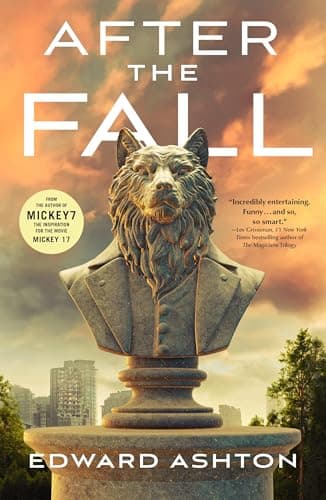
Should you read After the Fall?
What works
The wilderness scheme turns alien occupation into debt, work, bad planning, and reluctant loyalty, making systemic exploitation visible inside comic adventure.
What may not work for you
The tonal ease can blunt the horror of human bondage, and the broader occupied society remains thinner than the central partnership.
What may test your patience
The opening must establish alien economics and the uncomfortable terms of John and Martok's bond before the business disaster becomes active.
Does the ending reward the effort?
Mostly. The immediate crisis reaches a satisfying compromise, though affection cannot resolve the legal inequality the novel deliberately retains.
Reading After the Fall closely
After the Fall imagines humanity one hundred and twenty years after defeat and a century after alien grays collected the survivors. John lives as a bonded human attached to Martok, a broke and impulsive gray who treats him better than most until Martok uses John's bond as collateral for a wilderness business.
Edward Ashton turns alien invasion into buddy comedy and workplace satire without softening the ownership at its center. John and Martok may care for each other, but affection cannot erase a system that lets one friend legally gamble the other's life.
Would humans make good pets?
The provocative question exposes how obedience is taught and normalized. John's relative comfort makes recognizing exploitation more complicated, not less necessary.
Three useful comparisons
Mickey7
Mickey7 is tighter and more focused on copied identity; After the Fall expands Ashton's disposable-worker satire into ownership and cross-species friendship.
Best for: Science-fiction readers wanting cloning, hostile-planet survival, corporate exploitation, existential questions, and dark humor in a compact standalone story.
Project Hail Mary
Project Hail Mary treats human-alien cooperation as an optimistic scientific partnership, while Ashton makes legal inequality and bad economics impossible to ignore.
Best for: The best fit is someone who likes optimistic hard science fiction, first contact, high-stakes problem solving, and an emotionally satisfying partnership.
Shards of Earth
Shards of Earth offers grander space-opera stakes and a larger crew; After the Fall is smaller, drier, and more openly satirical about labor.
Best for: Go here for a found-family crew, diverse aliens, political factions, salvage work, and large-scale space-opera danger.