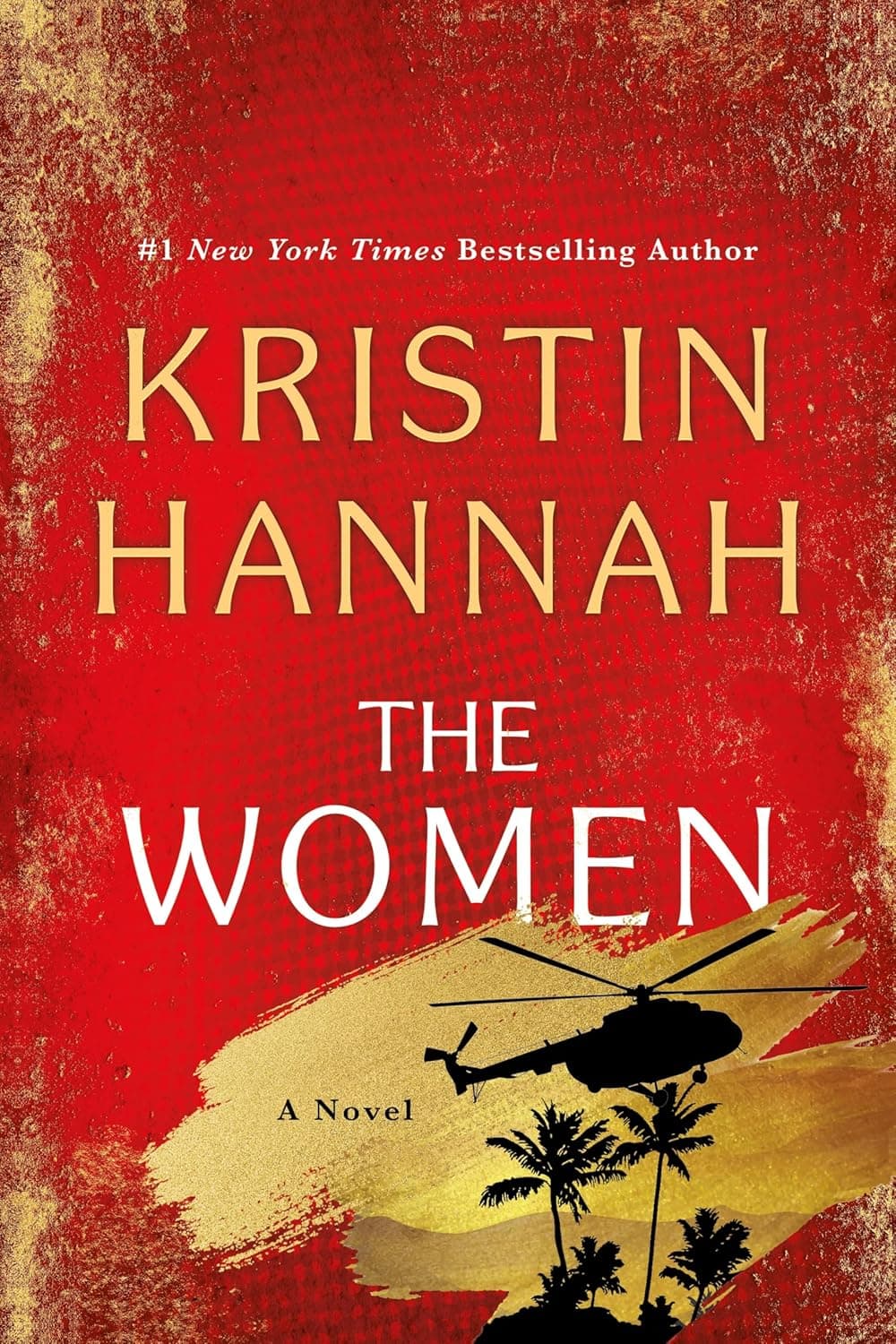
Should you read The Women?
What works
Field-hospital scenes make skill, exhaustion, and friendship tangible, while Frankie's return home shows how denial can prolong a war inside the people who served.
What may not work for you
Repeated catastrophes and romantic complications occasionally feel arranged to maximize anguish, reducing the room for quieter moral ambiguity.
What may test your patience
The postwar section repeats cycles of isolation and collapse after the combat narrative has already delivered a strong emotional peak.
Does the ending reward the effort?
Yes. The close recognizes service through community rather than requiring one relationship to repair trauma that the culture refused to name.
Reading The Women closely
In The Women, Kristin Hannah follows Frances “Frankie” McGrath from a sheltered California upbringing into the chaos of the Vietnam War. After her brother ships out and tragedy hits, Frankie enlists as an Army nurse and discovers that the slogan “women can be heroes too” comes with an unthinkable cost. Field hospitals, helicopters, and evacuation wards become her world, and the novel stays close to her shock, fear, and stubborn determination as casualties pour in faster than anyone can process.
The most gripping parts of the book are not just the bloody triage scenes but the friendships that form in the cracks. Other nurses and medics teach Frankie how to cope, how to laugh in dark moments, and how to keep going when the war refuses to make sense. Hannah leans into emotional beats and short, vivid scenes rather than dense military detail, so you always understand what Frankie is feeling even when the politics are messy or distant.
If you are wondering about intensity and who this novel is for, The Women reads very much as adult historical fiction. There are graphic descriptions of war injuries, frequent profanity, addiction, sex, and repeated losses, along with PTSD and depression when the characters come home. Most guidance puts it in the sixteen and up range or for adults who are ready for heavy topics, war trauma, and the emotional fallout that comes with them.
A common question is whether The Women is based on a true story. Frankie herself is fictional, but Hannah built her arc out of interviews, memoirs, and historical research on the real nurses who served in and around Vietnam. The specific characters and plot twists are invented, yet the mix of exhaustion, fear, camaraderie, and erasure that Frankie faces is meant to mirror what many women actually lived through when they served and then returned to a country that barely acknowledged them.
Book clubs have plenty to discuss, from Frankie’s family response to her service to the contrast between male and female veterans and the friendships that keep her alive.
Three useful comparisons
The Book Thief
The Book Thief is more formally inventive and views war through a child's civilian life; The Women is more direct, adult, and focused on medical service and aftermath.
Best for: Best for older teens and adults who want a slow, lyrical wartime novel about a foster family, the uses of language, and the cost of small acts of decency.
A Tale of Two Cities
Dickens uses revolution for symbolic sacrifice and suspense, while Hannah places bodily care and veteran recognition at the center of recent history.
Best for: Choose it for revolution, sacrifice, courtroom suspense, family devotion, and a shorter but denser Dickens novel.
Keeper of Lost Children
Keeper of Lost Children also follows war beyond combat, but uses multiple lives and postwar Germany to examine race, belonging, and separated families.
Best for: Choose it for a multi-timeline story about postwar Germany, Black American soldiers, German women, mixed-race children, adoption records, and the people allowed to decide where a child belongs.