Author profile
Ken Follett: books, reviews, and where to start
Ken Follett moved from tightly engineered thrillers to vast historical novels without abandoning his central skill: making institutions legible through people who need something urgently.
Biography and criticism
Suspense across cathedrals, wars, and generations
Follett's historical scale can look panoramic, but his books keep readers moving by treating engineering, politics, and social change as immediate obstacles.
The thriller craftsman
Ken Follett was born in Cardiff in 1949, studied philosophy, worked in journalism and publishing, and wrote several novels before Eye of the Needle became an international success. That wartime espionage thriller established his gift for clean objectives, converging pursuits, and danger produced by information moving between people who do not know the whole situation.
When The Pillars of the Earth appeared in 1989, a long novel about building a medieval cathedral seemed like a major change. The suspense method remained. Stone, labor, patronage, weather, church authority, inheritance, and violence continually threaten the work. Architecture becomes plot because materials and institutions resist desire.
History through momentum
The Kingsbridge books span centuries but return to the relationship between building, commerce, belief, and power in a community. The Century Trilogy uses families across countries to follow twentieth-century upheaval. Follett's characters can divide too neatly into sympathetic builders and obstructive villains, and emotional emphasis sometimes simplifies historical ambiguity.
Yet his research is effective when converted into decisions rather than displayed as background. A reader understands a historical condition because someone must cross a border, finance a project, survive a law, or conceal knowledge. Eye of the Needle is the starting point for concise suspense; The Pillars of the Earth for the expansive mode. Follett's achievement is not making history painless. It is making large systems visible without surrendering the forward pull of a thriller.
The books in context
How the work develops on the page
These notes connect the biography to specific choices in the books. Each title links to the full spoiler-free review.
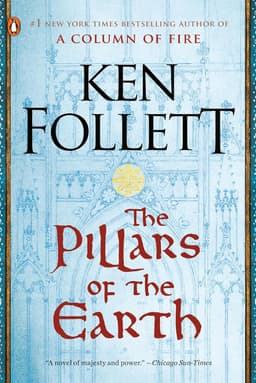
The Pillars of the Earth by Ken Follett is a sweeping cathedral saga set in war torn medieval England, following builders, nobles, monks, and townspeople as a grand project reshapes the fictional town of Kingsbridge. It is long, detailed, and surprisingly easy to sink into once you meet the main cast.
Every trade matters here. Stone masons, carpenters, wool merchants, and church officials drive the plot as much as kings or earls, and Follett's research shows in the way each scene is built. Market days, sieges, and construction milestones all feel grounded in practical detail. Readers who crave similarly textured novels can browse our historical fiction archive for more recommendations set in this time period and beyond.
The characters keep the pages turning. Tom Builder dreams in arches and towers, Prior Philip moves carefully within church politics, Aliena fights to rebuild her fortune, and Jack channels his curiosity into new ideas that challenge tradition. Relationships evolve over years, villains feel frighteningly human, and the town itself slowly becomes a character as the cathedral rises and falls with the people around it.
Follett explains building, trade, and medieval institutions at the moment a character needs to make or contest a practical decision.
Tom, Aliena, Philip, Jack, and the cathedral give engineering and institutional change personal continuity across war and famine.
Villains are extremely villainous, sexual violence is used heavily, prose is functional, and historical complexity sometimes yields to melodrama.
The long novel repeatedly resets after catastrophe, requiring commitment to rebuilding as its central rhythm rather than expecting steady progress.
Yes. Construction, family, and political arcs reach substantial closure, making the cathedral feel like accumulated collective life rather than backdrop.
Fans of character centered epics who want vivid medieval settings, long arcs, and a sense of everyday life alongside major events.
Ken Follett’s cathedral saga follows determined builders, scheming nobles, and the resilient citizens of Kingsbridge through war torn medieval England.
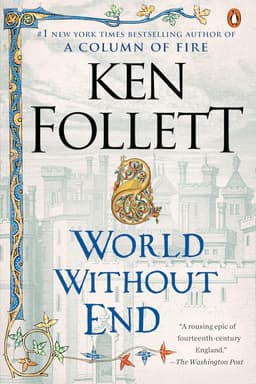
Read the complete reviewWorld Without End returns to Kingsbridge two centuries after The Pillars of the Earth, following fourteenth century tradespeople, visionaries, and schemers as they face plague, war, and the slow shifting of power. This overview focuses on the setup and tone so you can decide if it is the right next step.
Texture is once again the hook. Stonework, wool guild rivalries, legal loopholes, and battlefield logistics matter just as much as personal grudges. Market days feel crowded and tense, abbey politics change with every sermon, and the town's skyline keeps evolving. Readers who enjoy this grounded approach can revisit our The Pillars of the Earth review for another look at Kingsbridge from an earlier era.
The new cast carries the story. Caris pushes against the limits placed on women while trying to practice medicine, Merthin channels his talent into daring engineering projects, Gwenda claws for a better life in a world that keeps closing doors, and Ralph uses violence as a way to climb. Their paths intersect, drift apart, and collide again so that even when the narrative jumps to royal courts or far off campaigns, Kingsbridge remains the center of gravity.
Follett keeps the chapters short and scene driven, making a thousand plus pages feel surprisingly manageable. Epidemics, battles, court cases, and engineering experiments are given room to breathe, and the finale ties personal choices to the fate of the town itself. By the end, Kingsbridge once again feels like a living place shaped by the stubbornness and mistakes of its citizens.
Follett uses plain exposition around work and medicine, then builds chapters toward decisions whose consequences can reappear years later.
Caris, Merthin, hospitals, bridges, guilds, and the Black Death make practical innovation collide with church and commercial authority.
Antagonists are broad, sexual violence recurs, coincidences are heavy, and the length magnifies familiar patterns from The Pillars of the Earth.
Map the trades, guilds, and noble houses in a notebook to follow power shifts as new crises hit.
Pair the novel with histories of the Black Death to compare Follett's version of events with real accounts.
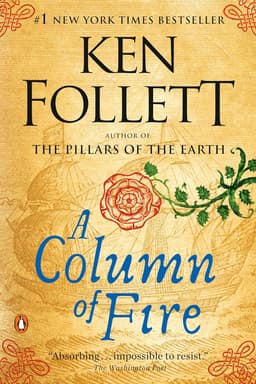
Read the complete reviewA Column of Fire continues Ken Follett's Kingsbridge saga into the age of Elizabeth I, where faith, espionage, and forbidden love collide across England and mainland Europe. It shifts the focus from cathedrals and bridges to trade, printing, and the dangerous politics of religion.
Follett's research sits in the background of almost every scene. Merchant ledgers, shipyard logistics, and printing house pressure all play a role as the story moves between England, France, Spain, and the Low Countries. Daily life is drawn in enough detail that policy decisions about religion and trade immediately feel personal.
Characters keep the historical sweep grounded. Ned tries to balance principle with pragmatism while working inside Elizabeth I's developing intelligence network, and Margery struggles to reconcile duty, belief, and love. Antagonists are unsettling because their fanaticism grows from fear, ambition, or loyalty rather than caricature, which makes betrayals hit harder.
Themes of tolerance, zealotry, and statecraft give the novel its bite. Follett shows how official decisions ripple from royal courts into kitchens, workshops, and markets, and how secret alliances can either protect fragile peace or push countries closer to war. Readers who want more Tudor intrigue with a similar blend of politics and daily life can browse our historical fiction archive for related picks.
Follett translates confessional conflict into plain strategic choices, keeping complex politics readable by attaching them to missions and households.
Ned and Margery make religious allegiance a question of marriage, work, secrecy, and survival across England and continental politics.
The long personal and political arcs receive firm closure, though the historical sweep matters more than every character turn.
Readers invested in the Kingsbridge series who want to see how the town and its families adapt to the Elizabethan world.
Pair your reading with documentaries or articles about Elizabethan intelligence networks to compare them with events in the novel.
Look back at earlier Kingsbridge books to see how the town's role evolves from medieval cathedral center to Renaissance trade hub.
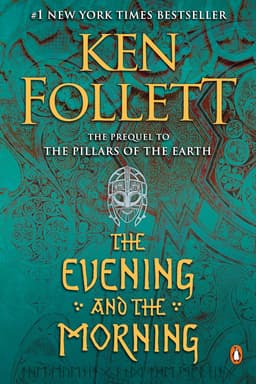
Read the complete reviewThis spoiler free The Evening and the Morning review looks at how Ken Follett returns to Kingsbridge at the end of the Dark Ages. Set between 997 and 1007 in England and Normandy, the novel follows boatbuilder Edgar, Norman noblewoman Ragna, and monk Aldred as they push back against corrupt bishop Wynstan, Viking raids, and a fragile legal system that keeps ordinary people exposed to violence and injustice.
As in The Pillars of the Earth, the appeal is not just the big clashes, but the everyday work of building, trading, and arguing for fair treatment. Follett spends time on ferries, mills, manors, and monasteries, so you see how law, money, and church power shape the smallest corners of life. The tone is immersive and often brutal, with moments of hope built around craftsmanship, community, and the idea that written rules can be used to protect people rather than crush them.
Because this is a Kingsbridge prequel, many readers wonder whether The Evening and the Morning is worth reading after The Pillars of the Earth or whether they should start here first. In practice, it works either way. New readers can treat it as an introduction to Kingsbridge history, while long time fans will enjoy spotting the early bridge, minster, and families whose choices echo down into the later cathedral saga.
Read the complete reviewWhere to begin
A good place to start with Ken Follett
The Pillars of the Earth
4.4 / 5The Pillars of the Earth makes cathedral building gripping by tying stone, labor, faith, sex, and political power to several decades of human ambition.
The Evening and the Morning
4.1 / 5The Evening and the Morning is an inviting Kingsbridge prequel about local power and institution building, but it follows the series' heroic and villainous patterns too predictably.
Reading order and buying help
Reading guides featuring Ken Follett
Bibliography
Books by Ken Follett
Reviewed titles open directly on Book Review Guide. Other editions and works remain marked until a full review is published.

Reviewed
World Without End

Reviewed
The Pillars of the Earth
Reviewed
A Column of Fire

Reviewed
The Evening and the Morning

Not reviewed yet
Night Over Water
Not reviewed yet
Triple
Not reviewed yet
The Key to Rebecca

Not reviewed yet
Robbery Under the Streets of Nice
Not reviewed yet
The Third Twin, To the Hilt, Small Town Girl, & The Burning Man
Not reviewed yet
Devlerin Dususu
Not reviewed yet
The Deep and Secret Things
Not reviewed yet
Les Piliers De La Terre
Not reviewed yet
Stonehenge
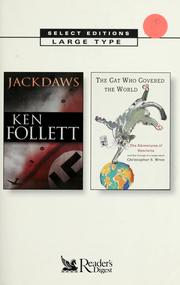
Not reviewed yet
Select Editions Large Type--Volume 119
Not reviewed yet
Nunca
Not reviewed yet
Armour of Light

Not reviewed yet
Ken Folllett Stand Aone Novels 12 Pack
Not reviewed yet
The Third Twin
Not reviewed yet
Fall Of Giants

Not reviewed yet
Un món sense fi

Not reviewed yet
Eye of the Needle
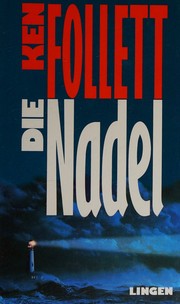
Not reviewed yet
Die Nadel
Not reviewed yet
Milat ha-tsofen Rebeḳah
Not reviewed yet
Le Secret De LA Pyramide (French Edition)
Not reviewed yet
Özgürlük Ülkesi
Not reviewed yet
The Man From St. Petersburg
Not reviewed yet
The Man From St. Petersburg Book Club Edition
Not reviewed yet
I pilastri della terra (Italian Edition)

Not reviewed yet
Aux portes de l'éternité

Not reviewed yet
La caiguda dels gegants
Not reviewed yet
Jackdaws
Not reviewed yet
Code to Zero

Not reviewed yet
El llindar de l'eternitat

Not reviewed yet
En el blanc

Not reviewed yet
Trilogía Los pilares de la Tierra

Not reviewed yet
Troe

Not reviewed yet
Notre-Dame
Not reviewed yet
Code Rebecca

Not reviewed yet
Trilogía The Century
Not reviewed yet
Ḳetseh ha-netsaḥ
Not reviewed yet
L'Inverno del Mondo. The century trilogy 2
Not reviewed yet
Armor of Light

Not reviewed yet
Las tinieblas y el alba

Not reviewed yet
Un Mundo Sin Fin
Not reviewed yet
Un Luogo Chiamato Liberta (Oscar Bestsellers) (Italian Edition)
Not reviewed yet
The Modigliani Scandal

Not reviewed yet
Ken Follet Signet Gift Pack

Not reviewed yet
Una columna de fuego
Not reviewed yet
Il Volo Del Calabrone (Hornet Flight){Romanzo}
Not reviewed yet
Le réseau Corneille
Not reviewed yet
Ken Follett 12 Copy Floor Display with Special Header
Bibliographic records: Open Library.
Reviewed bibliography
Ken Follett books reviewed here
Every title below has a complete, spoiler-free review. Scores are our editorial ratings, not visitor averages.

20174.1 / 5
A Column of Fire
A Novel
A Column of Fire expands Kingsbridge into Reformation espionage with broad historical reach, though intimate lives are sometimes carried along by a tour of major events.
As an Amazon Associate, I earn from qualifying purchases.

20204.1 / 5
The Evening and the Morning
A Kingsbridge Novel
The Evening and the Morning is an inviting Kingsbridge prequel about local power and institution building, but it follows the series' heroic and villainous patterns too predictably.
As an Amazon Associate, I earn from qualifying purchases.

20014.4 / 5
The Pillars of the Earth
A Novel
The Pillars of the Earth makes cathedral building gripping by tying stone, labor, faith, sex, and political power to several decades of human ambition.
As an Amazon Associate, I earn from qualifying purchases.

20074.2 / 5
World Without End
A Kingsbridge Novel
World Without End repeats Kingsbridge's strengths through medicine, plague, architecture, and resistant women, but also repeats its melodrama and cruelty.
As an Amazon Associate, I earn from qualifying purchases.
Keep exploring