
Author profile
Dan Brown: books, reviews, and where to start
Dan Brown became a global thriller phenomenon by turning art, architecture, codes, institutions, and disputed history into a sequence of questions that make readers keep moving.
Biography and criticism
The engineer of the modern clue chase
Brown's historical claims invite skepticism and his characters can be thin, but his command of chapter rhythm changed the commercial thriller and should be analyzed rather than waved away.
Music, teaching, and the first thrillers
Dan Brown was born in Exeter, New Hampshire, in 1964. His father taught mathematics at Phillips Exeter Academy and his mother was a church musician, placing codes, logic, religion, and performance within his early environment. Brown attended Amherst College, pursued music in Los Angeles, and later returned to New England, where he taught English and Spanish. His first novels, Digital Fortress, Angels & Demons, and Deception Point, established his interest in secret systems, technological threat, and experts racing institutions that control more information than they admit.
Those books did not initially make him a global name. The Da Vinci Code did in 2003. Its opening murder inside the Louvre launches a chain of symbols, artworks, religious claims, and reversals led by Harvard symbologist Robert Langdon. Sales turned earlier Langdon novel Angels & Demons into a retrospective hit and made Brown's mixture of tourism, puzzle, and conspiracy an international publishing model.
A chapter is a door left open
Brown writes short chapters that frequently end with a withheld answer, a new danger, or a shift in the reader's understanding of who can be trusted. Parallel narratives allow one line of action to interrupt another at the moment of disclosure. The technique is visible enough to parody, but visibility does not make it ineffective. Brown understands that suspense is the management of unfinished cognitive tasks. A reader continues partly to close the question the previous chapter refused to settle.
His prose prioritizes orientation and motion. Characters explain art, cryptography, science, and history in language designed to be retained during a chase. This produces accessible intellectual theater, though dialogue can sound like a guided tour and interior life rarely matches the care given to mechanisms. Langdon is less a psychologically changing protagonist than a stable instrument for decoding each new environment.
Fact, fiction, and the authority of confidence
The Da Vinci Code generated extensive criticism from historians, religious scholars, and art experts because it presented disputed or false claims with the confidence of hidden fact. Brown and his defenders could point to fiction, but the novel's pleasure depends partly on the suggestion that official history has concealed a recoverable truth. That tension is not incidental marketing. It is built into the form.
A responsible reader can enjoy the clue architecture while checking claims independently. Inferno uses Dante and epidemic fear; Origin turns toward artificial intelligence, cosmology, and organized religion; The Lost Symbol explores Freemasonry and Washington; The Secret of Secrets extends Langdon's interest in consciousness. In each case, real places and documents lend friction to speculative machinery. The history is most useful as an invitation to investigate, not as a substitute for scholarship.
A narrower talent than the sales imply
Brown is exceptionally good at one difficult thing: converting research into immediate narrative prompts. A building is not merely described; it hides a route. A painting is not merely interpreted; it changes the next destination. An academic dispute becomes a deadline. The same efficiency produces his limitations. When every element must serve the chase, grief, belief, and intimacy can become switches in the mechanism.
Angels & Demons is the best entrance for readers who want the purest Langdon race. The Da Vinci Code remains essential for understanding the cultural moment. Digital Fortress shows an early technological version of the same habits, while Wild Symphony reveals Brown's musical and children's work outside the thriller machine. His influence is visible whenever a novel promises that an educated tourist can save the world by reading the room more carefully than the people who own it.
The books in context
How the work develops on the page
These notes connect the biography to specific choices in the books. Each title links to the full spoiler-free review.
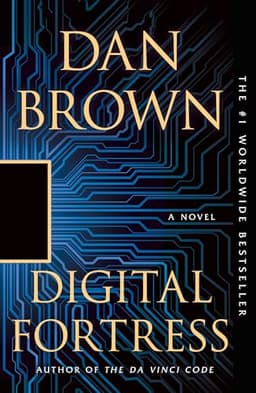
Digital Fortress takes Dan Brown's puzzle-thriller formula inside the National Security Agency. Cryptographer Susan Fletcher is called in when the agency's powerful code-breaking system encounters an apparently unbreakable program, and the technical crisis quickly becomes a fight over privacy, secrecy, and institutional loyalty.
The novel moves quickly and makes cryptography easy to follow, but its late-1990s technology and security assumptions now feel dated. It works best as an energetic period techno-thriller rather than a realistic guide to modern encryption.
Brown alternates control-room dialogue with a physical pursuit, using capitalized system terms and short chapters to make abstract code feel mechanical.
TRANSLTR, the unbreakable code, internal suspicion, and a second chase in Spain create two simple lines that converge under deadline.
The computer science is implausible, Susan's expertise is inconsistently used, and the NSA debate is reduced to heroes and traitors.
Repeated attempts to define the algorithm and identify the pass-key prolong a solution readers may recognize well before the characters.
The countdown resolves with energetic puzzle logic, though the ethical consequences of mass surveillance are tidied too easily.
The central conflict asks whether an agency should possess the power to read every message simply because it claims protective intentions. Brown gives that debate personal stakes through Susan's trust in the institution.
Short chapters, reversals, and simultaneous crises preserve momentum. Cybersecurity-minded readers will spot implausibilities, but the surveillance questions remain recognizable.
NSA cryptographer Susan Fletcher confronts an apparently unbreakable code that threatens the agency's surveillance power, forcing her to question secrecy, loyalty, and who controls digital privacy.
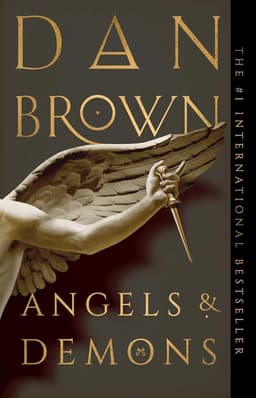
Read the complete reviewAngels & Demons is the first Robert Langdon adventure in publication order, sending the Harvard symbologist racing through Rome and Vatican City to stop a deadly countdown. An experiment at CERN, an antimatter canister, and a murdered physicist pull him into a conspiracy that links science, faith, and a secret society with a grudge.
The pacing is quick and clean. Chapters are short, revelations arrive often, and each solved clue seems to generate two new problems. Bernini statues, Latin mottos, and hidden passages turn the city itself into a maze that Langdon and scientist Vittoria Vetra have to read correctly if they want to survive. If you enjoy this sort of chase heavy story, you can dive deeper into similar titles in our thriller book guides.
Underneath the action, Brown keeps circling questions about science and religion. The Illuminati mythology, secret conclave politics, and the Vatican's relationship with modern research are presented in broad strokes, more interested in tension than footnotes, but they do give readers a simple frame for debate. Brown's focus is on entertainment, yet he knows how to plant ideas and symbols that stick.
The final act compresses hours into minutes and leans fully into blockbuster spectacle, which will work better for some readers than others. For many, Angels & Demons remains an enjoyable, high energy puzzle thriller that combines European landmarks, conspiracy elements, and a very specific kind of page turning suspense. If you decide to pick up a copy, you can find one through this Amazon link right here.
Brown cuts between Langdon's chase and the sealed conclave, using time checks and chapter breaks to make simultaneous events feel closer than geography allows.
The conclave, antimatter deadline, churches, elemental path, and murders create a clear sequence of escalating locations and stakes.
Science and religion become simplified camps, Vittoria loses agency as the plot accelerates, and the final reversals strain plausibility.
It delivers spectacle and several audacious twists, though the last explanation asks more credulity than the already heightened premise.
The Da Vinci Code is less action-heavy and more polished in its clue chain, making it the better-known entry.
Vivid use of piazzas, churches, and Vatican archives so that the setting feels like an active part of the mystery.
Readers interested in accessible stories that pit science and religion against each other while still leaving room for nuance.
Compare Brown's use of Vatican and Roman landmarks with material from official Vatican archives and travel guides to separate dramatic license from documented history.
Queue up the film adaptation or companion books after reading if you want to see how the story's puzzles and set pieces were reimagined on screen.
Angels & Demons delivers a high velocity Vatican City thriller where Robert Langdon races to decode secret symbols and stop an antimatter countdown.
Read the complete reviewDeception Point begins when a NASA satellite finds an extraordinary object beneath Arctic ice shortly before a presidential election. Intelligence analyst Rachel Sexton is sent to authenticate the discovery, but evidence of scientific manipulation turns the assignment into a lethal effort to expose who benefits from the announcement.
Read the complete reviewWhere to begin
A good place to start with Dan Brown

The Da Vinci Code
4.1 / 5The Da Vinci Code is an exceptionally efficient clue chase whose historical claims and characters are far less reliable than its page-turning structure.
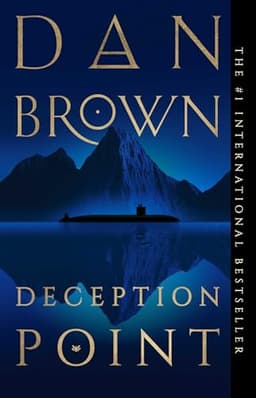
Deception Point
3.9 / 5Deception Point is an enjoyable science-and-politics conspiracy whose Arctic setting and operational danger compensate for thin characterization and extravagant plotting.
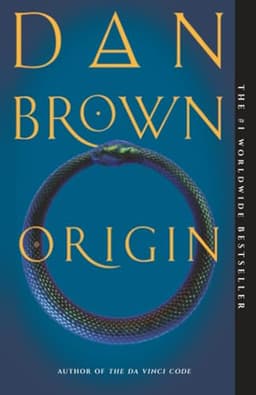
Origin
3.9 / 5Origin is a polished Spain-set chase whose artificial intelligence is more compelling than its supposedly world-changing answer to religion and human origins.
Series buying note
Would the collection be the better buy?
These are useful only when you want several books in the same run. The notes below spell out what each package includes and, just as importantly, what it leaves out.
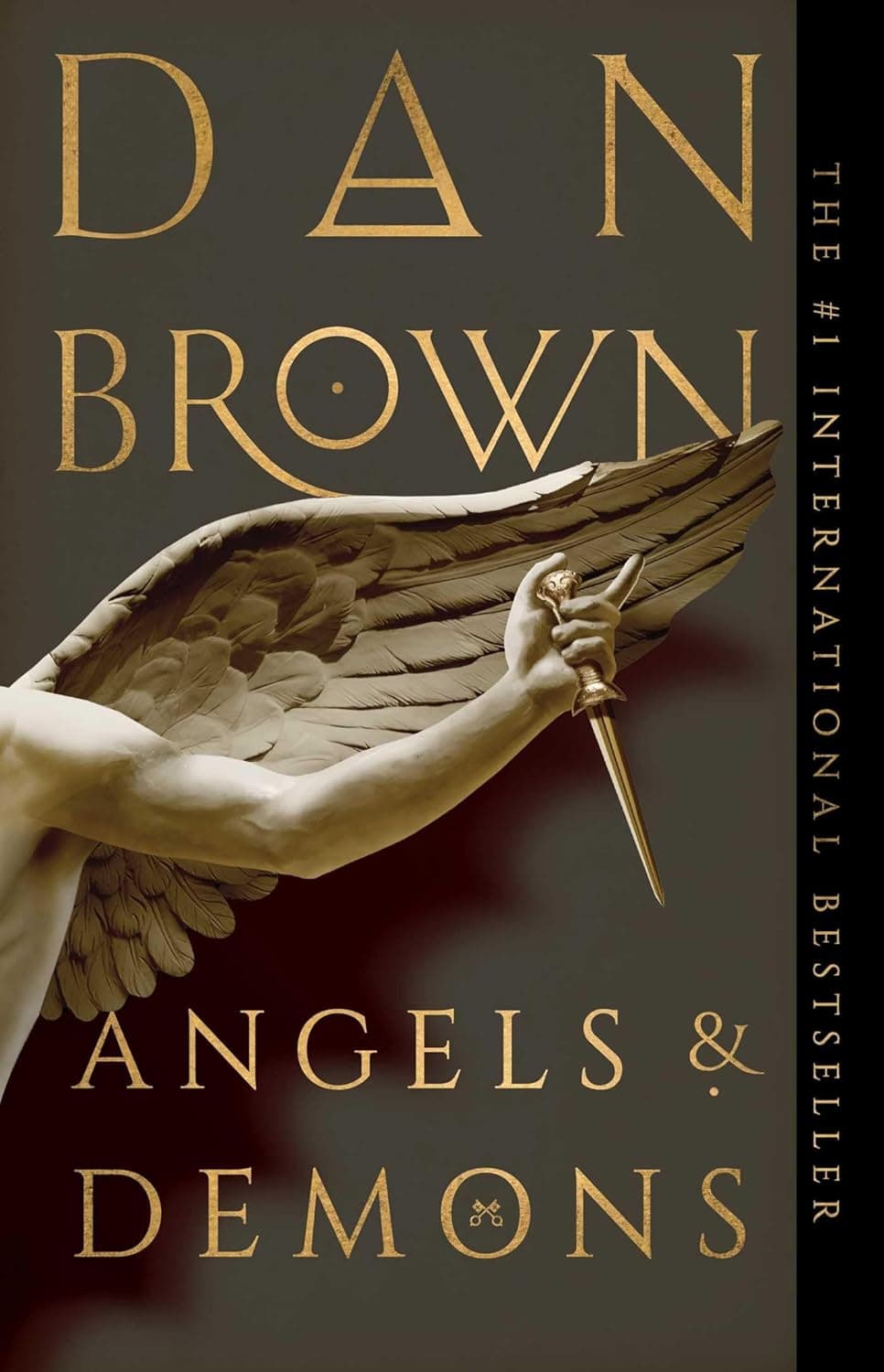
Seven-book paperback collection
Dan Brown 7-Book Collection
The package mixes five Robert Langdon adventures with Dan Brown's two standalone thrillers, Digital Fortress and Deception Point.
Included: Angels & Demons, The Da Vinci Code, The Lost Symbol, Inferno, Origin, Digital Fortress, Deception Point
Our buying note: Despite the marketplace title, this is not the complete current Langdon sequence. It omits The Secret of Secrets, so check the seven listed titles before ordering.
As an Amazon Associate, I earn from qualifying purchases.
Bibliography
Books by Dan Brown
Reviewed titles open directly on Book Review Guide. Other editions and works remain marked until a full review is published.

Reviewed
Wild Symphony

Reviewed
The Da Vinci Code

Reviewed
Origin

Reviewed
Deception Point
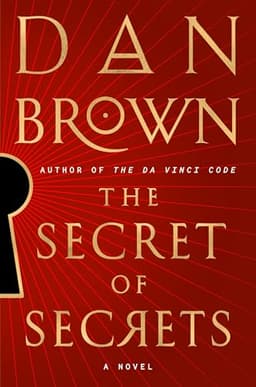
Reviewed
The Secret of Secrets
Reviewed
Digital Fortress

Reviewed
The Lost Symbol
Reviewed
Angels & Demons

Reviewed
Inferno

Not reviewed yet
Diabolus
Not reviewed yet
Conspiración
Not reviewed yet
Angeles y Demonios
Not reviewed yet
Kod Leonarda da Vinci
Not reviewed yet
Angels and Demons
![Cover of The Da Vinci Code [2/3]](https://covers.openlibrary.org/b/id/15207741-M.jpg)
Not reviewed yet
The Da Vinci Code [2/3]
Not reviewed yet
Malʾakhim ṿe-shedim
Not reviewed yet
Tsofen de Ṿintshi
Not reviewed yet
Yadā Vinči kod
Not reviewed yet
Angels & Demons [2/2]

Not reviewed yet
Robert Langdon Series Collection 7 Books Set By Dan Brown

Not reviewed yet
Lost Symbol V01
![Cover of Angels & Demons [1/2]](https://covers.openlibrary.org/b/id/14425757-M.jpg)
Not reviewed yet
Angels & Demons [1/2]
Not reviewed yet
Deception Point [2/2]
![Cover of Deception Point [1/2]](https://covers.openlibrary.org/b/id/-1-M.jpg)
Not reviewed yet
Deception Point [1/2]
Not reviewed yet
The Da Vinci Code/The Lost Symbol
![Cover of Inferno [2/2]](https://covers.openlibrary.org/b/id/12775469-M.jpg)
Not reviewed yet
Inferno [2/2]
![Cover of Inferno [1/2]](https://covers.openlibrary.org/b/id/12775468-M.jpg)
Not reviewed yet
Inferno [1/2]

Not reviewed yet
Lost Symbol V02

Not reviewed yet
Sakrileg. Das offizielle Begleitbuch zum Film

Not reviewed yet
Angels & Demons, Vol. 2
Not reviewed yet
Digital Fortress [1/2]
![Cover of The Da Vinci Code [adaptation]](https://covers.openlibrary.org/b/id/12721953-M.jpg)
Not reviewed yet
The Da Vinci Code [adaptation]
![Cover of The Lost Symbol [2/2]](https://covers.openlibrary.org/b/id/13151177-M.jpg)
Not reviewed yet
The Lost Symbol [2/2]
![Cover of The Da Vinci Code [2/2]](https://covers.openlibrary.org/b/id/8396605-M.jpg)
Not reviewed yet
The Da Vinci Code [2/2]
![Cover of Angels & Demons [1/3]](https://covers.openlibrary.org/b/id/9189647-M.jpg)
Not reviewed yet
Angels & Demons [1/3]
Not reviewed yet
Origin Vol 2
Not reviewed yet
Novels (Angels & Demons / Da Vinci Code)


Not reviewed yet
187 men to avoid
Not reviewed yet
Novels (Angels & Demons / Deception Point)
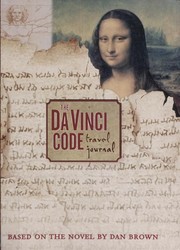
Not reviewed yet
The Da Vinci Code Travel Journal
![Cover of The Da Vinci Code [1/2]](https://covers.openlibrary.org/b/id/10578436-M.jpg)
Not reviewed yet
The Da Vinci Code [1/2]
Not reviewed yet
Robert Langdon Thrillers
Bibliographic records: Open Library.
Reviewed bibliography
Dan Brown books reviewed here
Every title below has a complete, spoiler-free review. Scores are our editorial ratings, not visitor averages.

20064 / 5
Angels & Demons
A Robert Langdon Thriller
Angels & Demons is a breathless Rome thriller whose countdown and physical route work better than its broad argument about science and faith.
As an Amazon Associate, I earn from qualifying purchases.

20063.9 / 5
Deception Point
A Thriller
Deception Point is an enjoyable science-and-politics conspiracy whose Arctic setting and operational danger compensate for thin characterization and extravagant plotting.
As an Amazon Associate, I earn from qualifying purchases.

20043.5 / 5
Digital Fortress
A Thriller
Digital Fortress has an effective cryptographic countdown but technology, workplace ethics, and gender characterization that have aged badly.
As an Amazon Associate, I earn from qualifying purchases.

20144 / 5
Inferno
Robert Langdon, Book 4
Inferno uses Florence, Dante, memory loss, and population ethics to create Brown's most feverish Langdon chase, even when the debate becomes reductive.
As an Amazon Associate, I earn from qualifying purchases.

20183.9 / 5
Origin
Robert Langdon, Book 5
Origin is a polished Spain-set chase whose artificial intelligence is more compelling than its supposedly world-changing answer to religion and human origins.
As an Amazon Associate, I earn from qualifying purchases.

20064.1 / 5
The Da Vinci Code
A Robert Langdon Thriller
The Da Vinci Code is an exceptionally efficient clue chase whose historical claims and characters are far less reliable than its page-turning structure.
As an Amazon Associate, I earn from qualifying purchases.

20123.7 / 5
The Lost Symbol
Robert Langdon, Book 3
The Lost Symbol has a rich Washington setting and strong ritual imagery, but repetition and an overextended villain weaken the Langdon formula.
As an Amazon Associate, I earn from qualifying purchases.

20253.9 / 5
The Secret of Secrets
Robert Langdon, Book 6
The Secret of Secrets gives Langdon a more personal consciousness mystery, but its Prague atmosphere and ideas remain stronger than the scale of its claims.
As an Amazon Associate, I earn from qualifying purchases.

20234.1 / 5
Wild Symphony
A Picture Book
Wild Symphony is a cheerful picture-book concert whose animal poems work best when paired with the music and illustrations rather than judged as standalone verse.
As an Amazon Associate, I earn from qualifying purchases.
Keep exploring