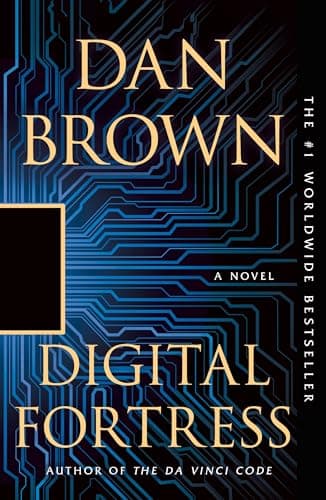
Should you read Digital Fortress?
What works
TRANSLTR, the unbreakable code, internal suspicion, and a second chase in Spain create two simple lines that converge under deadline.
What may not work for you
The computer science is implausible, Susan's expertise is inconsistently used, and the NSA debate is reduced to heroes and traitors.
What may test your patience
Repeated attempts to define the algorithm and identify the pass-key prolong a solution readers may recognize well before the characters.
Does the ending reward the effort?
The countdown resolves with energetic puzzle logic, though the ethical consequences of mass surveillance are tidied too easily.
Reading Digital Fortress closely
Digital Fortress takes Dan Brown's puzzle-thriller formula inside the National Security Agency. Cryptographer Susan Fletcher is called in when the agency's powerful code-breaking system encounters an apparently unbreakable program, and the technical crisis quickly becomes a fight over privacy, secrecy, and institutional loyalty.
The novel moves quickly and makes cryptography easy to follow, but its late-1990s technology and security assumptions now feel dated. It works best as an energetic period techno-thriller rather than a realistic guide to modern encryption.
Privacy against national security
The central conflict asks whether an agency should possess the power to read every message simply because it claims protective intentions. Brown gives that debate personal stakes through Susan's trust in the institution.
How it reads now
Short chapters, reversals, and simultaneous crises preserve momentum. Cybersecurity-minded readers will spot implausibilities, but the surveillance questions remain recognizable.
Three useful comparisons
Deception Point
Deception Point offers broader outdoor action and a stronger institutional conspiracy.
Best for: Choose it for a standalone Brown thriller with Arctic survival, NASA, election politics, and a large government secret.
Origin
Origin updates Langdon's technological setting and asks larger philosophical questions, with similar lecture-heavy pacing.
Best for: Langdon fans wanting Spanish art and architecture, artificial intelligence, religion, and a smooth modern chase.
Binary
Binary is a shorter, tighter technical threat whose chemistry and deadline feel more physically grounded.
Best for: A brief, plausible-seeming technothriller with chemical danger and minimal character detour.
Series buying note
Would the collection be the better buy?
These are useful only when you want several books in the same run. The notes below spell out what each package includes and, just as importantly, what it leaves out.


Seven-book paperback collection
Dan Brown 7-Book Collection
The package mixes five Robert Langdon adventures with Dan Brown's two standalone thrillers, Digital Fortress and Deception Point.
Included: Angels & Demons, The Da Vinci Code, The Lost Symbol, Inferno, Origin, Digital Fortress, Deception Point
Our buying note: Despite the marketplace title, this is not the complete current Langdon sequence. It omits The Secret of Secrets, so check the seven listed titles before ordering.