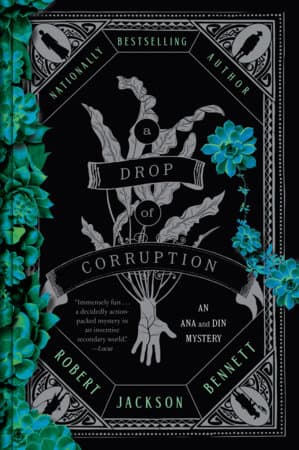
Should you read A Drop of Corruption?
What works
The locked-room disappearance expands into the biological infrastructure of the empire, making the Shroud both crime scene and political vulnerability.
What may not work for you
The larger geography produces more officials and systems to track, and Ana's leaps occasionally arrive before Din has given the reader enough time to test an alternative.
What may test your patience
The move from tower puzzle to Shroud investigation widens the case sharply and temporarily slows the clean line of clues.
Does the ending reward the effort?
Yes. The solution accounts for the impossible setup and the institutional motive without changing the world's rules at the finish.
Reading A Drop of Corruption closely
A Drop of Corruption reunites engraver Dinios Kol with detective Ana Dolabra for an apparent locked-room disappearance at the edge of the empire. A Treasury officer vanishes from a guarded tower with sealed doors and windows, but Ana quickly recognizes that the puzzle conceals a murder designed to look impossible.
The investigation moves toward the Shroud, the secured compound where fallen titans are processed for the blood-based alterations that keep the empire functioning. That setting turns the mystery into more than a contest of clever clues: the killer threatens the biological infrastructure behind transport, labor, security, and political power.
Robert Jackson Bennett again balances fair-play detection with strange ecology and institutional tension. Din's enhanced memory makes him an ideal recorder but not an effortless interpreter, while Ana's leaps remain entertaining because the evidence is available even when her conclusions arrive first.
A larger and more intricate mystery
The sequel expands beyond one estate into guarded towers, remote settlements, imperial systems, and a growing sequence of deaths. The scale increases without abandoning the pleasure of testing each explanation against planted clues.
Ana and Din as a partnership
Din is more confident but still worries about the limits of his alteration and his ability to keep pace with Ana. Their contrast, precise witness and disruptive theorist, continues to give the investigation warmth and humor.
Series order
Read The Tainted Cup first. The new case stands alone, but the earlier book establishes the empire, alterations, titans, and the trust developing between Ana and Din.
Three useful comparisons
The Tainted Cup
The Tainted Cup is the required starting point and offers a cleaner introduction to Din, Ana, and imperial alterations.
Best for: Mystery readers who want a fair trail of clues and fantasy readers who enjoy learning a world through an investigation.
What Moves the Dead
What Moves the Dead is a shorter biological Gothic mystery with much less politics.
Best for: Best for anyone who wants a short Gothic retelling, fungal horror, body unease, and a practical narrator with flashes of dry humor.
The Da Vinci Code
The Da Vinci Code offers faster clue-to-clue pursuit; Bennett gives evidence and world systems greater coherence.
Best for: Best for a fast art-history conspiracy if you can treat its factual claims as entertainment that needs verification.