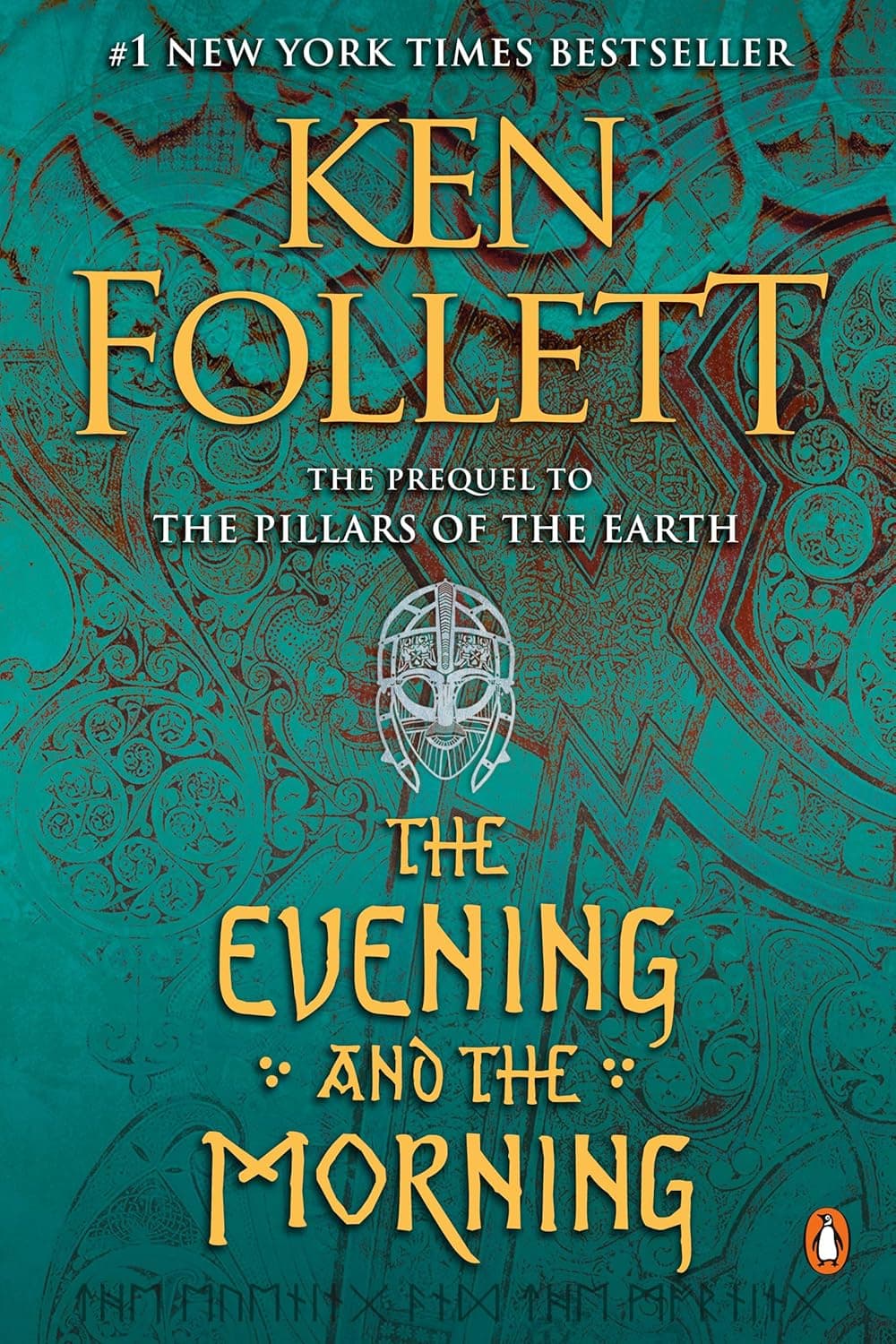
Should you read The Evening and the Morning?
What works
Edgar's craft, Ragna's legal struggle, Aldred's learning, river trade, and settlement growth make social organization visible at practical scale.
What may not work for you
Villains are extreme, sexual violence returns, coincidences connect arcs, and readers of earlier books will recognize the structure quickly.
What may test your patience
Repeated obstruction by local power delays building and legal reform through several similar cycles.
Does the ending reward the effort?
Yes. The main relationships close and the bridge, church, and settlement point clearly toward later Kingsbridge, even though the route there repeats familiar obstruction and revenge.
Reading The Evening and the Morning closely
The Evening and the Morning returns to Kingsbridge at the end of the Dark Ages. Between 997 and 1007, boatbuilder Edgar, Norman noblewoman Ragna, and monk Aldred face a corrupt bishop, Viking raids, and a legal system that leaves ordinary people exposed to violence.
The book spends time on ferries, mills, manors, and monasteries because controlling them decides who can travel, trade, and appeal a wrong. Edgar's building skill solves physical problems. Ragna has to argue inside a legal system tilted toward powerful men, while Aldred sees how written rules and a library might protect knowledge that local rulers would rather control.
The prequel works before or after The Pillars of the Earth because it has a new cast and a complete conflict. Reading in publication order adds recognition when the early bridge, minster, and families anticipate the later cathedral saga, but none of that context is required.
Continue with The Pillars of the Earth, World Without End, and A Column of Fire; our historical fiction collection gathers the related reviews.
What works in the prequel
Ferries, mills, land rights, and church offices show exactly how Wynstan can make a settlement dependent on him.
Edgar challenges physical limits through building, Ragna argues through law and household authority, and Aldred protects learning through church office.
The bridge and minster matter because each changes who can travel, trade, gather, and appeal a wrong.
Three useful comparisons
The Pillars of the Earth
The Pillars of the Earth takes place later and centers cathedral construction in an established town. This prequel works on a smaller scale with a ferry, bridge, minster, and the first rules of the settlement.
Best for: Settle in for a long, accessible medieval saga about cathedral building, family, politics, violence, romance, and clear heroes and villains.
World Without End
World Without End adds plague, medicine, and a denser established town.
Best for: Choose it if Caris's fight to practice medicine, Merthin's bridge work, guild rivalries, and the Black Death justify another very long visit to Kingsbridge.
Eaters of the Dead
Eaters of the Dead offers a shorter, stranger early-medieval adventure through outsider testimony.
Best for: Try this for historical adventure, Beowulf revision, Norse travel, and playful pseudo-scholarship.
Make the next decision