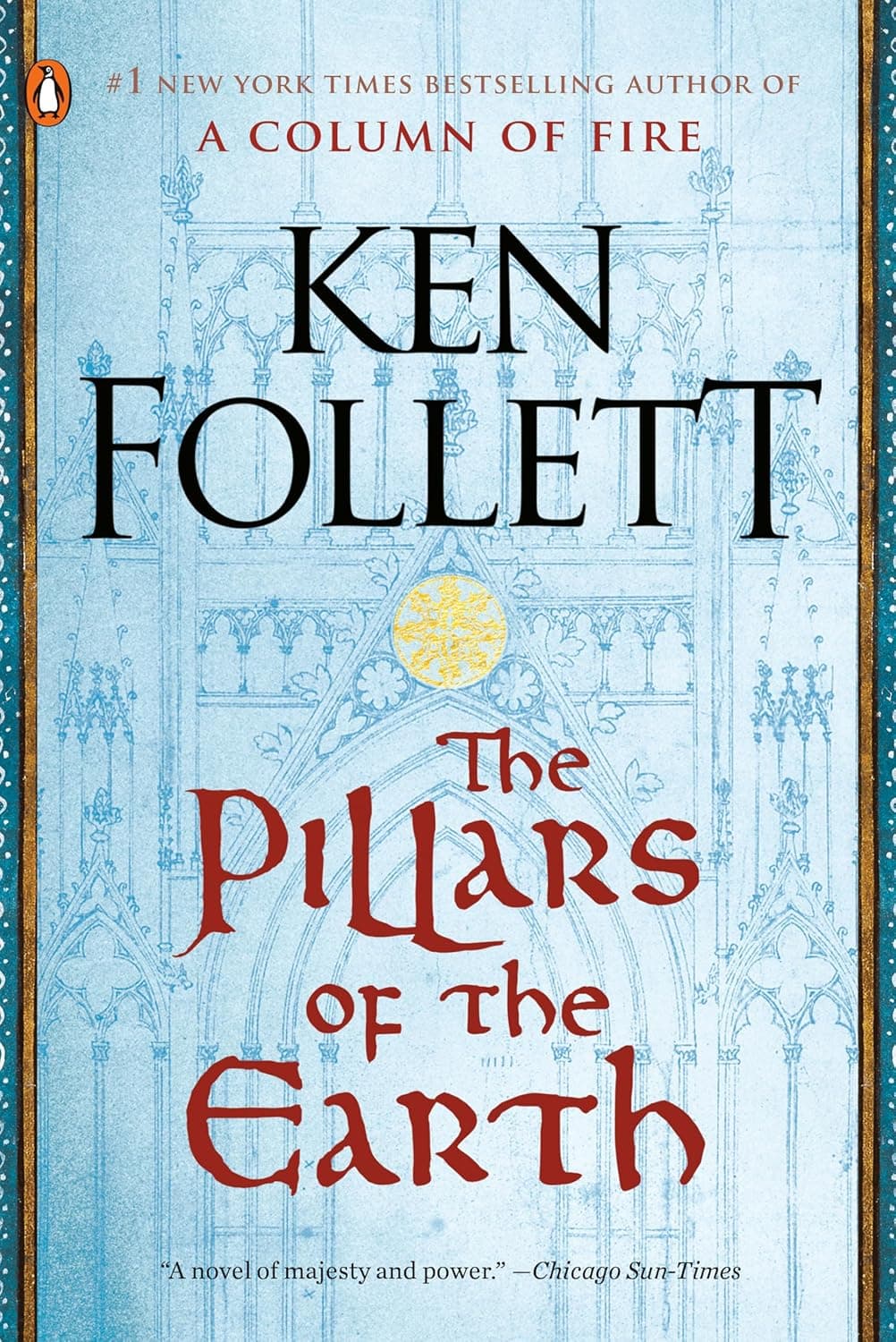
Should you read The Pillars of the Earth?
What works
Tom, Aliena, Philip, Jack, and the cathedral give engineering and institutional change personal continuity across war and famine.
What may not work for you
Villains are extremely villainous, sexual violence is used heavily, prose is functional, and historical complexity sometimes yields to melodrama.
What may test your patience
The long novel repeatedly resets after catastrophe, requiring commitment to rebuilding as its central rhythm rather than expecting steady progress.
Does the ending reward the effort?
Yes. Construction, family, and political arcs reach substantial closure, making the cathedral feel like accumulated collective life rather than backdrop.
Reading The Pillars of the Earth closely
The Pillars of the Earth by Ken Follett is the medieval cathedral-building novel set in war-torn England, following builders, nobles, monks, and townspeople as a grand project reshapes the fictional town of Kingsbridge. It is long, detailed, and surprisingly easy to sink into once you meet the main cast. If this is the book you were trying to identify, see current formats on Amazon.
Every trade matters here. Stone masons, carpenters, wool merchants, and church officials drive the plot as much as kings or earls, and Follett's research shows in the way each scene is built. Market days, sieges, and construction milestones all feel grounded in practical detail. Readers who crave similarly textured novels can browse our historical fiction archive for more recommendations set in this time period and beyond.
Tom Builder thinks in arches and towers, Prior Philip works carefully within church politics, Aliena fights to rebuild her fortune, and Jack tests ideas that older builders dismiss. Their lives change over decades, giving each setback in the cathedral's construction a human cost.
How central is cathedral construction?
The cathedral is not a medieval backdrop or an occasional project. Design, materials, labor, funding, church authority, and construction setbacks keep changing what the characters can attempt across the novel's decades.
That makes architecture the link between private ambition and public life: a practical decision about the building can alter work, faith, status, and political power throughout Kingsbridge.
Three useful comparisons
World Without End
World Without End returns to Kingsbridge generations later with plague and institutional change; read Pillars first.
Best for: Choose it if Caris's fight to practice medicine, Merthin's bridge work, guild rivalries, and the Black Death justify another very long visit to Kingsbridge.
The Evening and the Morning
The prequel shows an earlier Kingsbridge with more fragmented settlement-building.
Best for: Choose it to watch Edgar build, Ragna fight through a hostile legal system, and Aldred protect learning in a settlement controlled by a corrupt bishop.
A Tale of Two Cities
A Tale of Two Cities is shorter, denser, and more rhetorically powerful about history and sacrifice.
Best for: Choose it for revolution, sacrifice, courtroom suspense, family devotion, and a shorter but denser Dickens novel.
Make the next decision