
Author profile
Markus Zusak: books, review, and bibliography
Markus Zusak writes about family, guilt, and ordinary courage in books that make the narrator's hand impossible to miss. Sometimes that directness is moving, and sometimes it pushes too hard.
Biography and criticism
Death, color, and the stories people carry
The Book Thief made Zusak internationally famous, but the voice did not appear from nowhere. His earlier Australian novels were already listening closely to family speech and to young people trying to work out whether they are decent.
Family histories in suburban Sydney
Markus Zusak was born in Sydney in 1975 to an Austrian mother and German father. Stories of his parents' wartime childhoods, including bombing, hunger, and the persecution of Jewish people, helped form the material that became The Book Thief. Before that international success, he published The Underdog books and I Am the Messenger, novels grounded in Australian youth, family, and the uncertain line between good intention and moral action.
Death narrates The Book Thief, collecting colors and human stories while following Liesel Meminger in Nazi Germany. That choice makes sure we never forget that somebody is arranging the story for us. Death often tells us in advance that a character will die, so the question changes from whether it happens to what that life means before it ends.
A style that risks too much on purpose
Zusak uses bold metaphors, interruptions, repeated images, and direct address. The prose can feel overworked when every object is asked to carry emotion. It is much better when Liesel's growing command of words shows how the same language can spread propaganda or help one frightened person reach another.
Bridge of Clay took many years and returns to family through five brothers, grief, building, and myth. Its broken chronology is harder to enter than The Book Thief. Start with I Am the Messenger for a shorter example of his moral storytelling or The Book Thief for the style that defines him. Zusak is openly sentimental, but the feeling works only when a specific act or remembered voice earns it.
Narration as an act of rescue
Death often tells us who will die before the scene arrives. That removes the usual suspense, but it makes the ordinary moments before the death matter more. A historical death toll can turn a person into a number. Zusak uses what would normally be a spoiler to make us pay attention to one life while it is still being lived.
Liesel's theft of books is not simply rebellion against censorship. At first, words are objects whose power she cannot fully read. Learning gives her access to stories, insults, comfort, propaganda, and the possibility of composing an account. The novel does not make literacy automatically virtuous. Nazi language is literate. The moral question is who chooses the words and what relationship the language asks a listener to accept.
Zusak's metaphors divide readers because they arrive so often and plainly want to be remembered. Some capture the strange way a child or Death might see the world. Others make you notice the author when you should be inside the moment. His best passages bring back one color or object and let it gather meaning instead of demanding a new symbol in every sentence.
Bridge of Clay tells its family story in fragments, so the reader has to wait while the brothers, their grief, old myths, and the work of construction fall into place. Zusak's narrators keep trying to build something from incomplete memories. A stolen book or a bridge cannot undo a death, but making it gives grief somewhere to go.
Fragments, direct address, and emotional timing
Zusak interrupts the story with headings, definitions, asides, lists, and direct warnings. In The Book Thief, Death sounds like someone sorting an archive who cannot keep it impersonal. An interruption may reveal an outcome, isolate an object, or stop us over a detail that the plot would otherwise rush past. The method becomes sentimental when every pause demands importance. It works when the pause actually changes how long a moment feels.
Bridge of Clay is harder to enter because its fragments do not have the familiar history of The Book Thief to orient us. Brothers, parents, myths, animals, running, and construction first appear as loose pieces. The bridge eventually joins them, both as a real project and as a picture of how the story is being built. In both novels, people make things after a loss because the work puts one step after another when memory will not. Zusak's style is deliberately excessive, but his simplest returns often last longest: an ordinary word comes back, and now it carries the whole story behind it.
Where to begin
The Markus Zusak book reviewed here
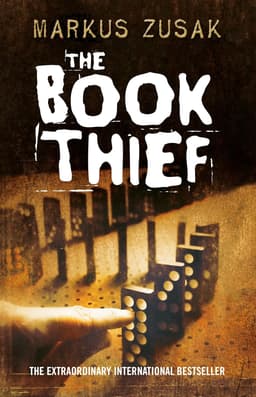
The Book Thief
4.5 / 5The Book Thief sometimes strains for tears, but Liesel's life with Hans, Rosa, Rudy, and Max gives its sorrow real weight.
Bibliography
Books by Markus Zusak
Reviews and book guides open on Book Review Guide. The full list comes from the linked bibliography source.
Reviewed
The Book Thief
Not reviewed yet
Die Bücherdiebin
Not reviewed yet
kids' night in
Not reviewed yet
I Am the Messenger
Not reviewed yet
Fighting Ruben Wolfe

Not reviewed yet
A Garota Que Eu Quero

Not reviewed yet
Underdogs
Not reviewed yet
This Is Push
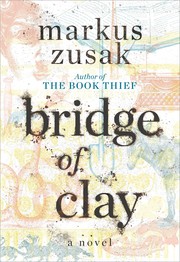
Not reviewed yet
Bridge of Clay
Not reviewed yet
Book Thief/I Am the Messenger Paperback Boxed Set
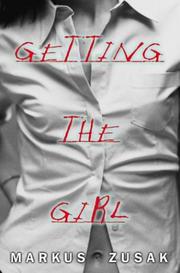
Not reviewed yet
Getting the Girl
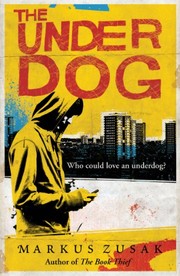
Not reviewed yet
The Underdog
Bibliographic source: Open Library.
Books on this site
Markus Zusak reviews and guides
20074.5 / 5
The Book Thief
A Novel
The Book Thief sometimes strains for tears, but Liesel's life with Hans, Rosa, Rudy, and Max gives its sorrow real weight.
As an Amazon Associate, I earn from qualifying purchases.
Keep exploring