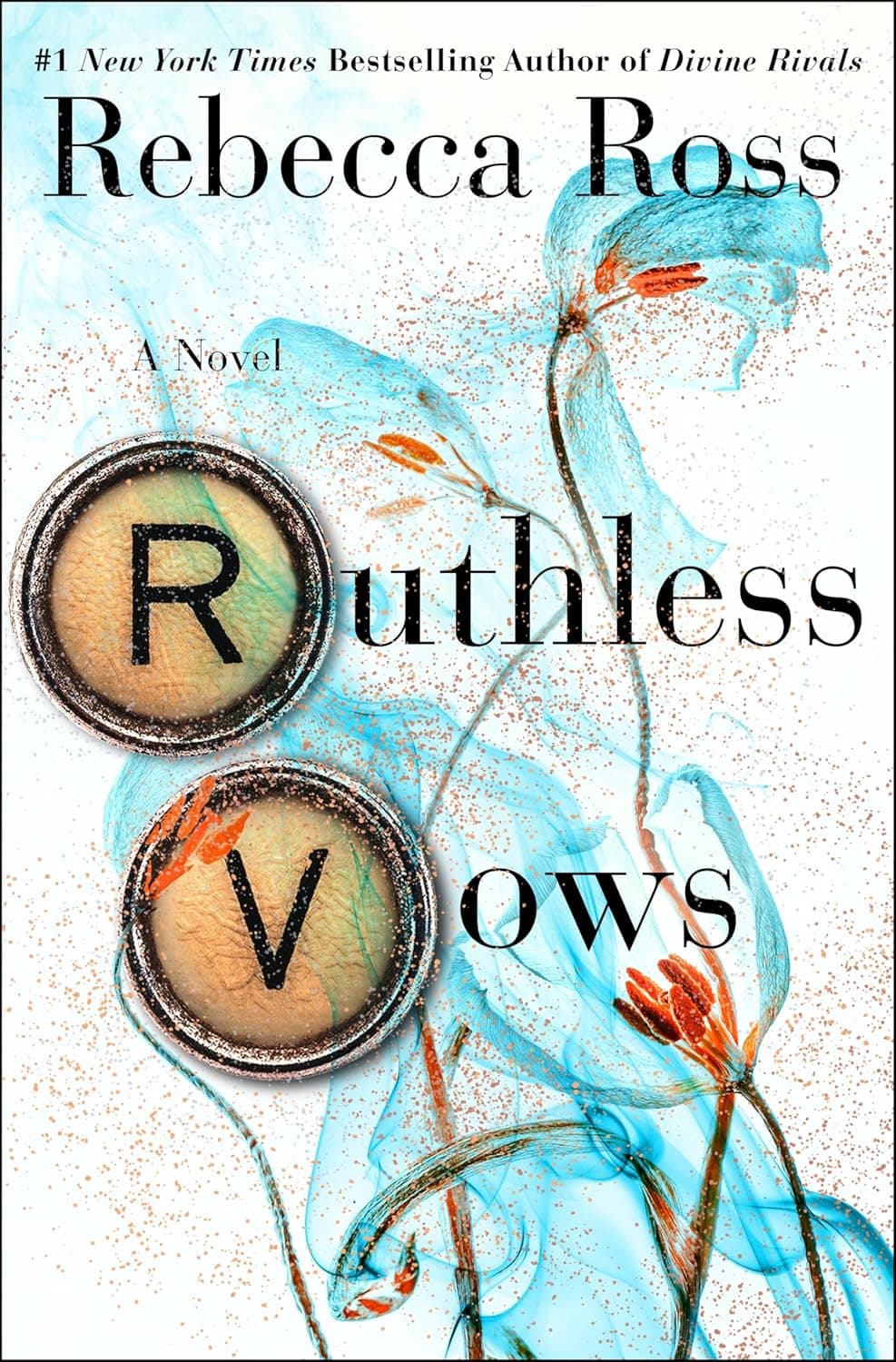
Should you read Ruthless Vows?
What works
Separation, memory, divided loyalties, and renewed writing keep the relationship active under direct political and divine pressure.
What may not work for you
The gods remain archetypal, military resolution is compressed, and several side characters serve the couple's path more than their own.
What may test your patience
The opening must reestablish Roman's circumstances and Iris's response before letters and agency reconnect the two lines.
Does the ending reward the effort?
Yes. The couple and war receive clear closure, with grief acknowledged rather than erased by romantic reunion.
Reading Ruthless Vows closely
Ruthless Vows is the second and final novel in the Letters of Enchantment duology, following Iris Winnow and Roman Kitt through its final, war torn stretch. Read Divine Rivals first; consult the Divine Rivals reading order when deciding where the optional shared-world standalone Wild Reverence fits.
Instead of trying to top the swoony surprise of magical typewriters, Ruthless Vows leans into consequences: trauma, missing time, loyalty tests and the ugly realities of propaganda. Iris and Attie head back to the front as journalists, trying to tell the truth about a war their own city refuses to face, while Roman becomes the polished voice of a god he barely understands. The letters between them shift from meet cute magic to a lifeline that slowly stitches identity and trust back together.
Ruthless Vows is heavier than Divine Rivals. It focuses on wartime danger, grief, nightmares and the cost of power, with several intense battle scenes and on-page deaths. The relationship is passionate and tender, with implied intimacy and fade-to-black moments rather than explicit detail.
For anyone wondering if Ruthless Vows is darker than Divine Rivals, the answer is yes in mood, not in nihilism. The stakes are higher, Dacre is on the page more often, and Roman’s amnesia hurts, yet the book keeps circling back to hope, chosen family and the idea that words can still change the tide of a war. Read in order as Divine Rivals first and Ruthless Vows second: it works as a satisfying conclusion that answers big questions without explaining every mystery away. After the duology, try Iron Flame for more explicit romance and magic action, or Mockingjay for a harsher war and propaganda story.
Three useful comparisons
Divine Rivals
Divine Rivals is more intimate, original, and required before this conclusion.
Best for: Gentle enemies-to-lovers tension meets magical correspondence, grief, war, and lyrical YA romantasy.
Mockingjay
Mockingjay offers a harsher account of propaganda, war, trauma, and young people used by rival causes.
Best for: Series readers prepared for propaganda, trauma, moral ambiguity, war, and a less crowd-pleasing conclusion.
Iron Flame
Iron Flame supplies more explicit romance and magic action but far messier relationship communication.
Best for: Fourth Wing readers wanting more rebellion, dragons, spice, and cliffhangers despite a messier structure.
Make the next decision