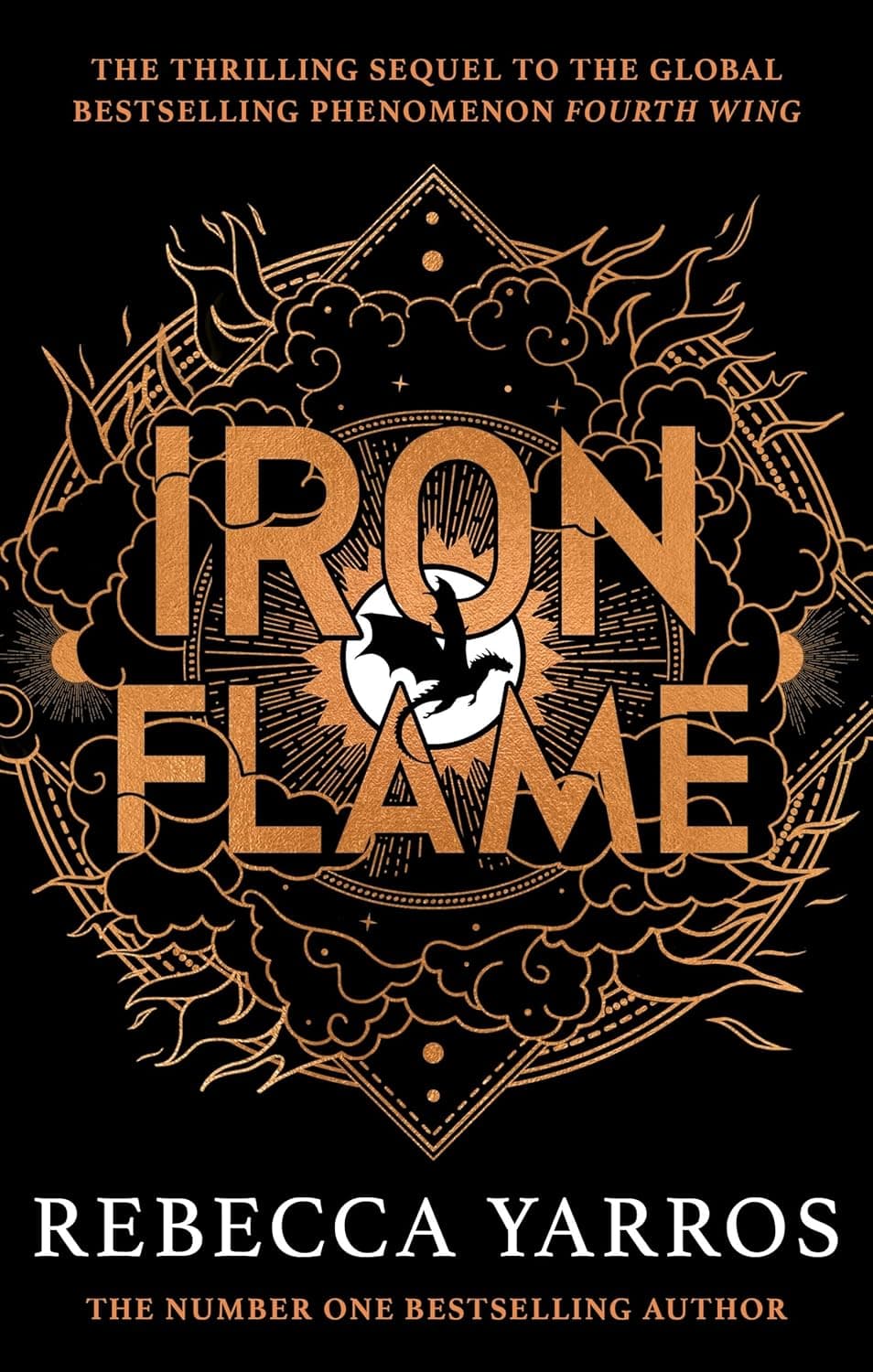
Should you read Iron Flame?
What works
Violet's training, archives, signet questions, dragon bonds, and changing institutional loyalty give the sequel real escalation.
What may not work for you
Xaden and Violet recycle trust arguments, new characters crowd the cast, pacing lurches, and world rules accumulate faster than they clarify.
What may test your patience
The long middle alternates missions, classes, research, and romantic conflict without one stable objective until late.
Does the ending reward the effort?
The final battle and revelation are forceful series hooks, but emotional resolution is deliberately sacrificed for another crisis.
Reading Iron Flame closely
Iron Flame throws Violet Sorrengail into a harsher second year at Basgiath, where brutal training, buried secrets, and dragon-bonded loyalties create more pressure than the first book did.
Iron Flame rarely pauses. Trials lead into missions, secrets trigger new arguments, and nearly every chapter is built to end under pressure. That speed makes the book easy to keep reading, but it also leaves important discoveries and losses less room to settle.
Violet and Xaden spend too much of the middle repeating the same dispute about trust. Their reasons are understandable, yet the cycle of demand, refusal, attraction, and renewed suspicion begins to feel manufactured. The dragons are more decisive company because their loyalties come with limits that the story respects.
The war beyond Basgiath becomes clearer, and the academy's lessons acquire a more sinister purpose. The expanded politics are useful, though explanations often arrive during an already crowded stretch of action. This is a bigger sequel in every sense, including length, and it could lose a substantial number of pages without losing its plot.
The content is darker than in the first book, with on-page violence, torture, and sexual content. Yarros signals those elements early.
Readers who want to dig deeper into the series afterward can look up interview archives at Tor.com for discussions about dragon warfare and the craft behind popular romantasy.
Three useful comparisons
Fourth Wing
Fourth Wing is cleaner, more immediately addictive, and required before the sequel's politics.
Best for: Come for dragons, lethal academy competition, disability-aware adaptation, explicit romance, and fast cliffhanger plotting.
Onyx Storm
Onyx Storm continues the unresolved magical and relationship consequences with an even wider world.
Best for: Established Empyrean readers invested in Violet, Xaden, dragons, romantic conflict, and expanding rebellion mythology.
Divine Rivals
Divine Rivals offers gentler prose, stronger letter-based intimacy, and less rule-heavy fantasy war.
Best for: Gentle enemies-to-lovers tension meets magical correspondence, grief, war, and lyrical YA romantasy.
Make the next decision