What to read next
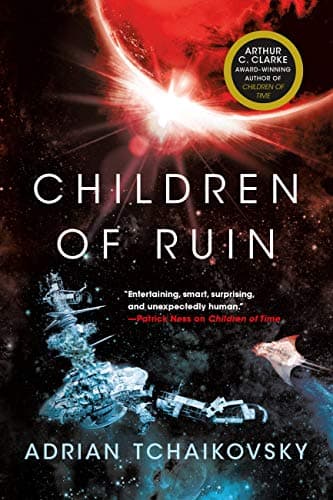
10 books like Children of Ruin
The octopuses do not think as centralized humans, and their shifting emotional color, limb intelligence, and politics force the narrative to change how intention is described. If that is what you want more of after Children of Ruin, these recommendations preserve that appeal in different ways, without pretending every similar book offers the same experience.
Start with our Children of Ruin review by Adrian Tchaikovsky.

Choose by reading mood
Where to start
For the fastest read
Shards of Earth
BalancedFor the gentlest option
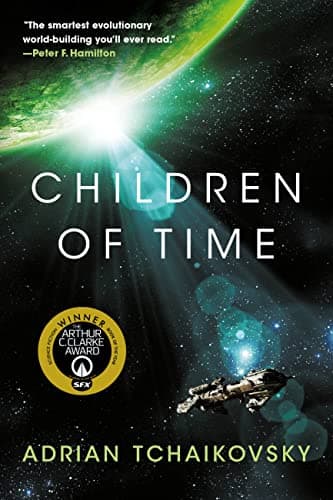
Children of Time
GentleFor minimal romance
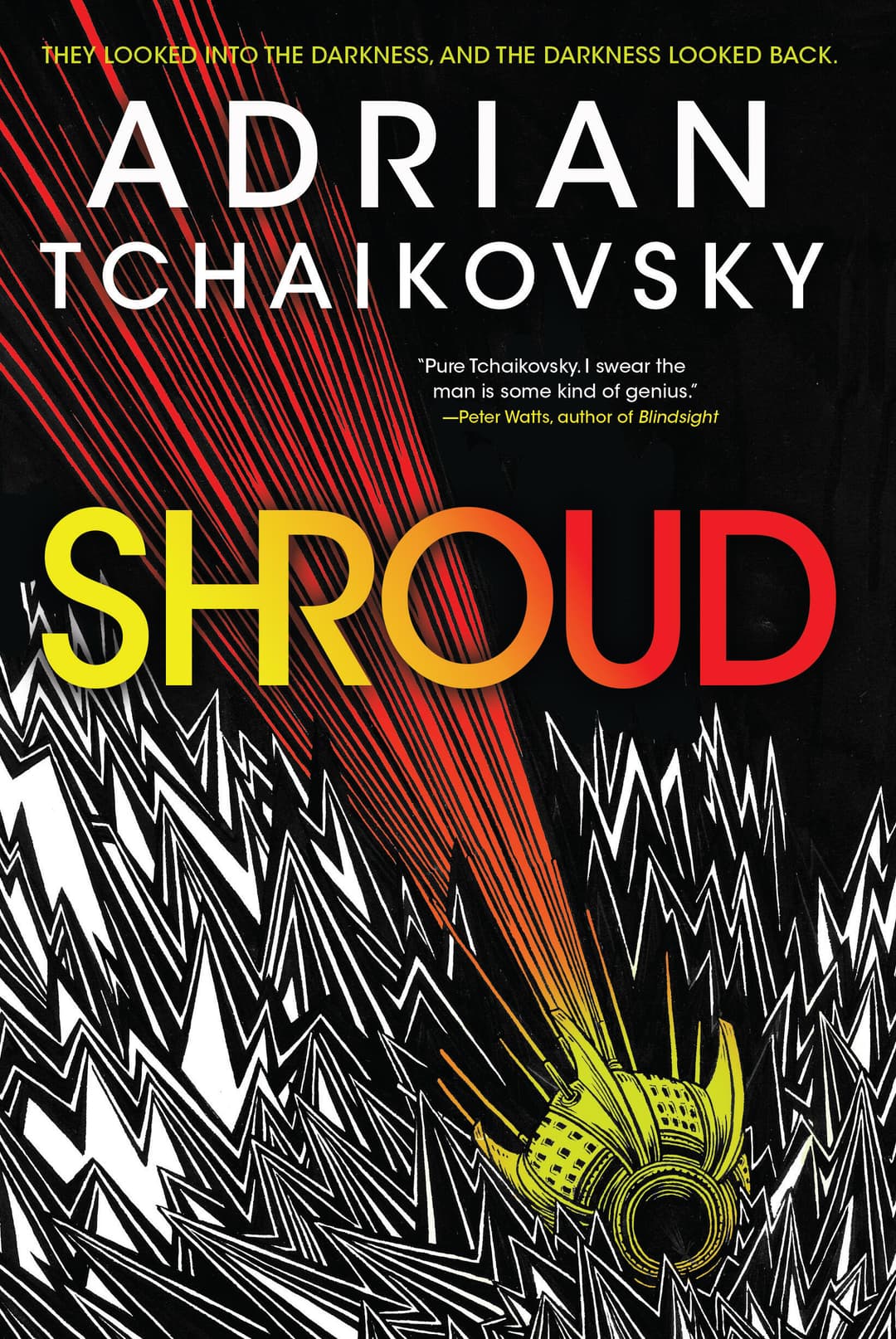
Shroud
MinimalFor the easiest entry
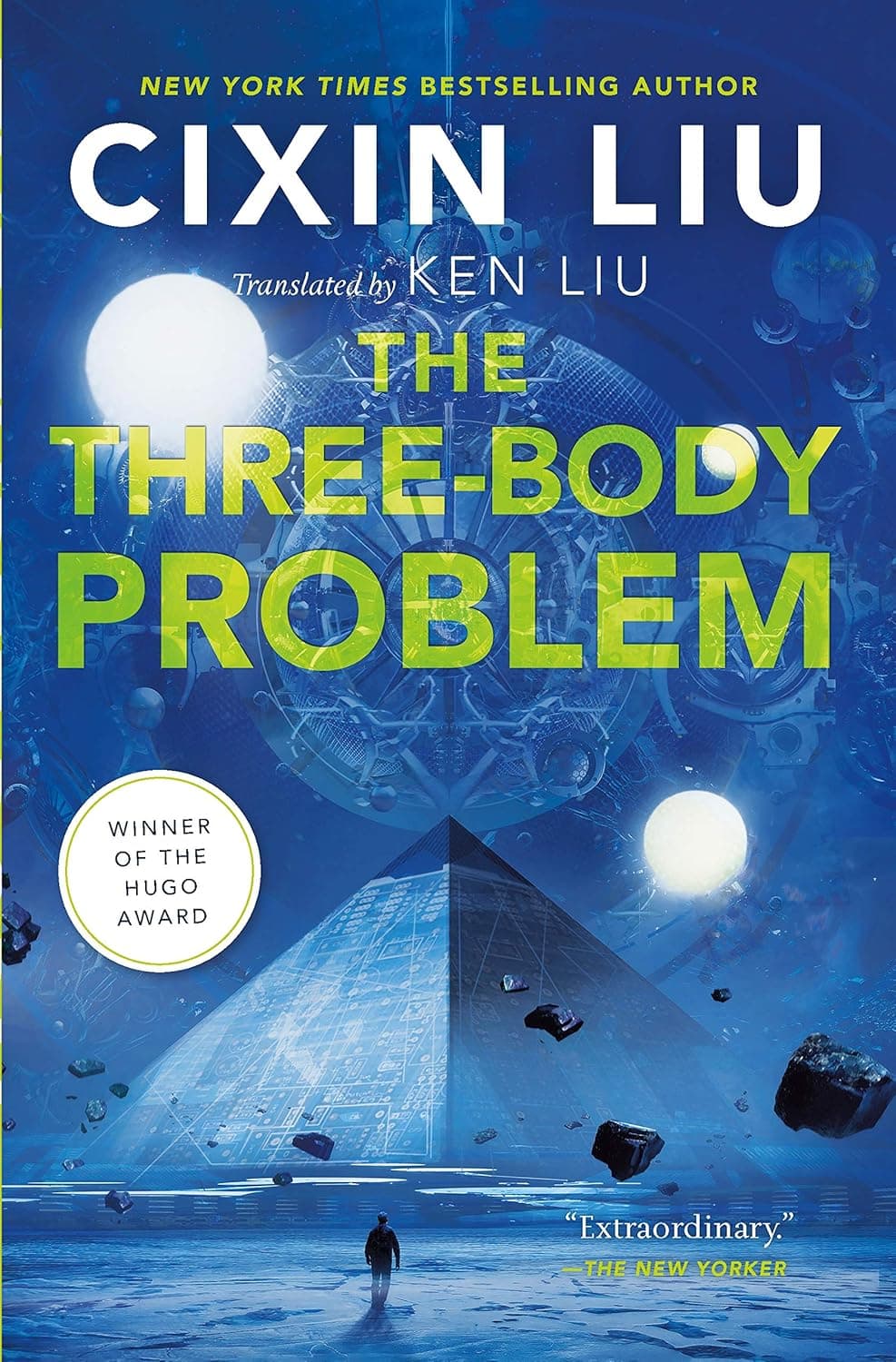
The Three-Body Problem
ModerateThe full shortlist
Why each book belongs here
Each match is judged against Children of Ruin, not merely placed beside it because the books share a broad genre label.
Children of Time
- Shared ground
- Both books use distance, alien environments, or interstellar travel to change the scale of the conflict.
- What changes
- Children of Time is cleaner and more cumulative; read it first for the civilizations and emotional foundation.
- Best for
- Readers who like big evolutionary ideas, nonhuman viewpoints, and long time scales more than a conventional hero's journey.
- Pace Balanced
- Darkness Gentle
- Romance Minimal
- Difficulty Moderate
Shroud
- Shared ground
- Both books use distance, alien environments, or interstellar travel to change the scale of the conflict.
- What changes
- Shroud concentrates first-contact difficulty inside one hostile world and works without series preparation.
- Best for
- Readers of rigorous first contact, hostile-environment survival, alien cognition, and detailed ecological science fiction.
- Pace Measured
- Darkness Gentle
- Romance Minimal
- Difficulty Demanding
The Three-Body Problem
- Shared ground
- Both books make observation, missing information, and the search for an explanation part of the pleasure.
- What changes
- Three-Body emphasizes physics, history, and ideological fracture rather than embodied alien viewpoint.
- Best for
- Readers who enjoy hard science fiction, first contact, conceptual mystery, and political history more than character-led adventure.
- Pace Balanced
- Darkness Gentle
- Romance Minimal
- Difficulty Moderate
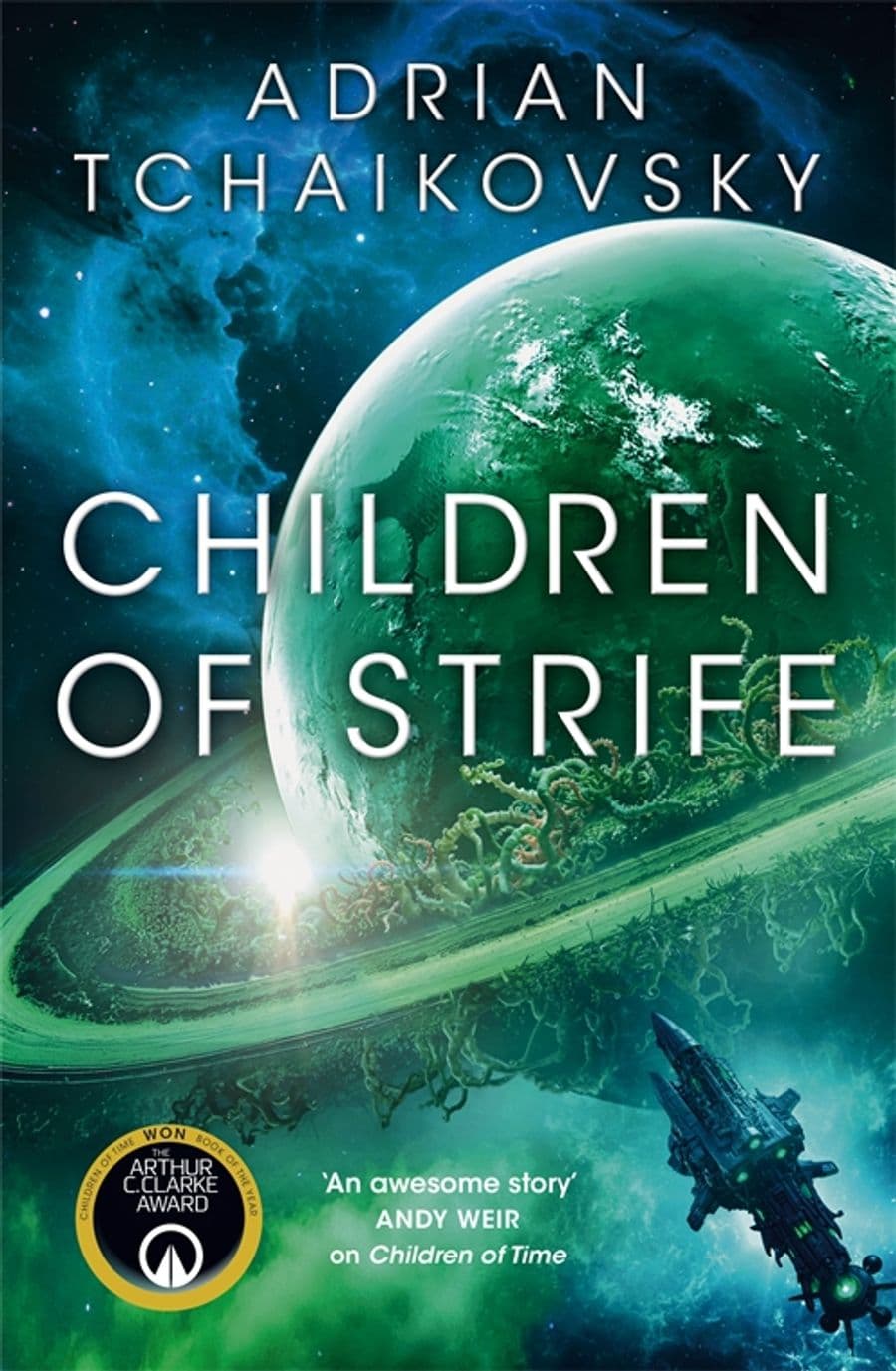
Children of Strife
- Shared ground
- Both books make observation, missing information, and the search for an explanation part of the pleasure.
- What changes
- Children of Strife has a similar overall reading load, but changes the emphasis. Cato's mantis-shrimp perspective and Kern's long memory keep questions of intelligence, vanity, and designed life from returning to a human default.
- Best for
- Readers current with Children of Time who want long-form uplift, first contact, nonhuman minds, and scientific mystery.
- Pace Balanced
- Darkness Gentle
- Romance Minimal
- Difficulty Moderate
Shards of Earth
- Shared ground
- Both books make observation, missing information, and the search for an explanation part of the pleasure.
- What changes
- Shards of Earth is faster than Children of Ruin. Idris's damaged value to competing powers and the Vulture God's improvised family keep the Architects from becoming an abstract cosmic threat.
- Best for
- Readers wanting found-family crews, diverse aliens, political factions, salvage work, and large-scale space-opera danger.
- Pace Balanced
- Darkness Gentle
- Romance Minimal
- Difficulty Moderate
Revelation Space
- Shared ground
- Both books make observation, missing information, and the search for an explanation part of the pleasure.
- What changes
- Revelation Space is more demanding than Children of Ruin. The Amarantin extinction turns ruins into testimony, while Sylveste, Volyova, and Khouri approach the same threat through incompatible motives.
- Best for
- Patient readers wanting hard science fiction, archaeology, deep time, morally difficult characters, and cosmic danger.
- Pace Measured
- Darkness Gentle
- Romance Minimal
- Difficulty Demanding
On the Steel Breeze
- Shared ground
- Both books treat power as a system of competing interests rather than a single villain.
- What changes
- On the Steel Breeze has a similar overall reading load, but changes the emphasis. Chiku's divided continuations, the holoships, Watchkeepers, and Crucible turn identity and governance into practical survival questions.
- Best for
- Blue Remembered Earth readers wanting generation ships, artificial intelligence, identity copies, and higher-stakes space travel.
- Pace Measured
- Darkness Gentle
- Romance Minimal
- Difficulty Demanding
Beyond the Aquila Rift
- Shared ground
- Both books use distance, alien environments, or interstellar travel to change the scale of the conflict.
- What changes
- Beyond the Aquila Rift has a similar overall reading load, but changes the emphasis. Long novellas and short pieces show technology changing grief, distance, art, war, and identity rather than repeating one space-opera mode.
- Best for
- Newcomers wanting a substantial Reynolds sampler and established readers collecting major standalone short fiction.
- Pace Balanced
- Darkness Moderate
- Romance Minimal
- Difficulty Moderate
Diamond Dogs, Turquoise Days
- Shared ground
- Both books use distance, alien environments, or interstellar travel to change the scale of the conflict.
- What changes
- Diamond Dogs, Turquoise Days has a similar overall reading load, but changes the emphasis. The Blood Spire turns intellect into obsession and mutilation, while the Pattern Jugglers make memory an ecological and ethical relationship.
- Best for
- Readers wanting compact hard SF, mathematical traps, body horror, alien oceans, and Revelation Space ideas without a full novel.
- Pace Measured
- Darkness Moderate
- Romance Minimal
- Difficulty Moderate
Belladonna Nights and Other Stories
- Shared ground
- Both books use distance, alien environments, or interstellar travel to change the scale of the conflict.
- What changes
- Belladonna Nights and Other Stories has a similar overall reading load, but changes the emphasis. Returning universes sit beside independent tales of deep time, machines, art, grief, and survival, with mature control of emotional scale.
- Best for
- Reynolds readers wanting later short fiction, familiar universes, deep time, and more emotional variety.
- Pace Balanced
- Darkness Moderate
- Romance Minimal
- Difficulty Moderate
Side-by-side
Pace, darkness, romance, and difficulty
Use these labels as directional guidance. The individual notes above explain the tradeoffs.
| Book | Pace | Darkness | Romance | Difficulty |
|---|---|---|---|---|
| Children of Ruin | Measured | Moderate | Minimal | Moderate |
| Children of Time | Balanced | Gentle | Minimal | Moderate |
| Shroud | Measured | Gentle | Minimal | Demanding |
| The Three-Body Problem | Balanced | Gentle | Minimal | Moderate |
| Children of Strife | Balanced | Gentle | Minimal | Moderate |
| Shards of Earth | Balanced | Gentle | Minimal | Moderate |
| Revelation Space | Measured | Gentle | Minimal | Demanding |
| On the Steel Breeze | Measured | Gentle | Minimal | Demanding |
| Beyond the Aquila Rift | Balanced | Moderate | Minimal | Moderate |
| Diamond Dogs, Turquoise Days | Measured | Moderate | Minimal | Moderate |
| Belladonna Nights and Other Stories | Balanced | Moderate | Minimal | Moderate |
Keep exploring
Explore another Books Like guide
Start from another familiar book and compare a new set of reading paths.