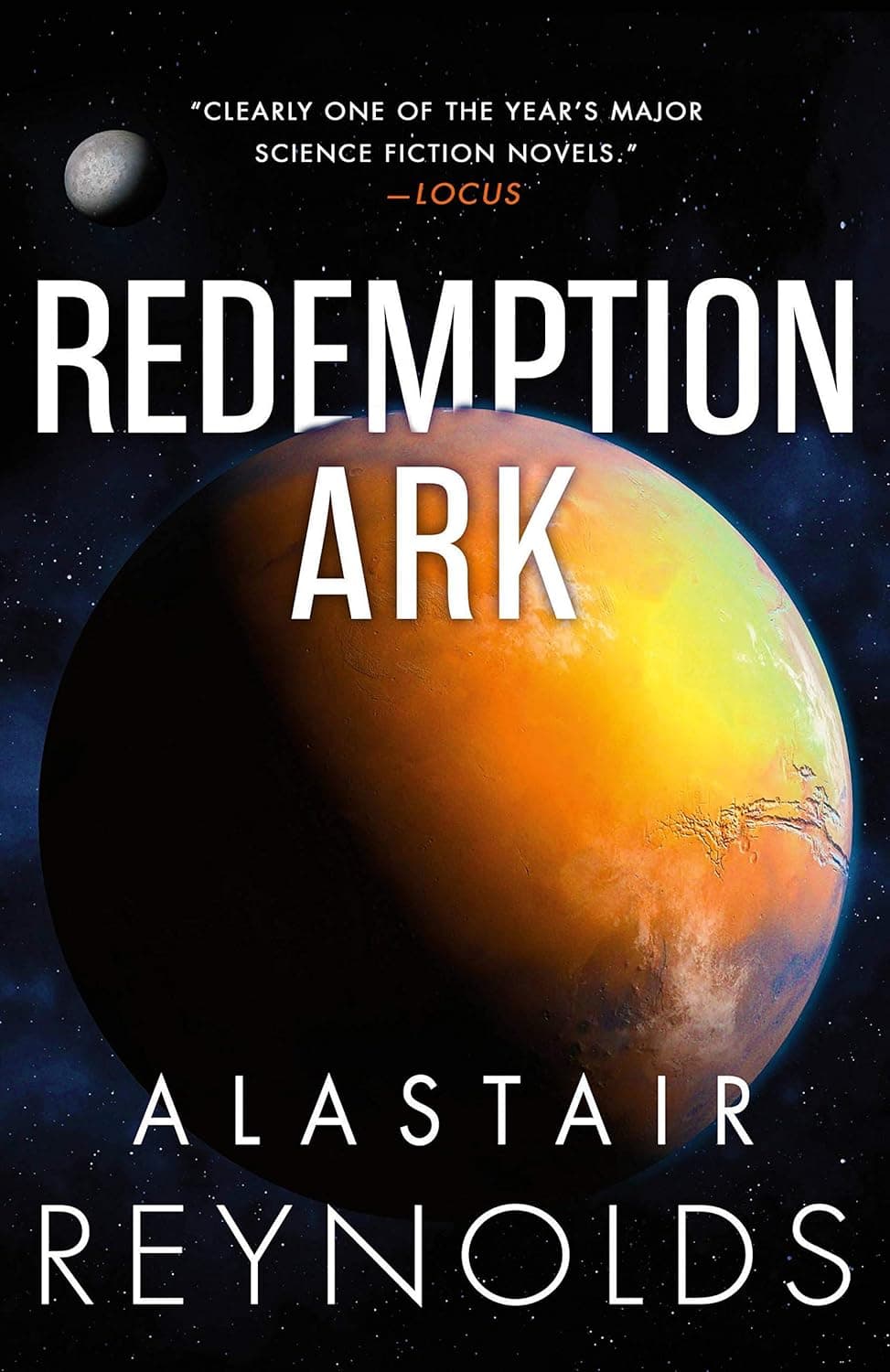
Should you read Redemption Ark?
What works
Clavain and Skade's shared Conjoiner history makes their conflict intimate, while the Inhibitors force every faction to price survival against moral risk.
What may not work for you
The cast and continuity are dense, some planetary characters receive limited depth, and technical pursuit can overwhelm intimacy.
What may test your patience
Multiple ships, factions, and delayed communications must align before the weapon pursuit and Resurgam evacuation become one crisis.
Does the ending reward the effort?
Yes as the trilogy's middle movement. It delivers major choices and costly movement while leaving the species-level war unresolved.
Reading Redemption Ark closely
Redemption Ark moves the Inhibitors from distant explanation to active threat. Human activity around Resurgam has attracted machines designed to suppress spacefaring civilizations, and evacuation becomes urgent even though most people cannot understand the scale or speed of what is approaching.
Nevil Clavain, a centuries-old Conjoiner veteran, learns that Skade intends to obtain the cache of Hell-class weapons aboard Nostalgia for Infinity. His defection turns the novel into a pursuit between people who share mental technologies and history but disagree about who can be trusted with weapons powerful enough to matter against the Inhibitors.
The sequel is more propulsive than Revelation Space, with factional strategy, ship combat, rescue decisions, and the return of familiar characters. Reynolds still refuses simple heroism: every possible defense carries catastrophic risk, and the people trying to save humanity must decide which populations, loyalties, and moral limits can survive the emergency.
The Inhibitor threat becomes immediate
The machines operate on timescales and strategic assumptions larger than one human conflict. Their arrival turns the earlier extinction mystery into a practical problem while preserving their alien quality: survival requires understanding an enemy that treats civilizations as recurring patterns.
Clavain and Skade's divided Conjoiner vision
Both characters emerge from a society built on shared minds, yet secrecy and political purpose remain possible. Their conflict tests whether collective intelligence eliminates individual ambition or simply gives power new, more intimate mechanisms.
Pacing, scale, and reading order
The book alternates evacuation, pursuit, and internal conflict across several ships and systems. It should be read after Revelation Space because it continues the Inhibitor discovery, Nostalgia for Infinity crew, and Resurgam plot rather than reintroducing them for newcomers.
Three useful comparisons
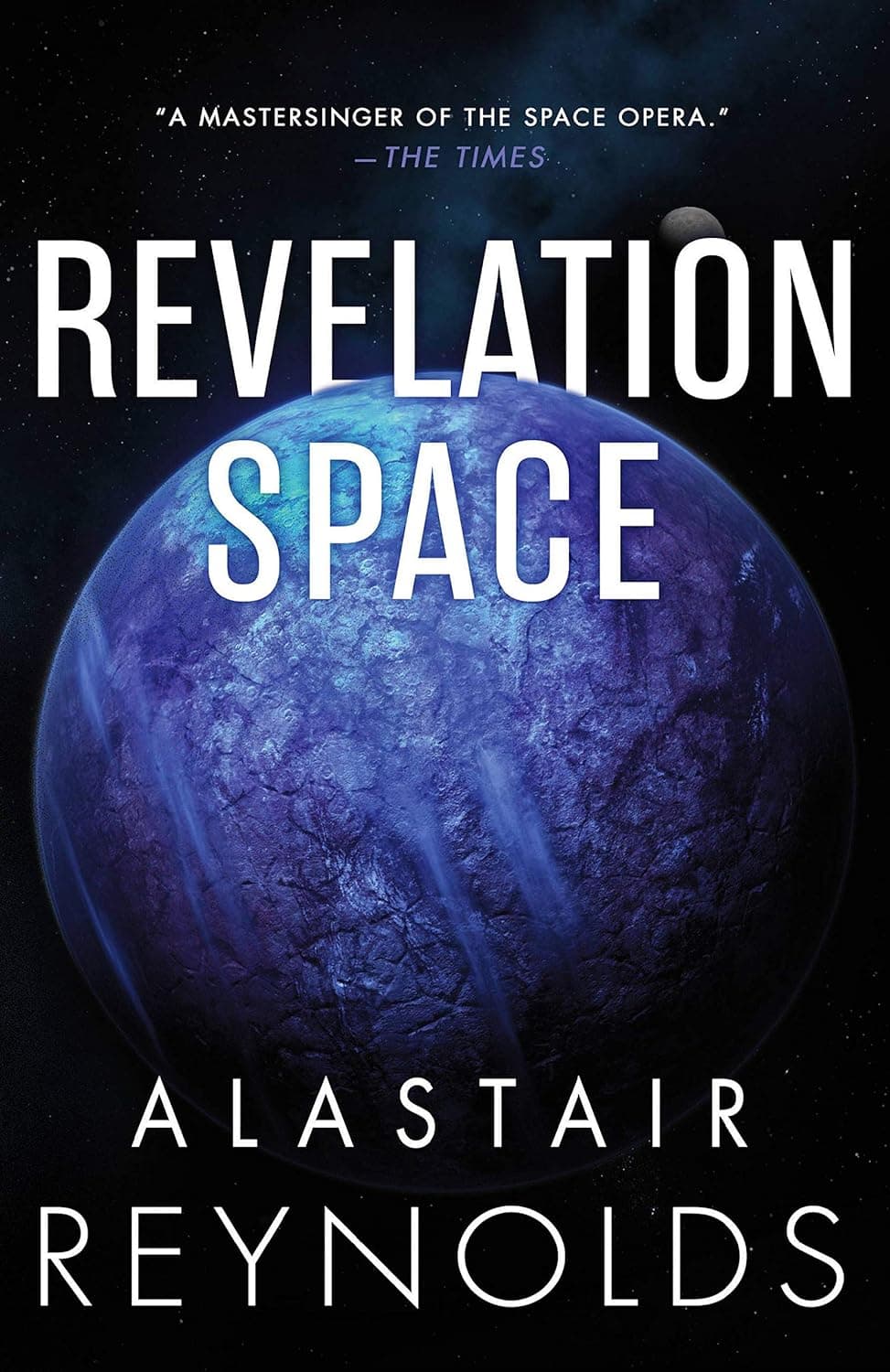
Revelation Space
Revelation Space is the required, slower foundation for every returning character and threat.
Best for: Patient readers wanting hard science fiction, archaeology, deep time, morally difficult characters, and cosmic danger.
As an Amazon Associate, I earn from qualifying purchases.
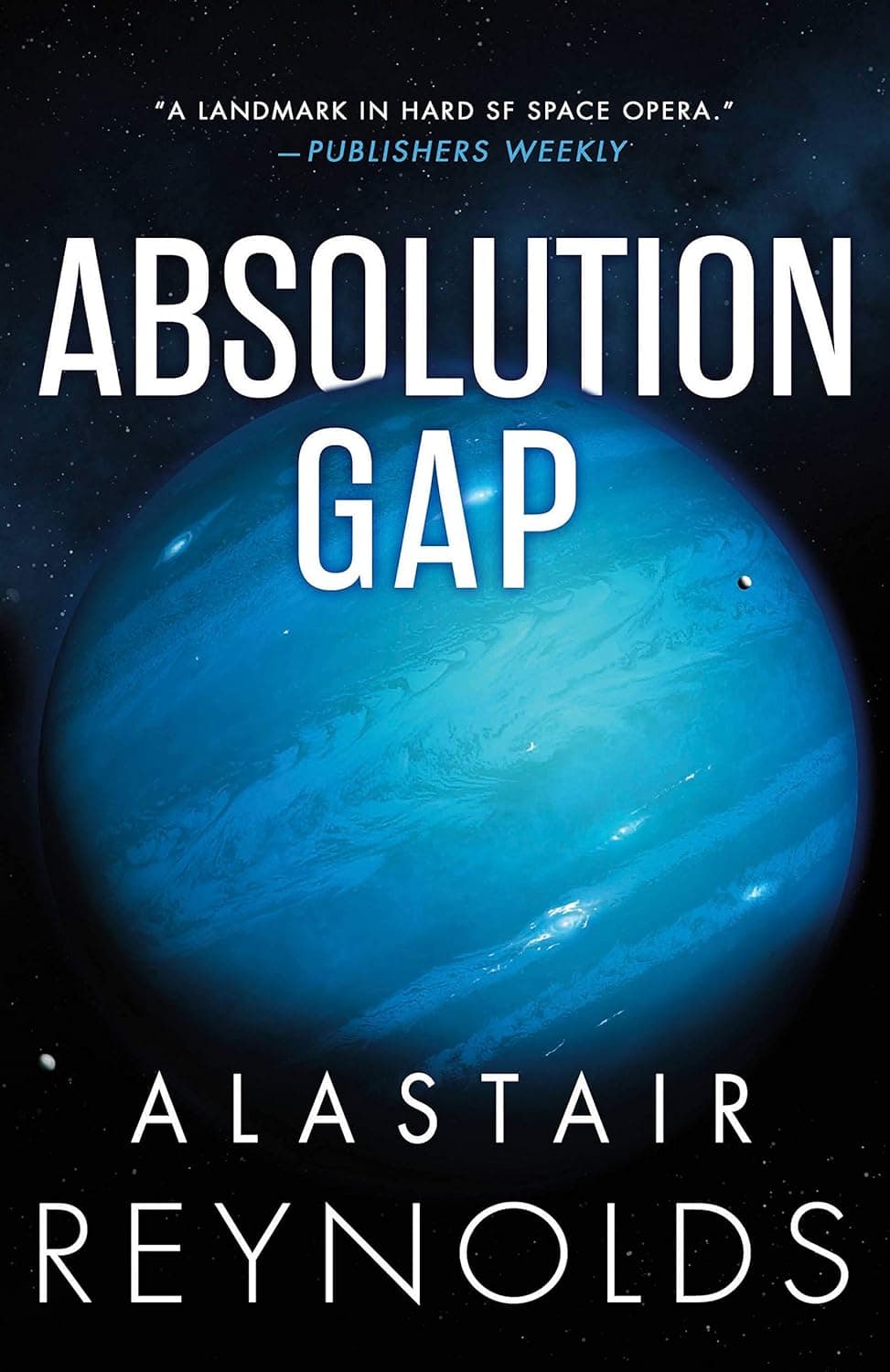
Absolution Gap
Absolution Gap continues the conflict but shifts heavily toward religion and a divisive form of closure.
Best for: Committed trilogy readers comfortable with religious worldbuilding, delayed convergence, and oblique rather than military closure.
As an Amazon Associate, I earn from qualifying purchases.
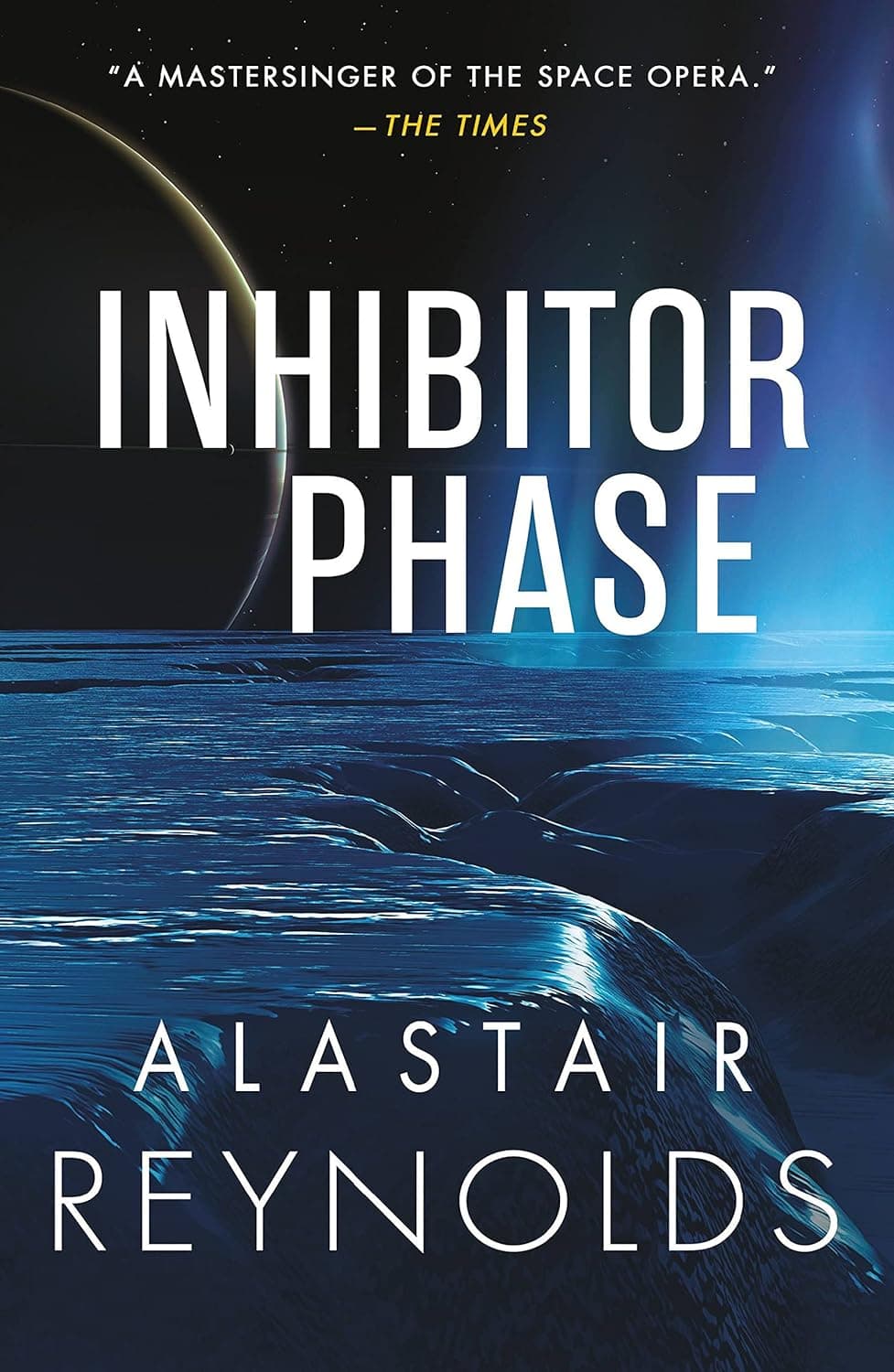
Inhibitor Phase
Inhibitor Phase revisits the war much later with a more direct survival mission and series knowledge assumed.
Best for: Experienced Revelation Space readers wanting a later survival mission and stronger engagement with the Inhibitor war.
As an Amazon Associate, I earn from qualifying purchases.
Make the next decision