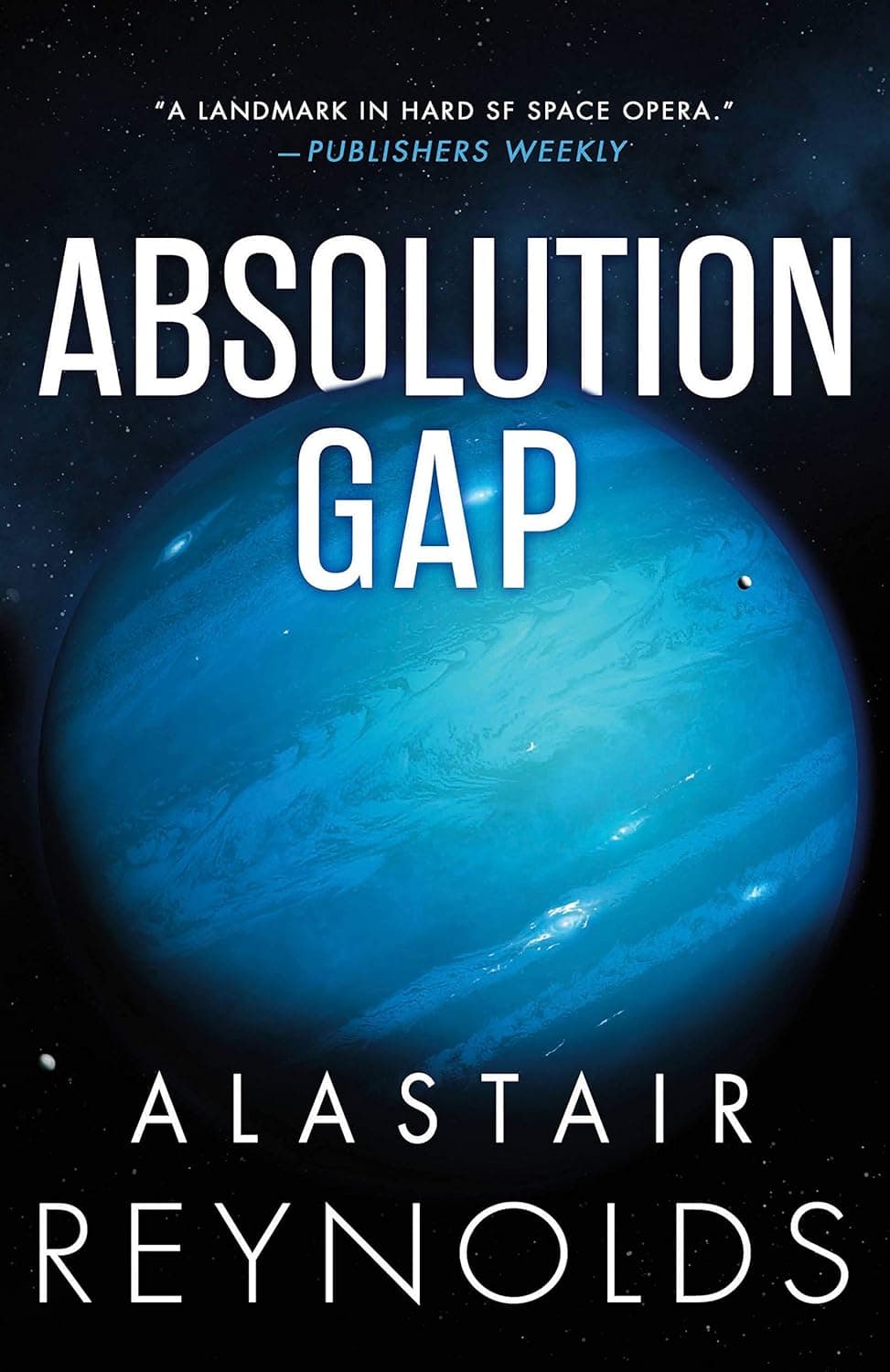
Should you read Absolution Gap?
What works
Hela's moving cathedrals turn belief into infrastructure, showing how a genuine astronomical anomaly can support coercive authority.
What may not work for you
The Hela plot dominates, Quaiche's religion is prolonged, and major war consequences are compressed or pushed offstage.
What may test your patience
Cathedral politics and observation of Haldora occupy long stretches while readers wait to rejoin the trilogy's established conflict.
Does the ending reward the effort?
Only partly. The thematic connection lands, but the abrupt treatment of the larger war remains a real structural disappointment.
Reading Absolution Gap closely
Absolution Gap continues the struggle against the Inhibitors while opening on Hela, a moon whose inhabitants follow enormous moving cathedrals. The cathedrals remain positioned to observe Haldora, a gas giant that appears to vanish for an instant, an event Quaiche turns into the foundation of a coercive religion.
Elsewhere, survivors connected to the Nostalgia for Infinity search for allies and technologies capable of changing humanity's prospects. The plot links personal grief, altered identity, alien intelligence, and the difficulty of coordinating resistance when travel and information still require years.
The novel is ambitious and atmospheric, especially in its images of mobile cathedrals and obsessive observation. It is also divisive because Hela occupies much of the book while major consequences of the Inhibitor war are compressed or displaced. Readers should expect thematic closure and expanded mysteries rather than a tidy military resolution.
Faith organized around an astronomical anomaly
Haldora's disappearance may be miracle, signal, or misunderstood physics. Quaiche converts uncertainty into authority, showing how a genuine mystery can support an institution that punishes doubt and uses engineering, spectacle, and pain to maintain belief.
Moving cathedrals and unequal survival
The cathedrals crawl constantly to preserve their view, forcing entire communities into competition. Their scale turns religious devotion into infrastructure and makes individual lives dependent on leaders whose interpretation of one distant planet governs food, movement, and safety.
Ending, difficulty, and expectations
This should be read after Revelation Space and Redemption Ark. It advances the core characters and conflict, but its ending is deliberately oblique and abrupt for readers expecting every war thread to resolve on page; later Inhibitor Phase revisits the universe from another angle.
Three useful comparisons
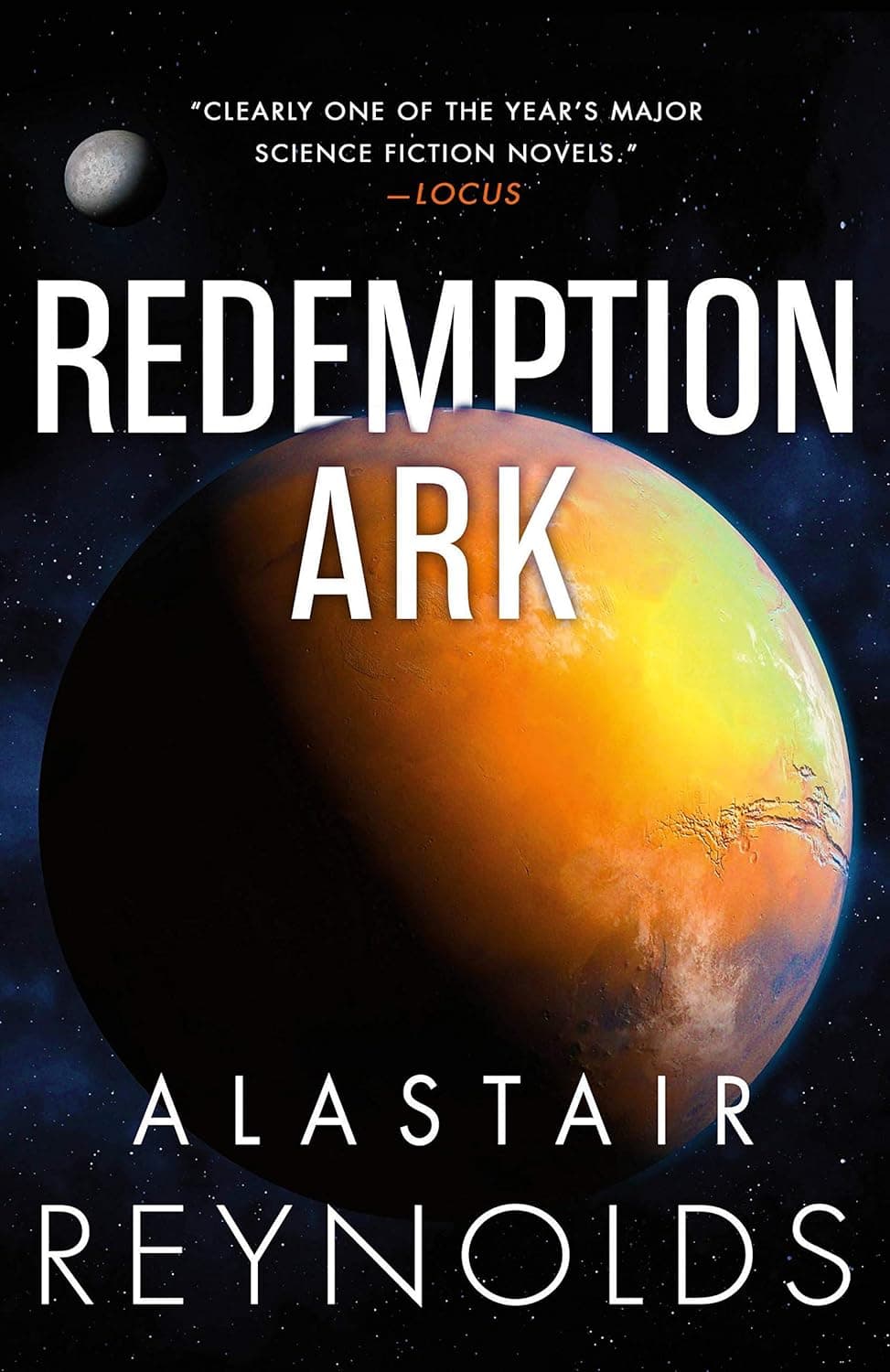
Redemption Ark
Redemption Ark is more coherent and propulsive, with the trilogy's strongest strategic conflict.
Best for: Revelation Space readers ready for faster space opera, factional strategy, evacuation, and ethically dangerous technology.
As an Amazon Associate, I earn from qualifying purchases.
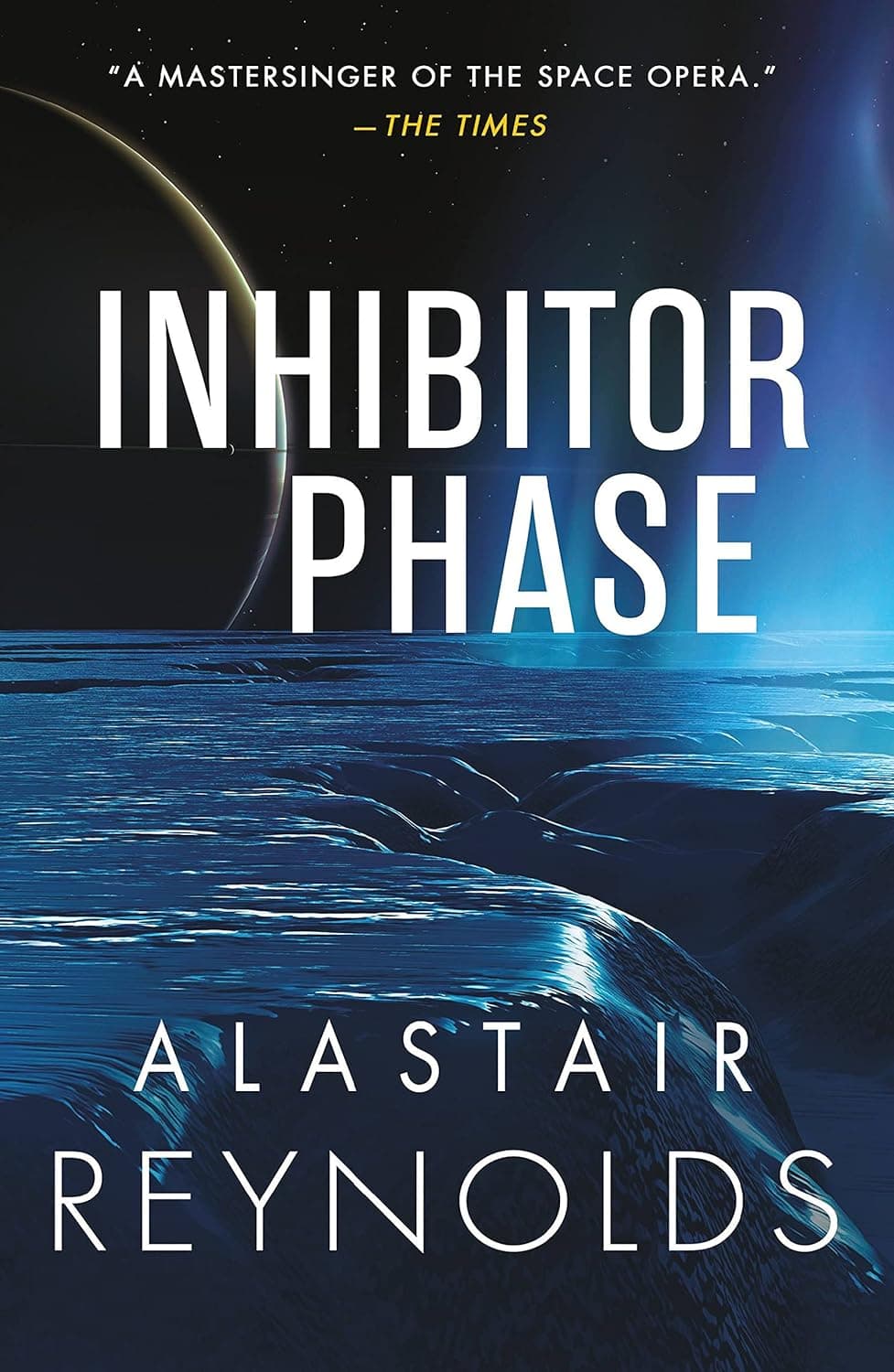
Inhibitor Phase
Inhibitor Phase offers a later, more direct return to the Inhibitor threat.
Best for: Experienced Revelation Space readers wanting a later survival mission and stronger engagement with the Inhibitor war.
As an Amazon Associate, I earn from qualifying purchases.

The Silmarillion
The Silmarillion treats belief and catastrophe mythically rather than through science-fiction institutions.
Best for: Committed Middle-earth readers who enjoy mythology, tragic history, invented languages, and repeated reading more than conventional character access.
As an Amazon Associate, I earn from qualifying purchases.
Make the next decision