Science fiction reading order
Revelation Space Books in Order: Main Series, Side Stories and Dreyfus
Alastair Reynolds built one setting through novels, novellas, and stories published out of internal chronology. You do not need a forensic timeline. You need to know which books spoil later discoveries and which branch can be read on its own.
Best first-time order
Begin with Revelation Space, then follow publication order within each branch
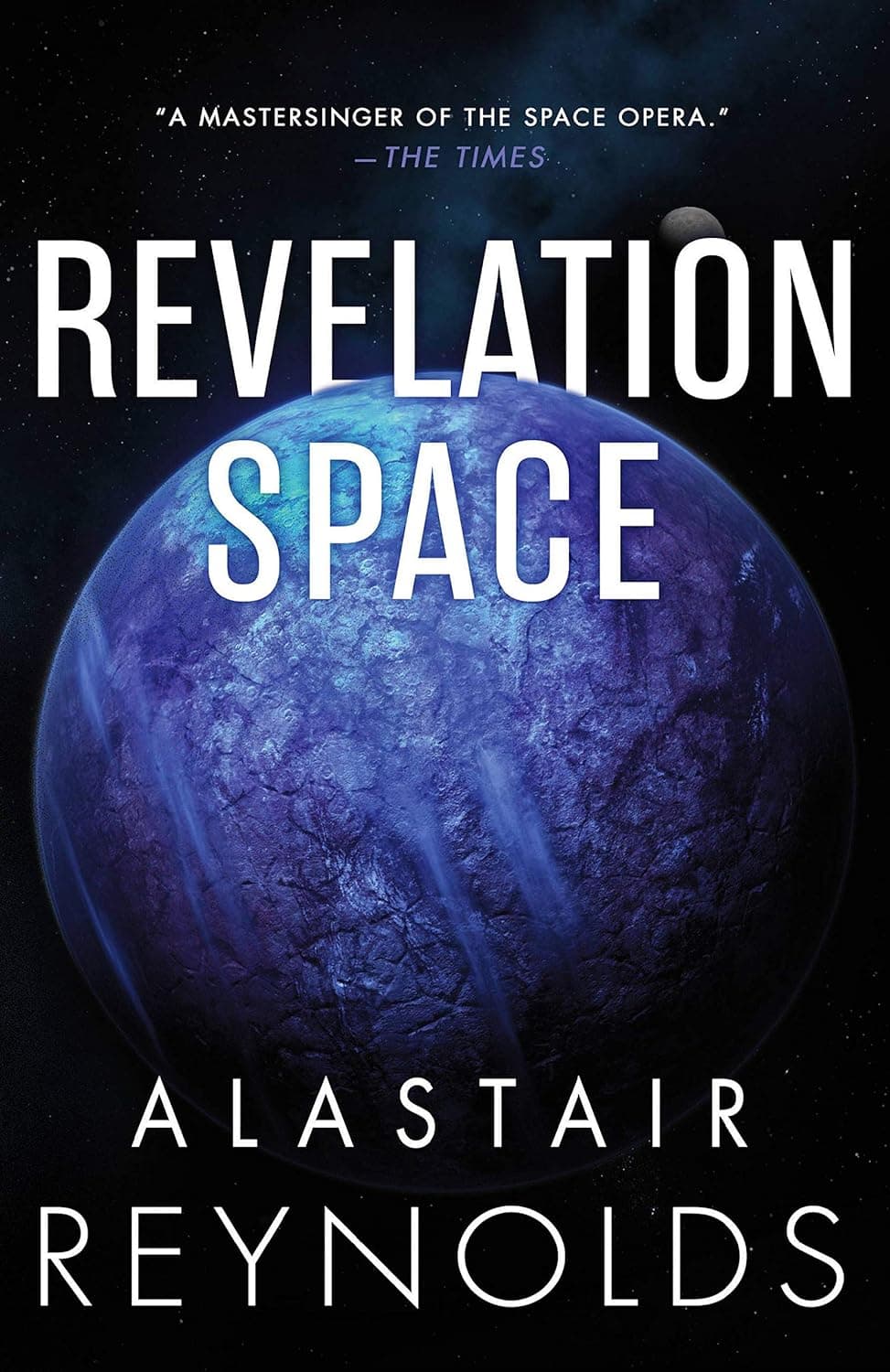
Read Revelation Space, Chasm City, Redemption Ark, Absolution Gap, and Inhibitor Phase for the clearest first journey through the setting. Chasm City is not numbered as a main-sequence novel, but reading it second makes later references and the history of Yellowstone far richer. Save The Prefect, also sold as Aurora Rising, Elysium Fire, and Machine Vendetta for a separate Dreyfus trilogy. The short fiction can be sampled after Chasm City, although Galactic North is most satisfying after the original trilogy because its title story looks far beyond it.
Revelation Space is less a single straight series than a shared future with several doors. The original novels follow Dan Sylveste, the Nostalgia for Infinity, and humanity's collision with the Inhibitors. Chasm City and the short fiction deepen places and histories around that conflict. The Prefect Dreyfus novels move back to the Glitter Band before the plague and trade cosmic pursuit for police procedure, constitutional argument, and machine intelligence. A publication list that mixes all three strands without explanation makes the setting look harder than it is.
Reynolds has said that the order is not critical, while recommending Revelation Space, Redemption Ark, and Absolution Gap in sequence. That advice is sound, but Chasm City is too useful to postpone. It introduces the setting's most important civilization at street level and explains why later characters speak about Yellowstone with such grief. We place it between the first and second core novels. That small adjustment makes a first read smoother without pretending there is an official numbered order.
Recommended sequence
A first-time reading order that preserves discovery
The first five entries form the main route. The collections expand its history. The final three entries are a coherent prequel-era detective series and should remain together.
1
Revelation Space
Core sequence begins
The opening novel introduces an archaeologist pursuing evidence of an extinct civilization, an assassin with divided loyalties, and a damaged lighthugger whose crew needs a cure. Reynolds does not explain every term on arrival. He lets ships, factions, and technologies become legible as their interests collide. That initial uncertainty is part of the atmosphere, not a sign that you missed a prequel.
Why it belongs here: Start here if you want the central mystery to unfold in the order readers originally encountered it. Do not begin with a chronological prequel merely to avoid unfamiliar vocabulary.
2
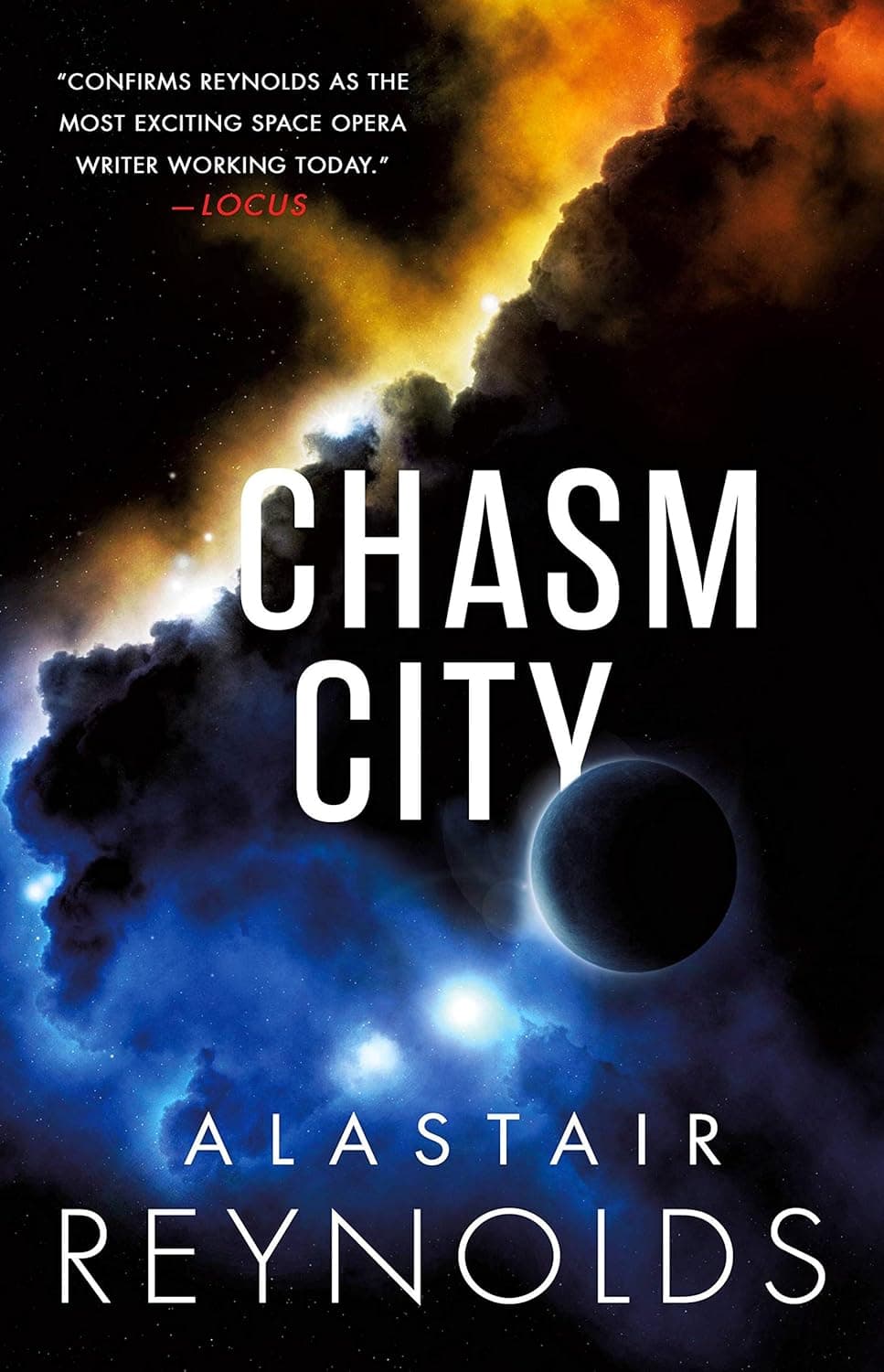
Chasm City
Standalone with major context
A pursuit into plague-damaged Chasm City becomes a story about memory, identity, and the founding myths people use to excuse brutality. The plot is more concentrated than Revelation Space, and the crowded city feels more lived-in than its starship corridors. It also turns several names and historical references in the later books from background lore into consequences people have survived.
Why it belongs here: Read it second for the richest route. Readers impatient to continue the Inhibitor plot can move directly to Redemption Ark and return here, but they will lose useful emotional context.
3
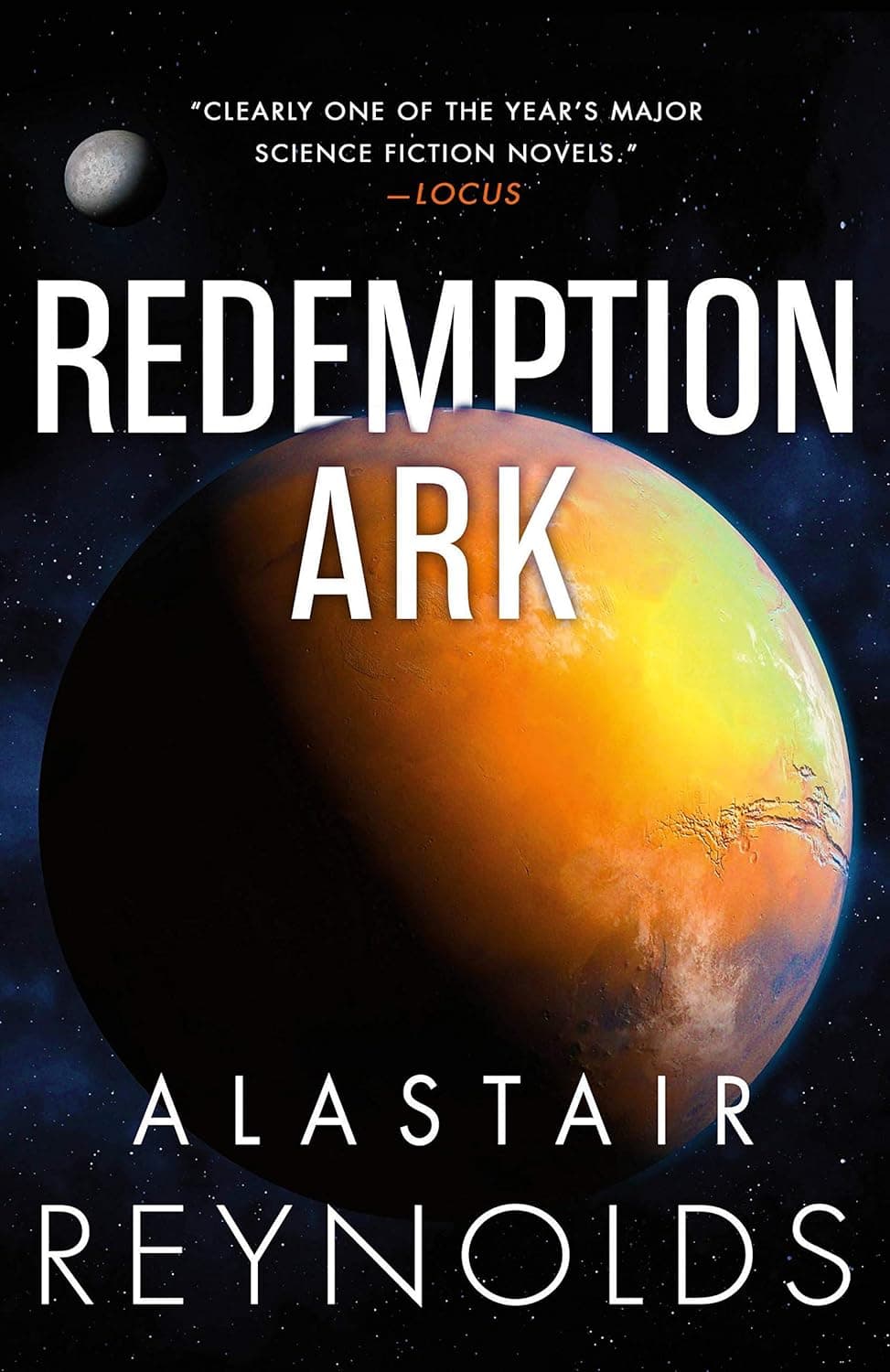
Redemption Ark
Core sequence continues
The scale expands as factions that were distant in the first novel become active powers. The Inhibitor threat is no longer an archaeological possibility, and decisions made aboard the Nostalgia for Infinity acquire consequences for entire populations. Its parallel plotlines are easier to track after Chasm City because the setting's political vocabulary and recent disasters already mean something.
Why it belongs here: Treat this as the direct sequel to Revelation Space. It assumes that the first book's identities, weapons, and discoveries are known and does not rebuild them for a new reader.
4
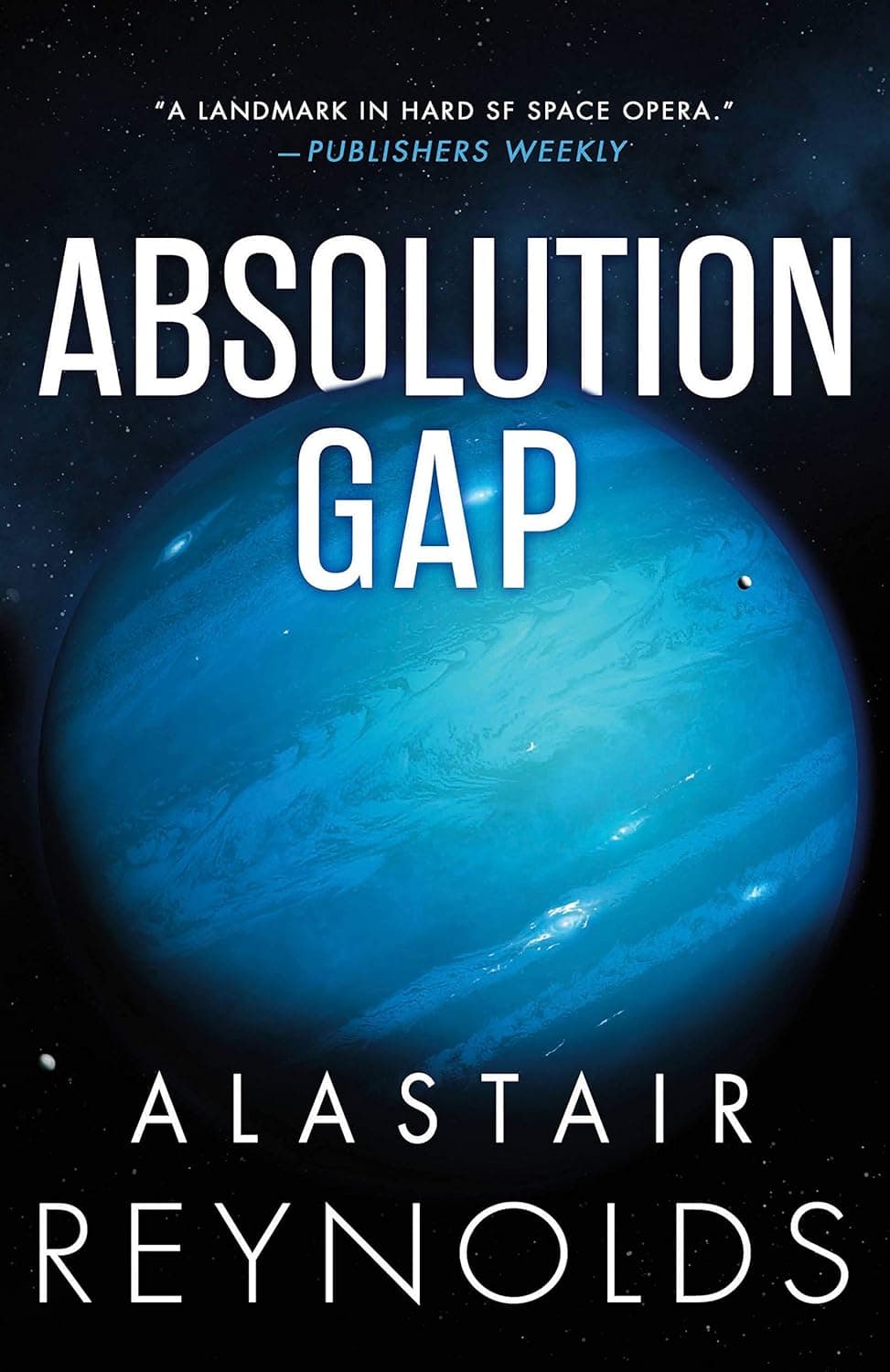
Absolution Gap
Original trilogy conclusion
The third core novel brings a religious movement, a strange moon, and the continuing flight from the Inhibitors into the same argument about survival. Its ending is controversial because some large questions receive an oblique or compressed resolution. Reading it as a conventional finale can create the wrong expectation; reading it as the close of the original campaign makes its strange detours easier to judge on their own terms.
Why it belongs here: Finish the original trilogy here before opening later-set stories. The novel resolves a major phase of the conflict, not every possibility in Reynolds's universe.
5
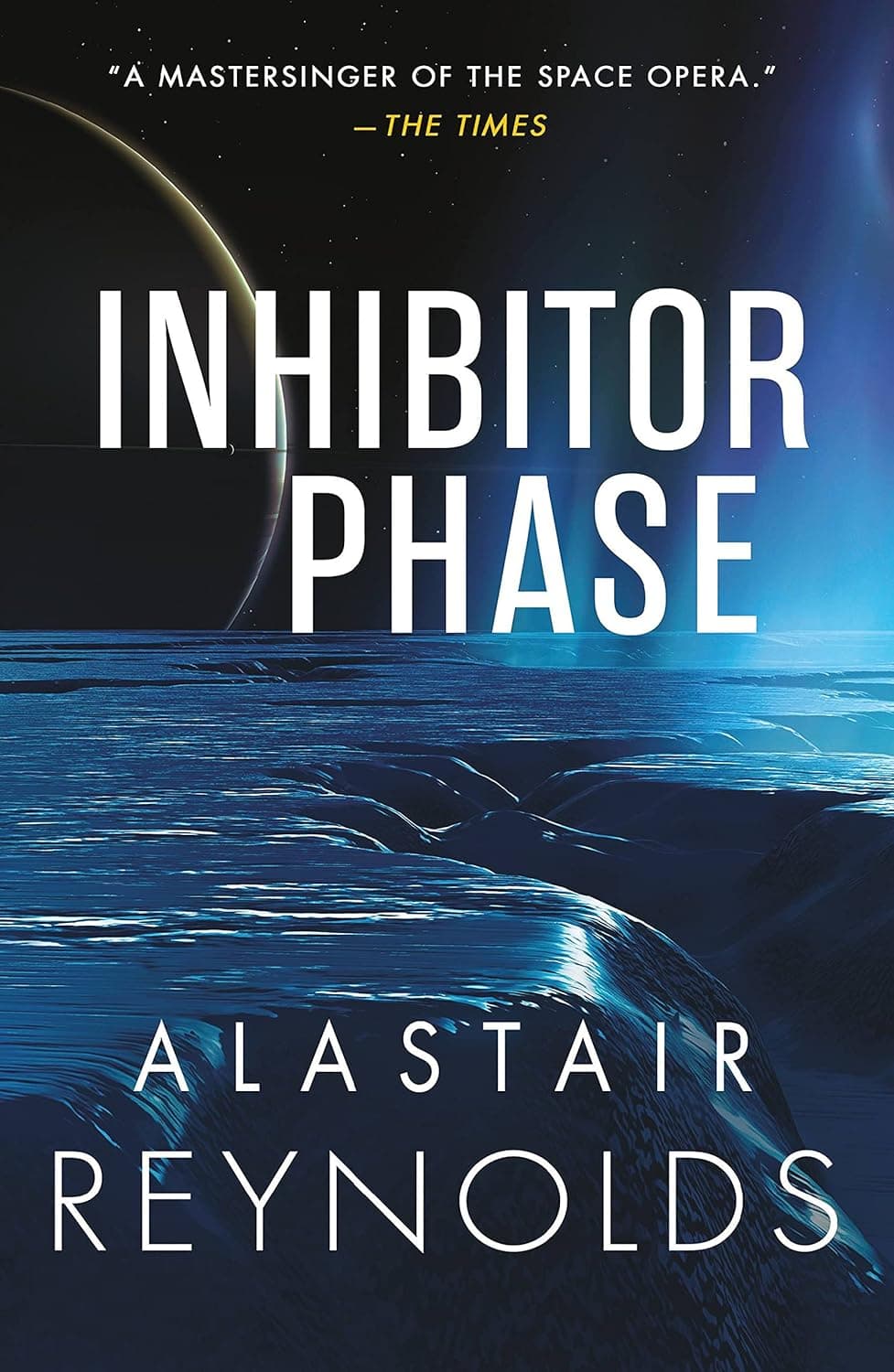
Inhibitor Phase
Later return to the main conflict
Published many years after Absolution Gap, this novel returns to the Inhibitor era with new identities, damaged survivors, and another desperate attempt to keep human communities alive. It is written to provide some orientation, but its emotional weight depends on knowing what the earlier books cost. The connections are more rewarding when recognized rather than encountered as exposition.
Why it belongs here: Read it after Absolution Gap, not as an alternative starting point. It works as a late coda and renewed campaign rather than volume four in a perfectly continuous quartet.
6
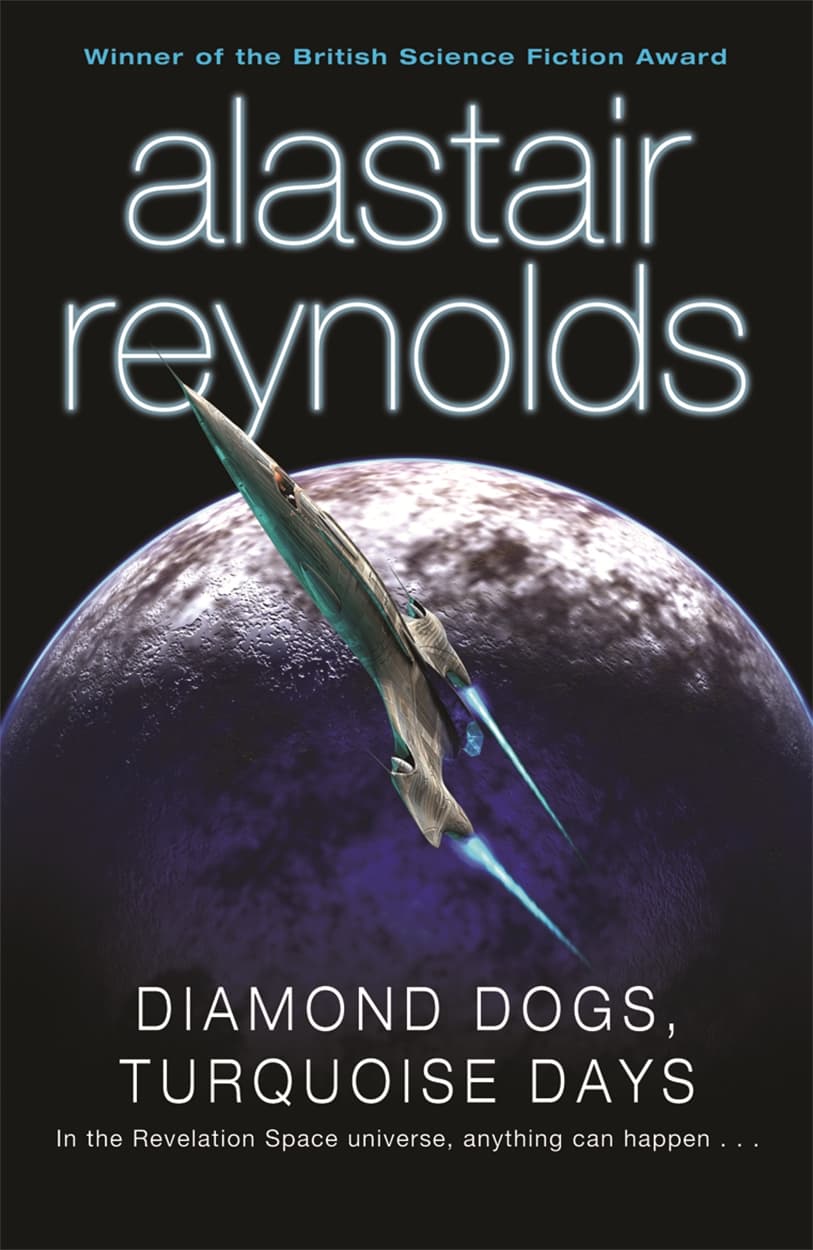
Diamond Dogs, Turquoise Days
Two compact side stories
Diamond Dogs turns an alien structure into a cruel test of friendship, obsession, and bodily compromise. Turquoise Days explores Pattern Jugglers and the communities that form around an oceanic intelligence. Both stories illuminate parts of the setting that the main novels can only pass through, and both show Reynolds working at a sharper, less sprawling length.
Why it belongs here: Read after Chasm City or after the original trilogy. It is the best side volume for someone who wants focused ideas without committing to another large novel.
7
Galactic North
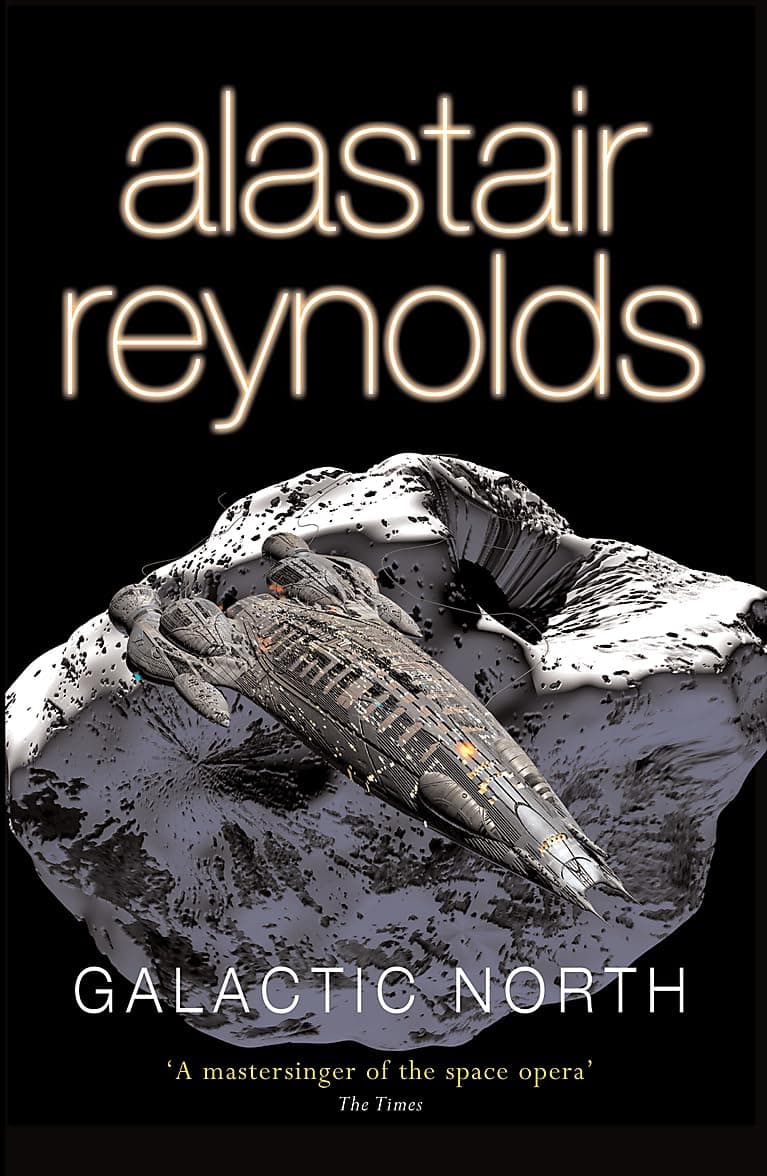
Shared-universe story collection
These stories reach across centuries and revisit Conjoiners, Ultra crews, Mars, Clavain, and the far future implied by the setting's conflicts. Some pieces were published before the novels, but collection order is not the same as ideal first exposure. The title story in particular extends the horizon so dramatically that it can change how the apparent stakes of the core trilogy feel.
Why it belongs here: Save the complete collection until after Absolution Gap. Individual early-set stories can be sampled sooner, but the volume works best as an expansion of a future you already understand.
8
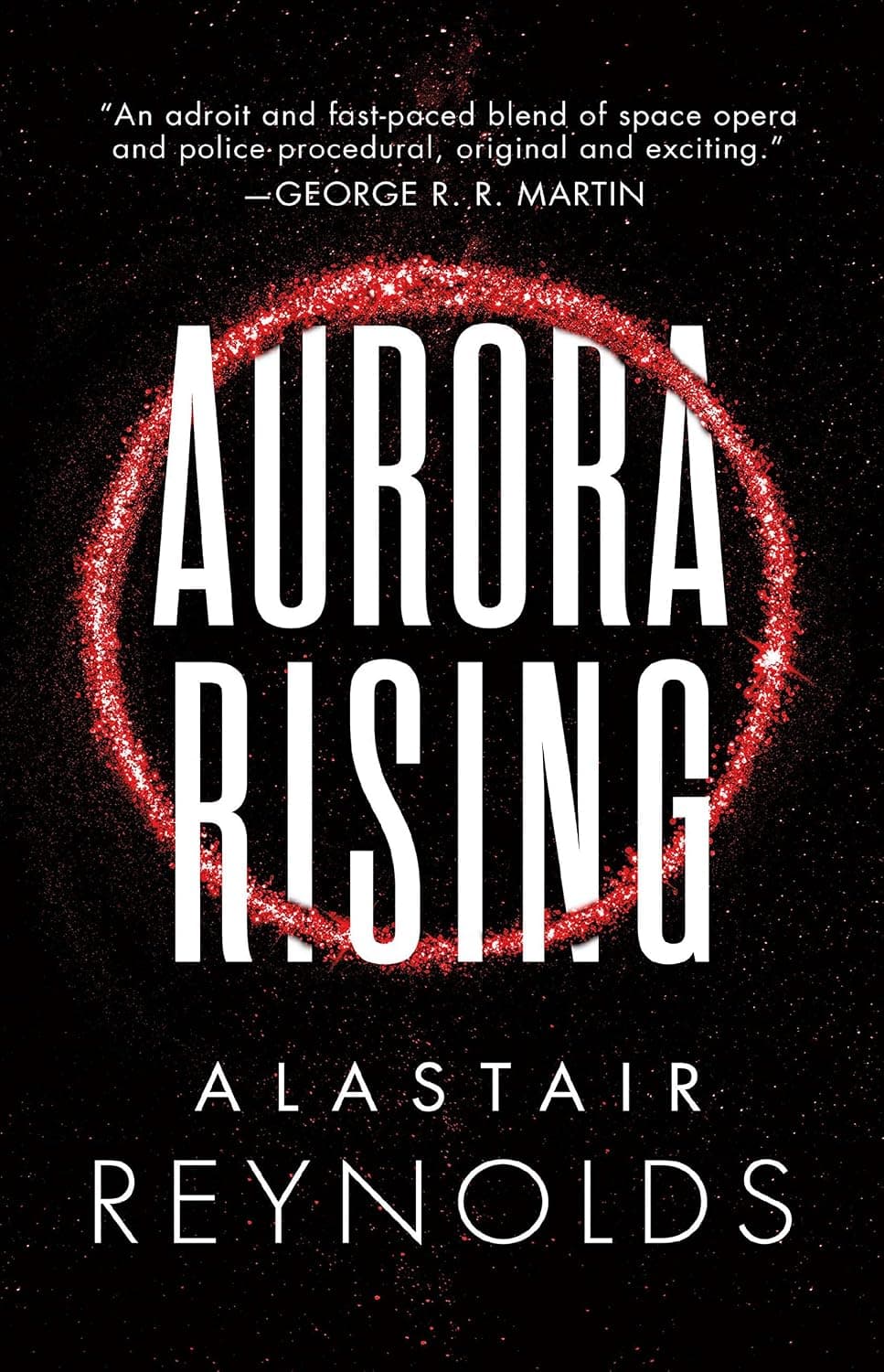
The Prefect, also published as Aurora Rising
Dreyfus Emergencies book one
Before the Melding Plague, Tom Dreyfus polices the Glitter Band's thousands of habitats for Panoply. The novel is a procedural about voting, surveillance, institutional legitimacy, and a threat that exploits the network holding this democracy together. Its older setting means the reader knows some fragility is coming, but the case stands independently of the Inhibitor sequence.
Why it belongs here: Begin the Dreyfus trilogy here under either title. Aurora Rising is a retitle, not a sequel or a different edition that needs to be read twice.
9
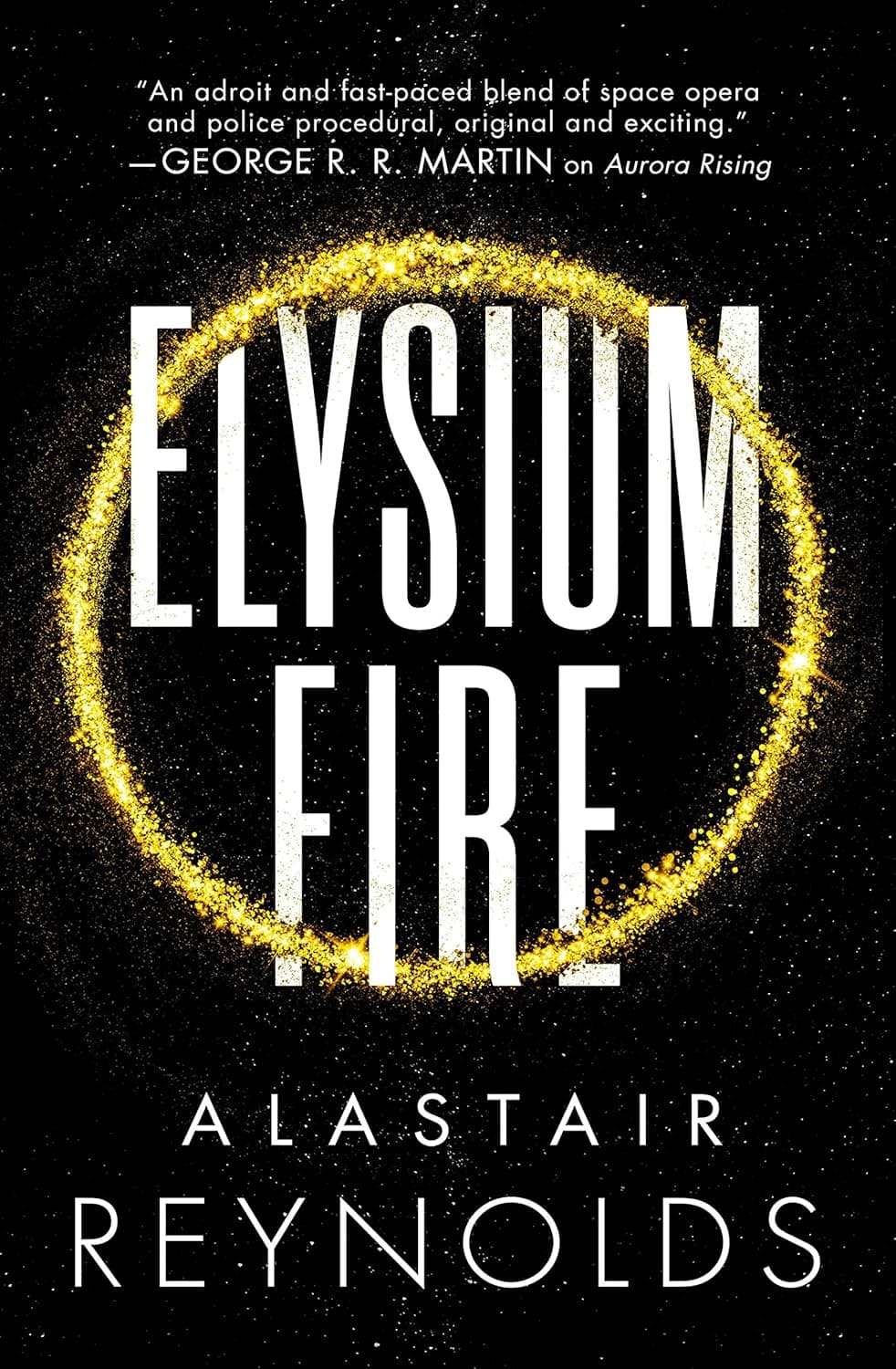
Elysium Fire
Dreyfus Emergencies book two
Dreyfus faces apparently spontaneous deaths across the Glitter Band while political pressure tests Panoply's authority. The mystery has a new immediate case, but relationships and institutional wounds carry over from The Prefect. Reading it first would reveal who survived the previous crisis and flatten the slow development of Dreyfus, Thalia Ng, and their colleagues.
Why it belongs here: Read directly after The Prefect. This branch is more sequential than the side novels, so there is little benefit in rearranging it by internal dates.
10
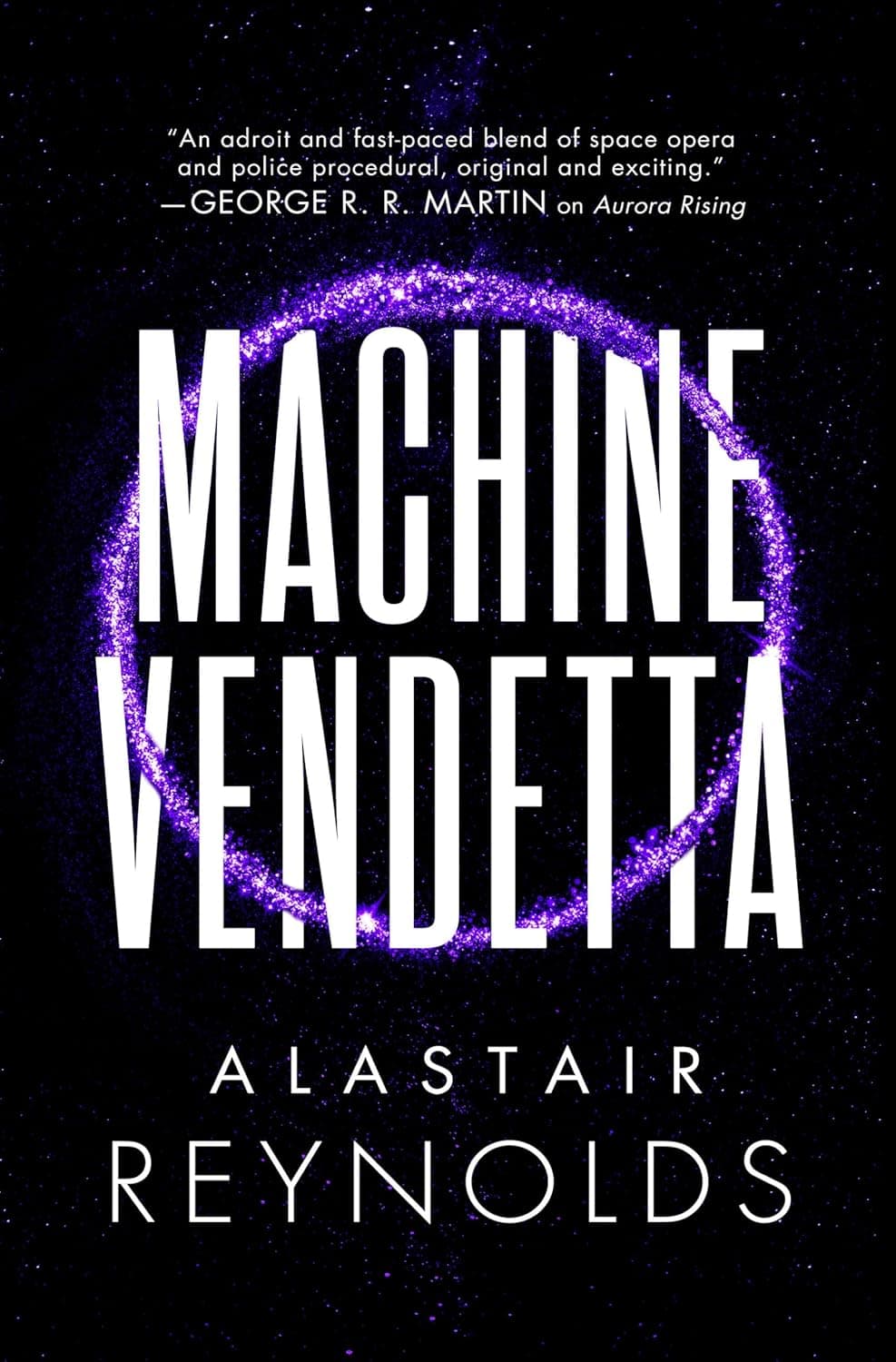
Machine Vendetta
Dreyfus Emergencies book three
The third investigation forces Dreyfus to confront consequences attached to both Panoply and the machine intelligences around the Glitter Band. Reynolds described it as his final return to the Revelation Space setting for the time being. That makes it the current endpoint of the Dreyfus line, though not a chronological endpoint for the universe itself.
Why it belongs here: Read it after Elysium Fire. It rewards your accumulated knowledge of the investigators and closes the published Dreyfus sequence better than it works as a standalone mystery.
Three branches
Choose the part of Revelation Space you actually want
Every branch shares technology and history, but each offers a different reading contract.
| Branch | Core books | Best entry | Reading feel |
|---|---|---|---|
| Inhibitor sequence | Revelation Space through Inhibitor Phase | Revelation Space | Cosmic archaeology, pursuit, extinction risk |
| Chasm City and short fiction | Chasm City, Diamond Dogs, Galactic North | Chasm City | Identity, local history, concentrated ideas |
| Dreyfus Emergencies | The Prefect, Elysium Fire, Machine Vendetta | The Prefect | Police procedure, democracy, machine intelligence |
Should you read in internal chronological order?
No, at least not on a first pass. Beginning with Dreyfus gives you the Glitter Band at its height, but it also frames the later ruined city as a foregone historical exercise. Publication-aware reading lets Revelation Space introduce the ruins first and allows Chasm City to uncover what that loss means. The gap between prosperity and collapse is more haunting when it is discovered rather than filed in advance.
Chronology is worthwhile on a reread. Then the Dreyfus trilogy can show the institutions before catastrophe, the short stories can fill particular eras, and the main sequence can become a long study of consequences. That is a different pleasure from solving the mysteries for the first time.
Where do the newest story collections fit?
Orion's newer Revelation Space Collection volumes reorganize the short fiction into a broader two-volume set. Volume one moves from Dilation Sleep through Diamond Dogs. Volume two begins with Turquoise Days and continues through later stories including Weather, Nightingale, Monkey Suit, and Plague Music. These collections are useful if you want more than the older Galactic North and Diamond Dogs volumes without chasing individual anthologies.
They still should not replace the novels as an entry point. Short fiction often assumes that a faction, technology, or historical event can be recognized in a few lines. Read Revelation Space and Chasm City first, then use the collections as a map of the spaces between novels.
The shortest sensible route
If you only want the central extinction story, read Revelation Space, Redemption Ark, and Absolution Gap, then add Inhibitor Phase if you want the later return. That is the author's own basic sequence with its modern coda. Our fuller recommendation adds Chasm City because it makes the world feel inhabited rather than merely vast.
If Revelation Space feels too austere, try Chasm City before quitting the setting. It has a clearer pursuit plot and a more immediate location. If the cosmic branch feels exhausting but the universe still interests you, The Prefect offers the cleanest alternative entry because it turns the same technologies into a detective problem.
Quick answers
Questions readers ask before buying
Is Chasm City part of the main Revelation Space series?
It is a standalone novel in the same setting rather than a numbered core sequel. We place it second because it supplies valuable history and emotional context, not because the central plot requires it.
Are The Prefect and Aurora Rising the same book?
Yes. Aurora Rising is the later title used for The Prefect in some markets. Buy one edition, then continue with Elysium Fire and Machine Vendetta.
Can I start with the Dreyfus books?
Yes. They form a coherent prequel-era detective trilogy. Starting there changes how you encounter the Glitter Band's later history, but it does not make the mysteries incomprehensible.
Is the Revelation Space universe finished?
The published branches have usable stopping points, but the setting is not organized around one final volume that closes every historical thread. Reynolds called Machine Vendetta his last return to the setting for now, which leaves room for a future change without promising one.
Sources
Sources for this guide
The sequence separates Reynolds's own reading-order advice from our editorial recommendation to place Chasm City second. Current titles and collection contents were checked against the author's site and Orion's catalog.
Keep reading