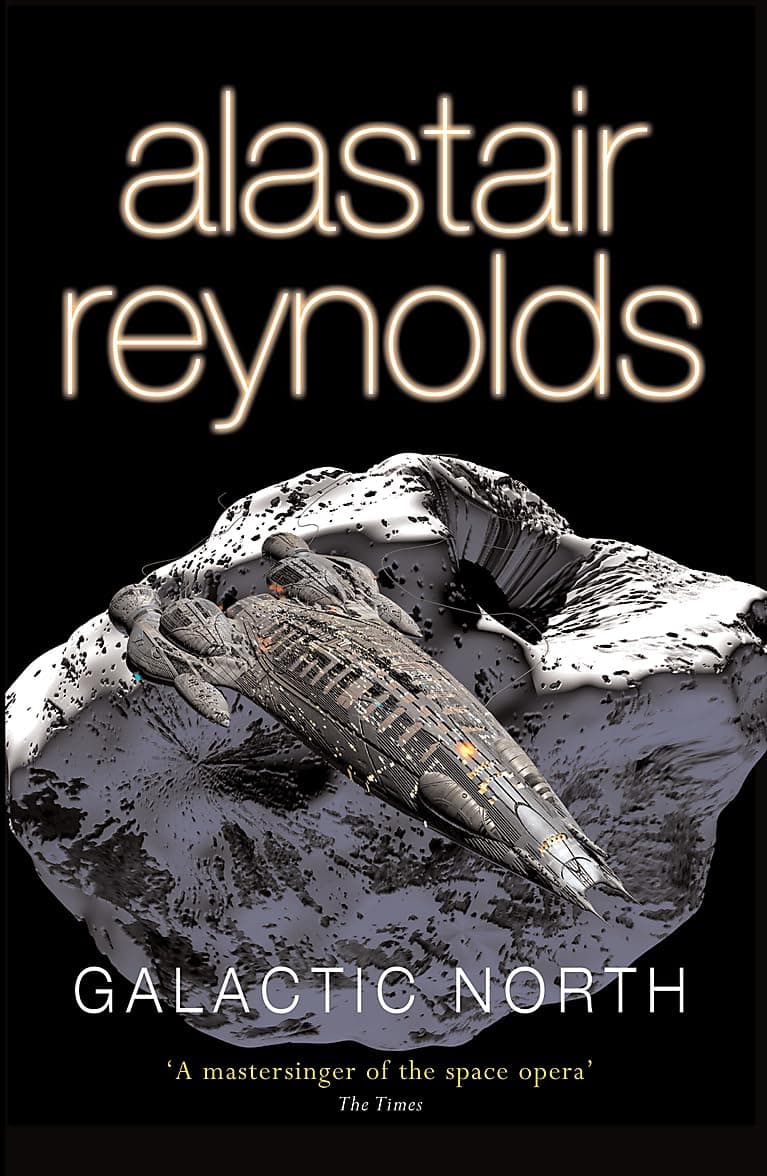
Should you read Galactic North?
What works
Clavain, Conjoiners, Ultras, medical ships, and relativistic futures gain concrete origins and consequences without reading like encyclopedia entries.
What may not work for you
Quality and density vary, chronology is not intuitive, and several stories depend heavily on knowledge of the universe.
What may test your patience
Moving among eras and characters can be disorienting if read before the core novels or forced into strict chronological order.
Does the ending reward the effort?
The title story supplies an enormous temporal horizon and works as a natural final perspective on the collection.
Reading Galactic North closely
Galactic North gathers eight shorter works from the Revelation Space universe, ranging from early solar-system conflict to futures thousands of years beyond the core novels. The collection supplies origins, side stories, and consequences that the novels often mention only as distant history.
Great Wall of Mars explores Clavain and Galiana before their later roles, while Glacial combines planetary archaeology with murder investigation. Weather gives an intimate view of Conjoiner technology, and Nightingale turns a seemingly abandoned hospital ship into one of Reynolds's most effective horror settings.
The title story stretches across an enormous chronology and shows human factions changing far beyond any individual's lifetime. Read together, the stories make Ultras, Conjoiners, Demarchists, body modification, and relativistic travel more concrete. Quality and density vary, but the strongest pieces are essential for readers invested in the universe.
History between and around the novels
The stories fill gaps without behaving like reference notes. Familiar factions appear at different stages of development, showing how political identities mutate when travel, war, and biological modification separate populations for centuries.
Science fiction with a persistent horror edge
Several entries place scientific discovery inside compromised bodies, abandoned facilities, or predatory institutions. Nightingale and Grafenwalder's Bestiary are especially dark, while other stories use the same unease to examine mind sharing and posthuman identity.
Best reading point and edition value
New readers can understand individual stories, but the collection is richer after Revelation Space and Redemption Ark. It offers context for recurring characters and technologies, then extends the timeline far beyond the main trilogy without requiring one continuous plot.
Three useful comparisons
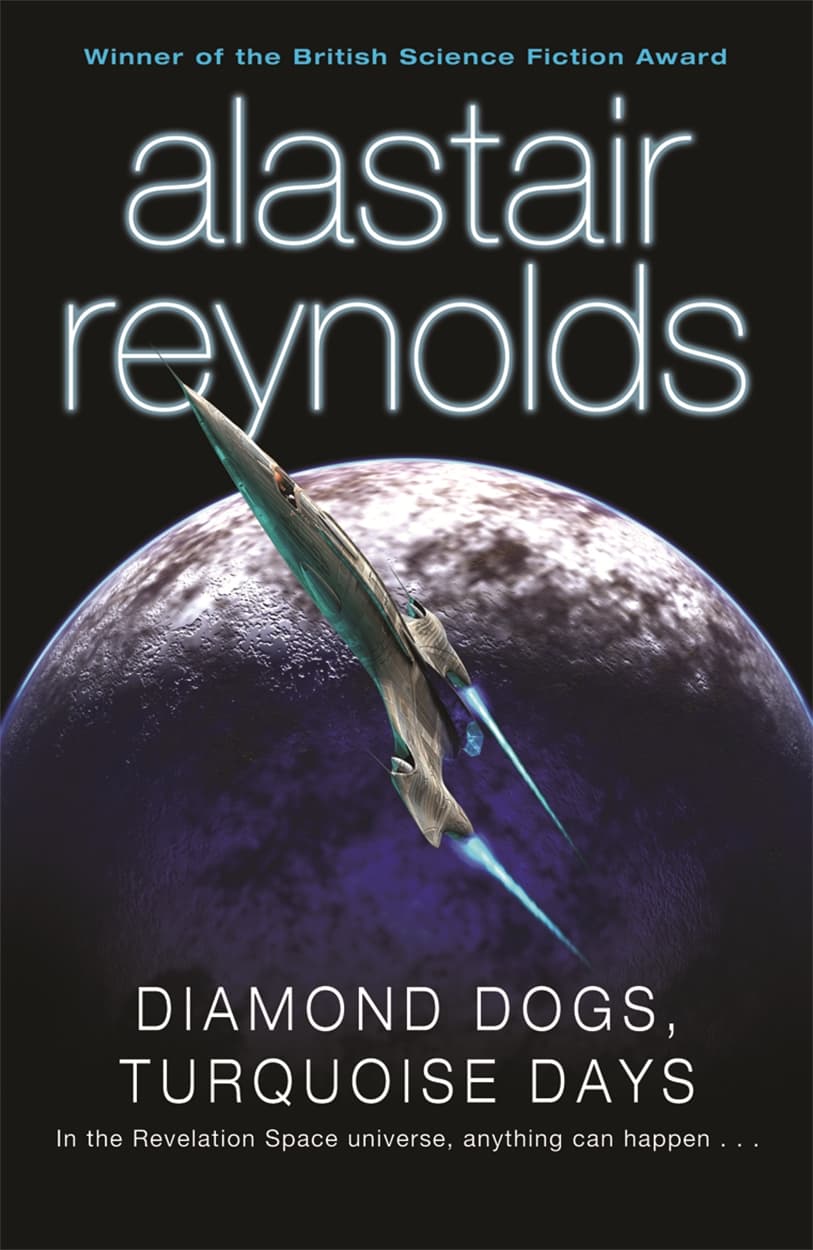
Diamond Dogs, Turquoise Days
Diamond Dogs offers two longer, more concentrated novellas with stronger individual identities.
Best for: Compact hard SF with mathematical traps, body horror, alien oceans, and Revelation Space ideas without a full novel's commitment.
As an Amazon Associate, I earn from qualifying purchases.
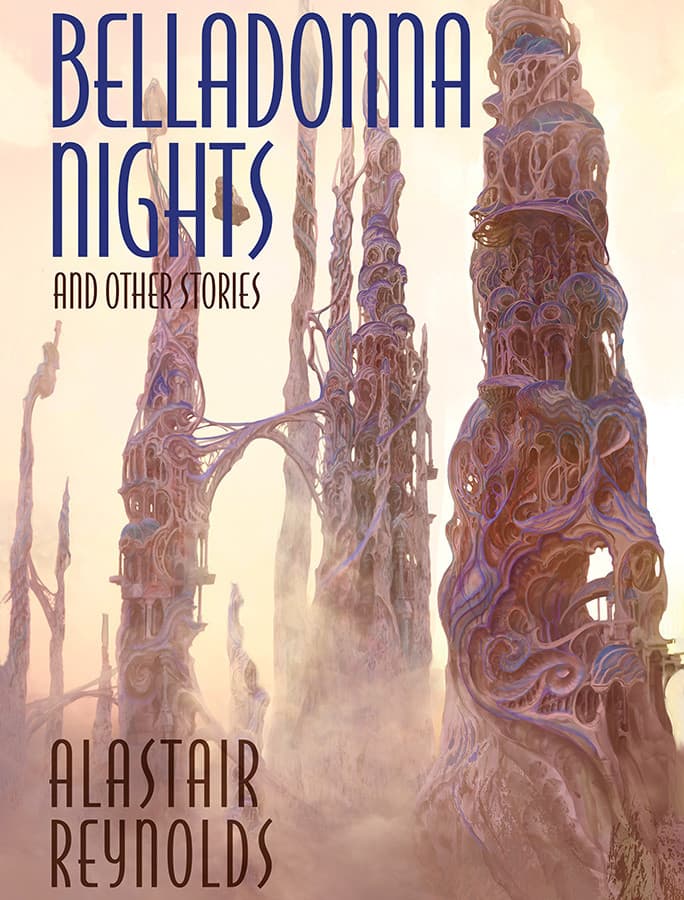
Belladonna Nights and Other Stories
Belladonna Nights ranges across later career settings and works better for readers beyond one universe.
Best for: Reynolds readers wanting later short fiction, familiar universes, deep time, and more emotional variety.
As an Amazon Associate, I earn from qualifying purchases.

Zima Blue and Other Stories
Zima Blue is the better non-Revelation collection and shows greater emotional and tonal range.
Best for: New and established Reynolds readers wanting varied standalone short science fiction with both darkness and humanity.
As an Amazon Associate, I earn from qualifying purchases.
Make the next decision