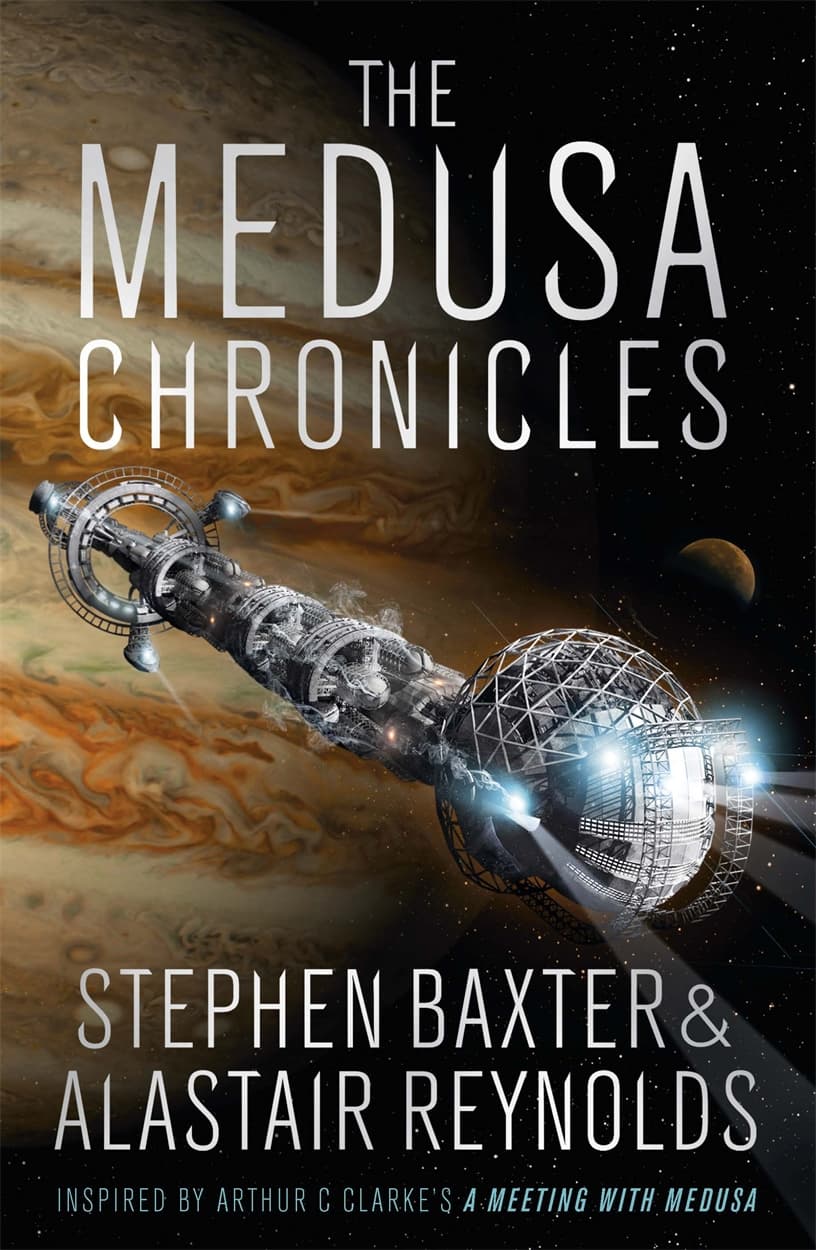
Should you read The Medusa Chronicles?
What works
Howard Falcon's altered body and long relationship with Jupiter's life provide continuity through machine evolution, politics, and centuries of change.
What may not work for you
Time jumps reduce supporting characters, exposition carries large transitions, and the collaboration sometimes feels designed around honoring an existing template.
What may test your patience
Each era must establish a new political and technological status before Falcon's enduring conflict becomes visible again.
Does the ending reward the effort?
Yes. The final accommodation matches the book's long concern with coexistence, memory, and forms of intelligence beyond rivalry.
Reading The Medusa Chronicles closely
The Medusa Chronicles, co-written by Stephen Baxter and Alastair Reynolds, continues Arthur C. Clarke's novella A Meeting with Medusa. Explorer Howard Falcon survives a catastrophic airship accident through extensive augmentation, becoming part human and part machine before returning to Jupiter's atmosphere.
Falcon's altered body allows his story to extend across centuries. He witnesses expansion through the solar system, increasingly autonomous artificial intelligence, political conflict between biological and machine life, and repeated discoveries around Jupiter's vast aerial ecosystem.
The collaboration aims to preserve Clarke's clear, idea-centered sense of wonder while extending questions his original story left open. Its episodic chronology sometimes keeps characters other than Falcon at a distance, but that structure suits a protagonist who becomes a long-lived intermediary between carbon and machine civilizations.
Continuing A Meeting with Medusa
The novel treats Clarke's story as a foundation rather than a premise to retell. Falcon's Jupiter expedition, injuries, and first encounter remain central history, while Baxter and Reynolds ask what his augmentation means once machine intelligence develops beyond human control.
Howard Falcon across centuries
Falcon gains longevity and capability but never becomes fully comfortable as a symbol. Governments and machines repeatedly position him as ambassador, witness, or relic, forcing him to negotiate identities defined by others around the material reality of his body.
Collaboration, scale, and accessibility
The book spans roughly eight centuries and favors major historical episodes over one continuous adventure. Reading Clarke first adds emotional and conceptual depth, but the novel supplies enough background for readers arriving directly from Baxter or Reynolds.
Three useful comparisons
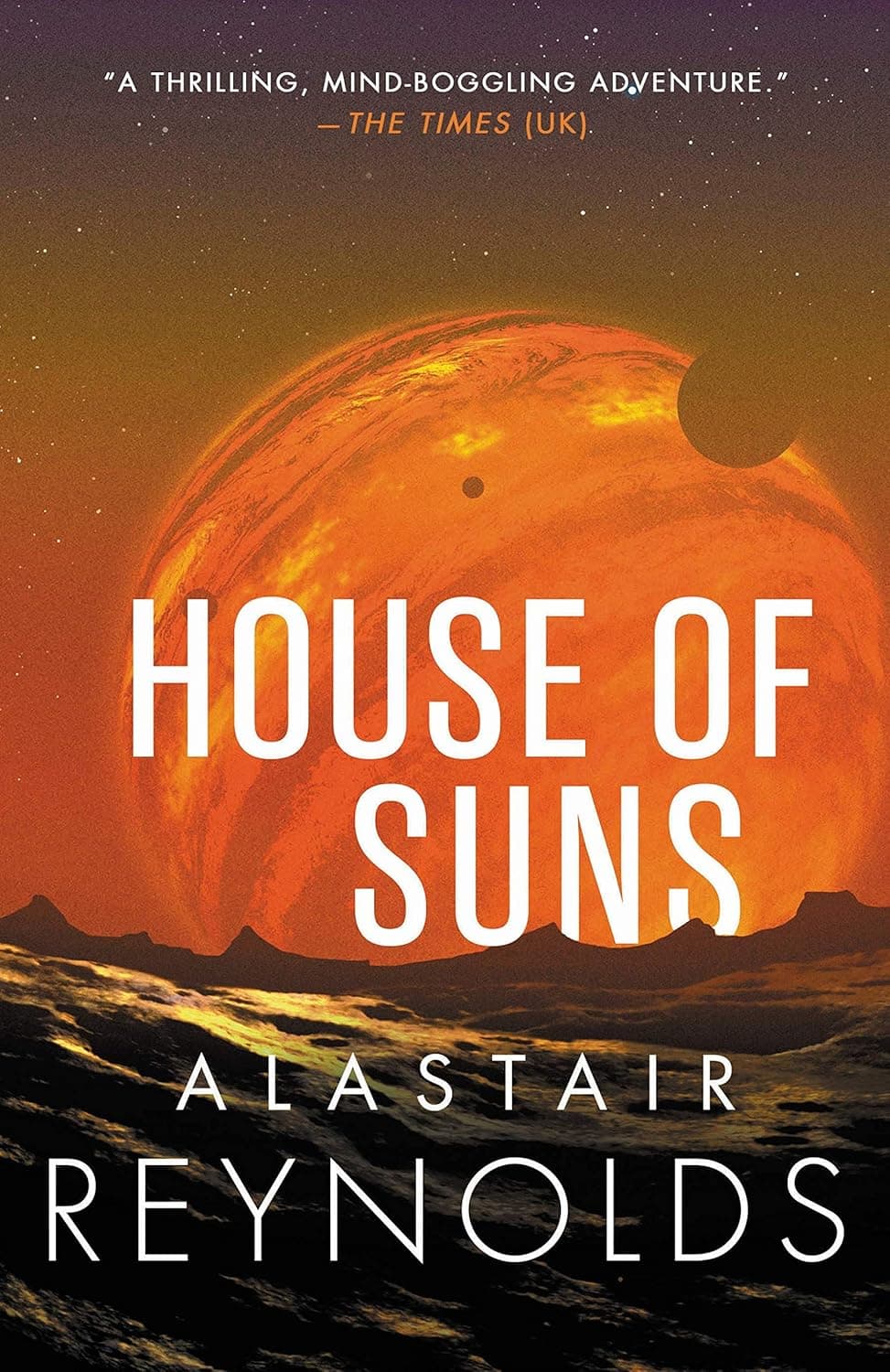
House of Suns
House of Suns offers greater originality, intimacy, and galactic mystery across an even longer history.
Best for: Choose it for an accessible standalone epic with deep time, clones, machine people, romance, pursuit, and galactic mystery.
As an Amazon Associate, I earn from qualifying purchases.
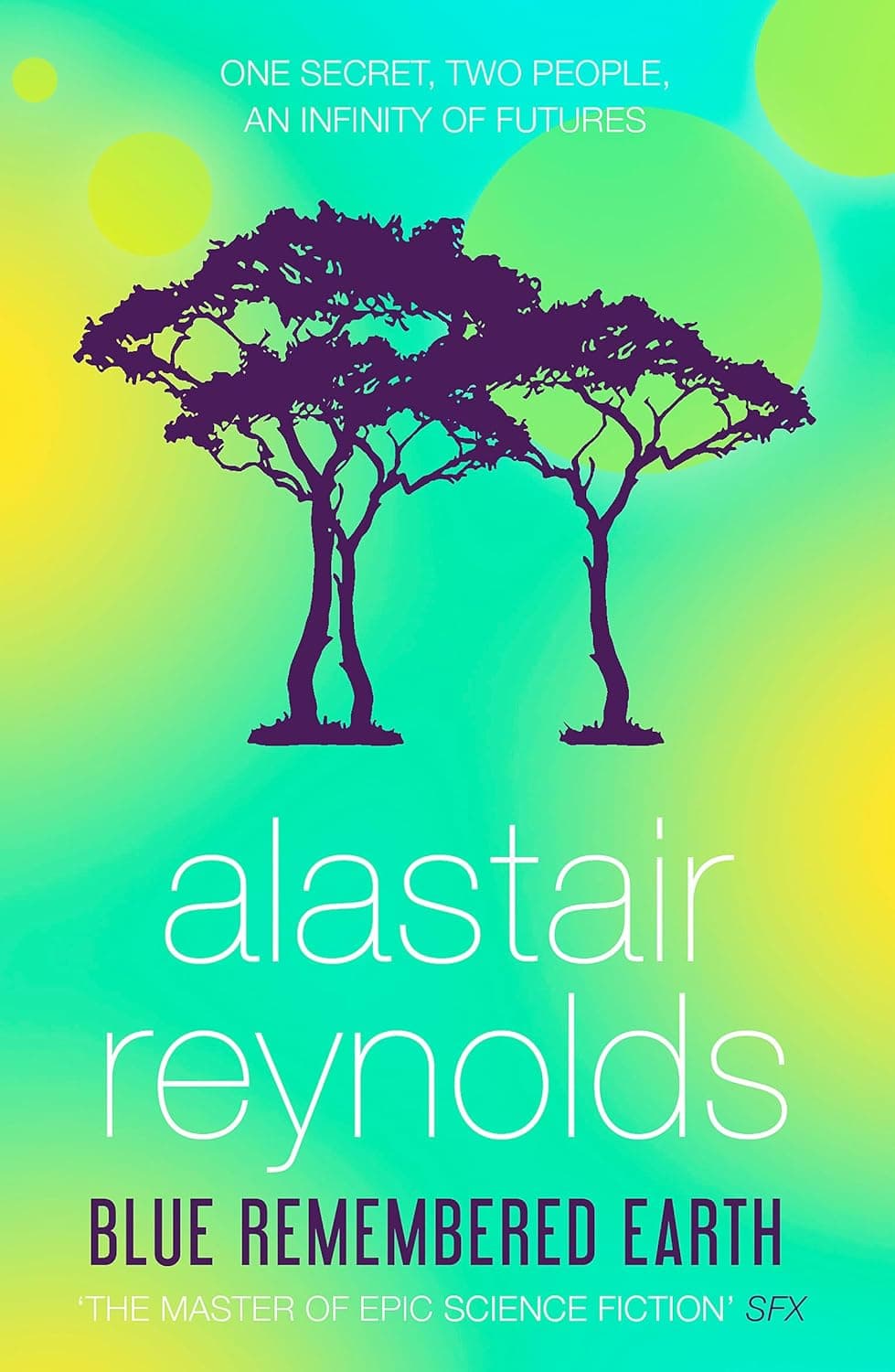
Blue Remembered Earth
Blue Remembered Earth begins another optimistic Reynolds future with stronger family and African focus.
Best for: Best for optimistic future Africa, family mystery, elephants, solar-system infrastructure, and slow generational science fiction.
As an Amazon Associate, I earn from qualifying purchases.
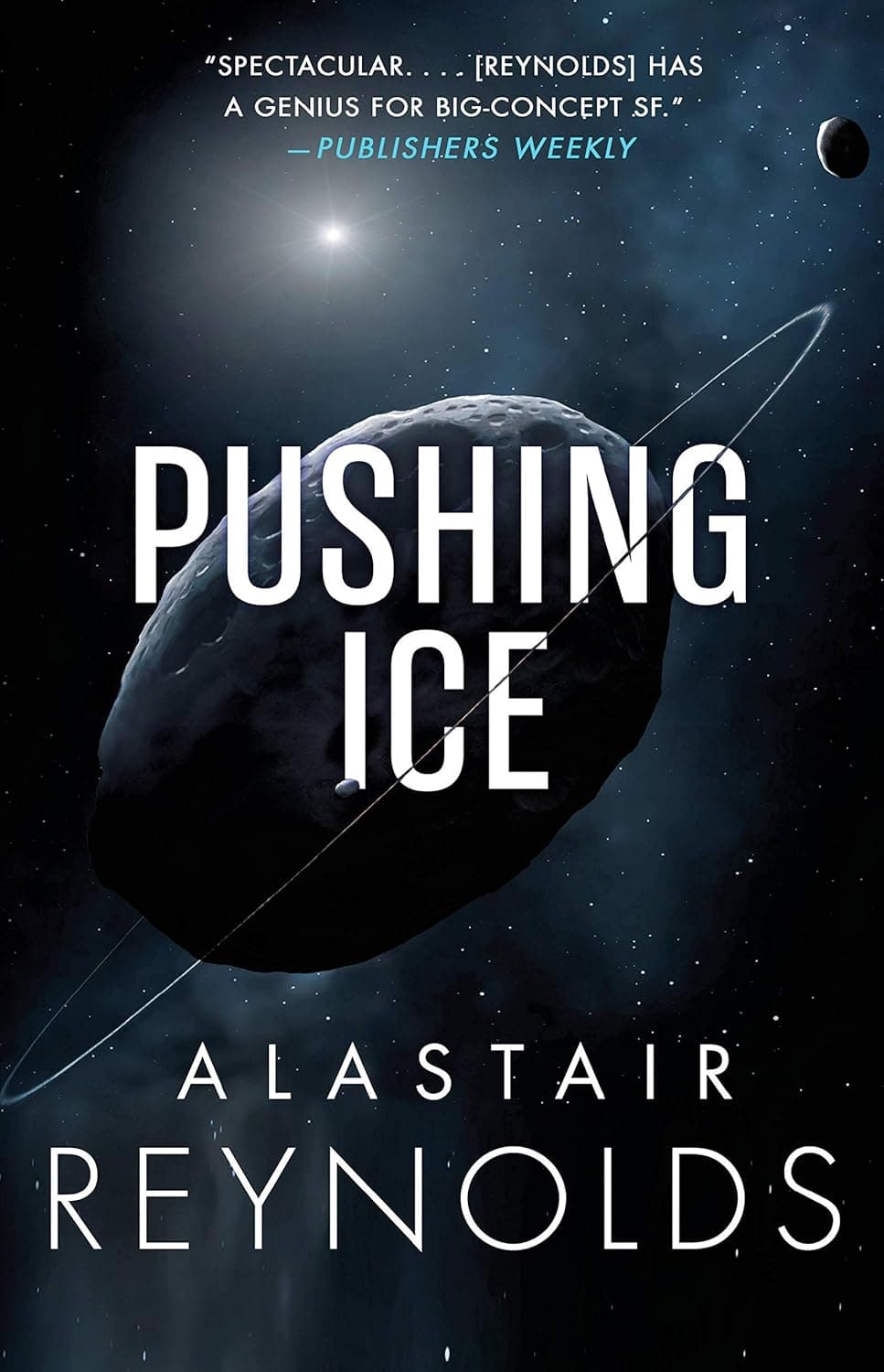
Pushing Ice
Pushing Ice gives cosmic encounter more abrasive human politics and a self-contained modern premise.
Best for: The draw is standalone hard SF with generation survival, first contact, cosmic scale, and abrasive human politics.
As an Amazon Associate, I earn from qualifying purchases.