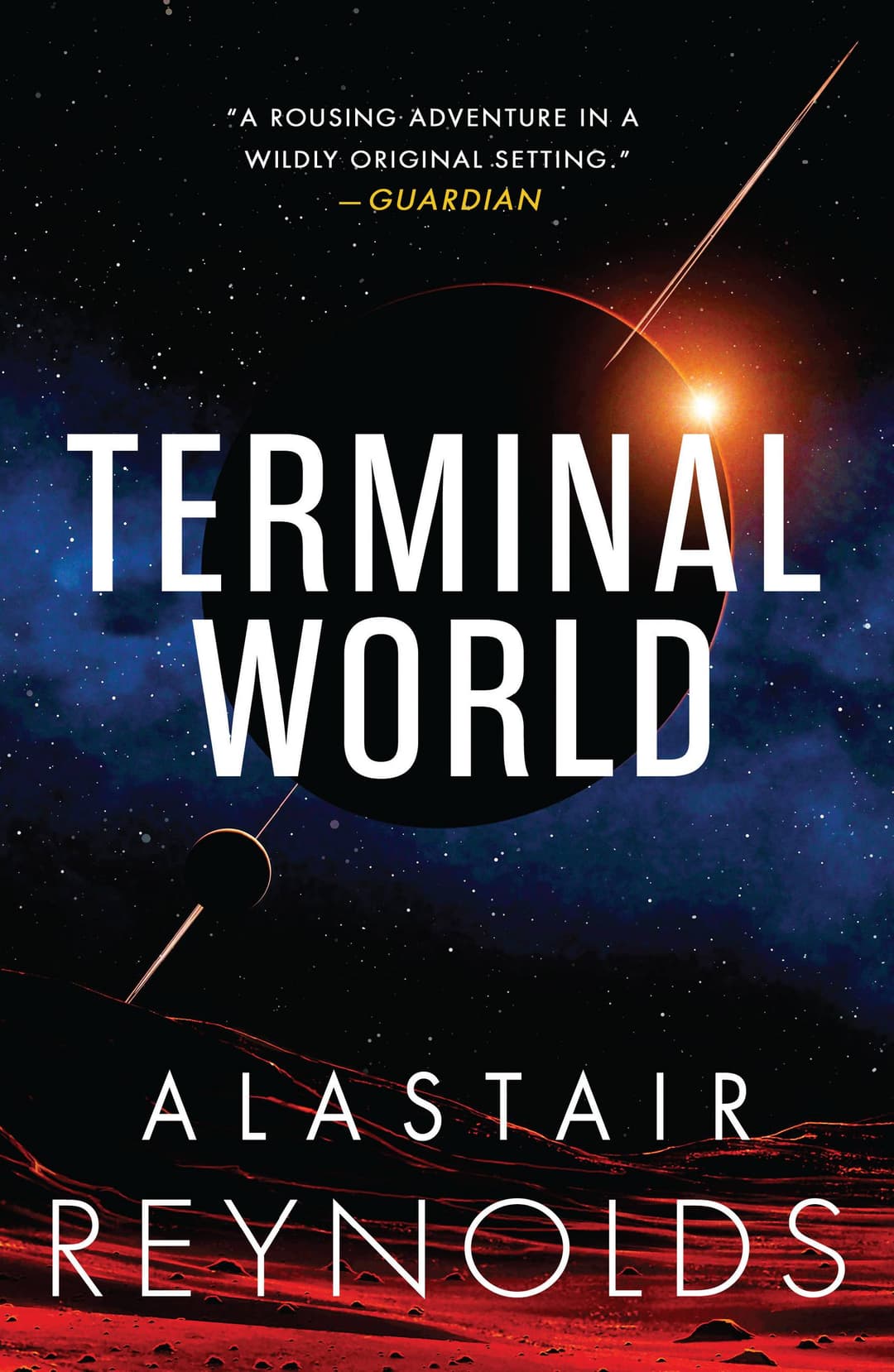
Should you read Terminal World?
What works
Spearpoint's technology zones make medicine, transport, weapons, and political power fail at physical boundaries, giving worldbuilding immediate consequence.
What may not work for you
Genre shifts feel episodic, supporting characters thin during travel, and the planetary explanation is less satisfying than the city premise.
What may test your patience
After the excellent Spearpoint opening, the caravan and airship journey repeatedly resets place and objective.
Does the ending reward the effort?
Partly. The larger mystery receives an answer, but it cannot fully unite every adventure mode the novel has accumulated.
Reading Terminal World closely
Terminal World centers on Quillon, a pathologist living in Spearpoint, the last great human city. The city rises through zones where different levels of technology function: sophisticated machines work in some districts, while electricity, steam, or even simpler mechanisms fail elsewhere.
When a dying angel arrives in Quillon's morgue, the body exposes secrets about his own origin and forces him to flee with former soldier Meroka. Their journey descends the city and crosses the surrounding world through caravans, airships, violent factions, and unstable zone boundaries.
The novel begins with noir and medical mystery, becomes a steampunk road adventure, and gradually reveals planetary-scale questions. That shifting genre is intentional but can feel episodic. Reynolds makes technological limitation physical and political, showing how entire cultures form around machines that may stop working a few steps away.
Spearpoint and the technology zones
The zones prevent technological progress from being a simple ladder. Advanced societies cannot automatically dominate every region, and people crossing boundaries must abandon tools, medicine, transport, and assumptions that previously guaranteed power.
Quillon as doctor, exile, and evidence
Quillon understands bodies before he understands the world. The angel in his morgue makes his professional knowledge inseparable from personal danger, while Meroka's practical suspicion keeps the quest from becoming a purely intellectual search for origins.
Three useful comparisons
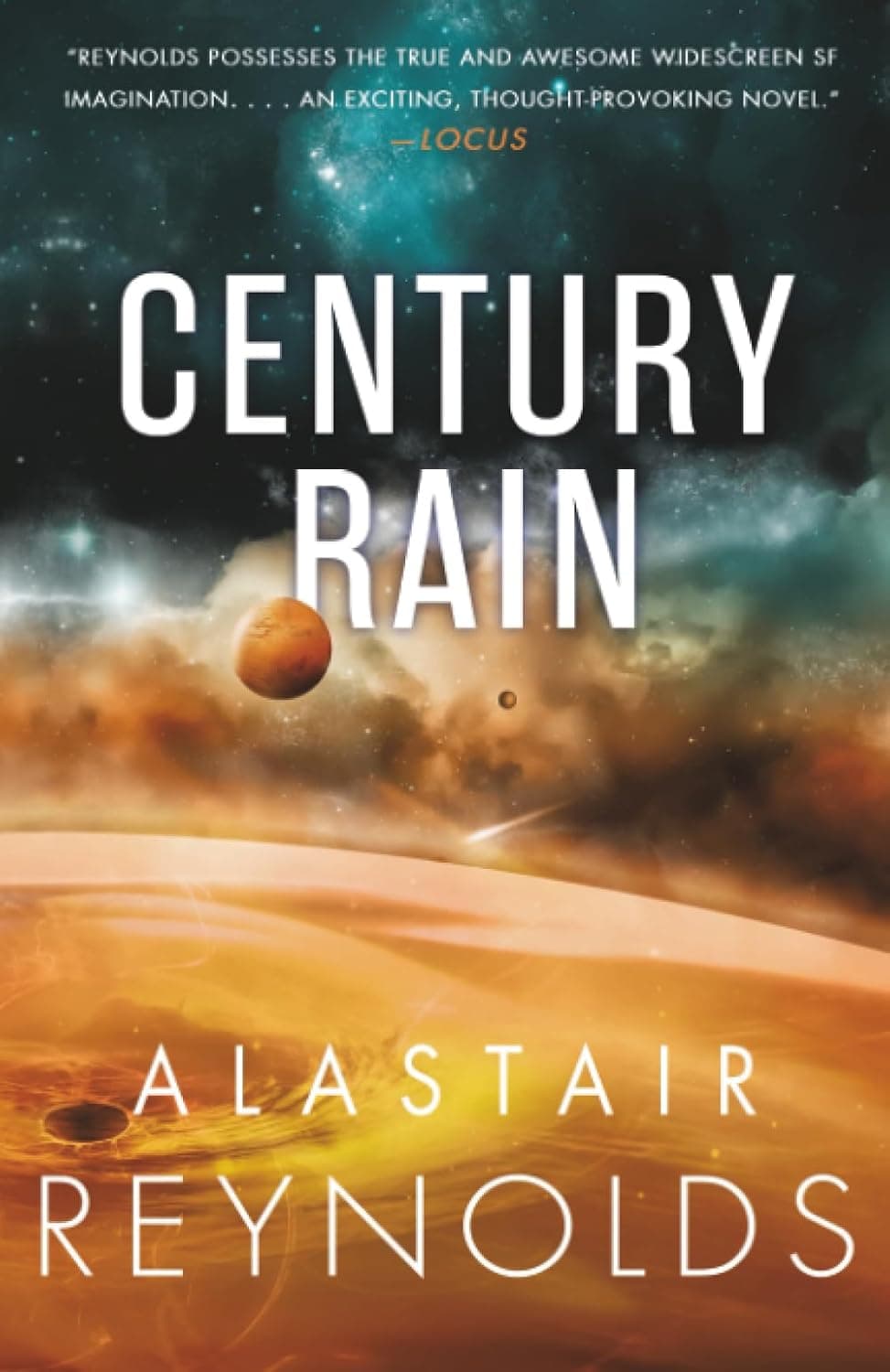
Century Rain
Century Rain integrates its noir and speculative settings more smoothly and adds a stronger central relationship.
Best for: Try it for standalone alternate history, detective noir, scientific mystery, and understated romance.
As an Amazon Associate, I earn from qualifying purchases.
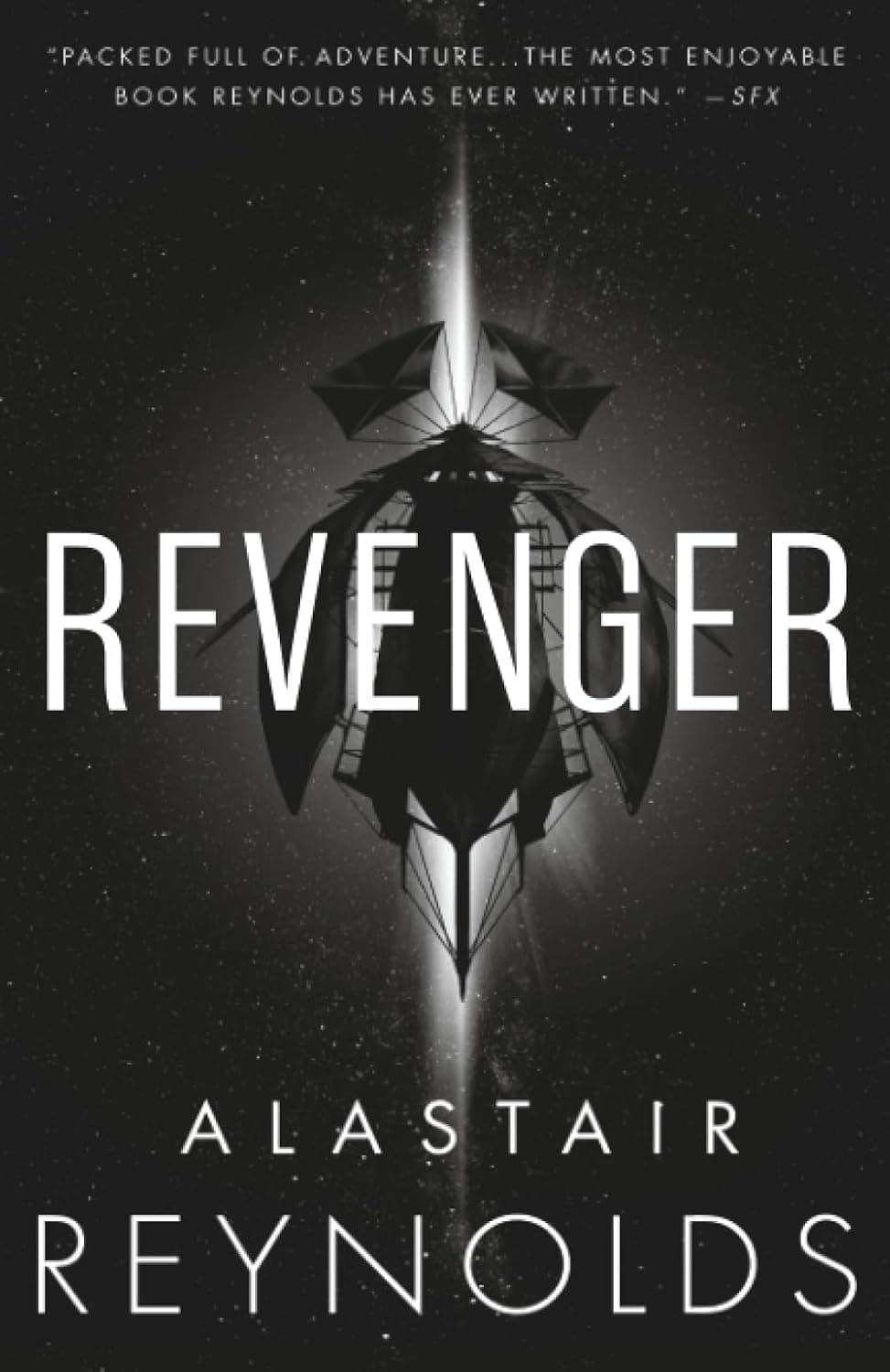
Revenger
Revenger offers a cleaner adventure voice, solar-sail ships, and a younger crew.
Best for: Go here for accessible space piracy, sisters, treasure worlds, a found crew, and a YA-adjacent adventure tone.
As an Amazon Associate, I earn from qualifying purchases.
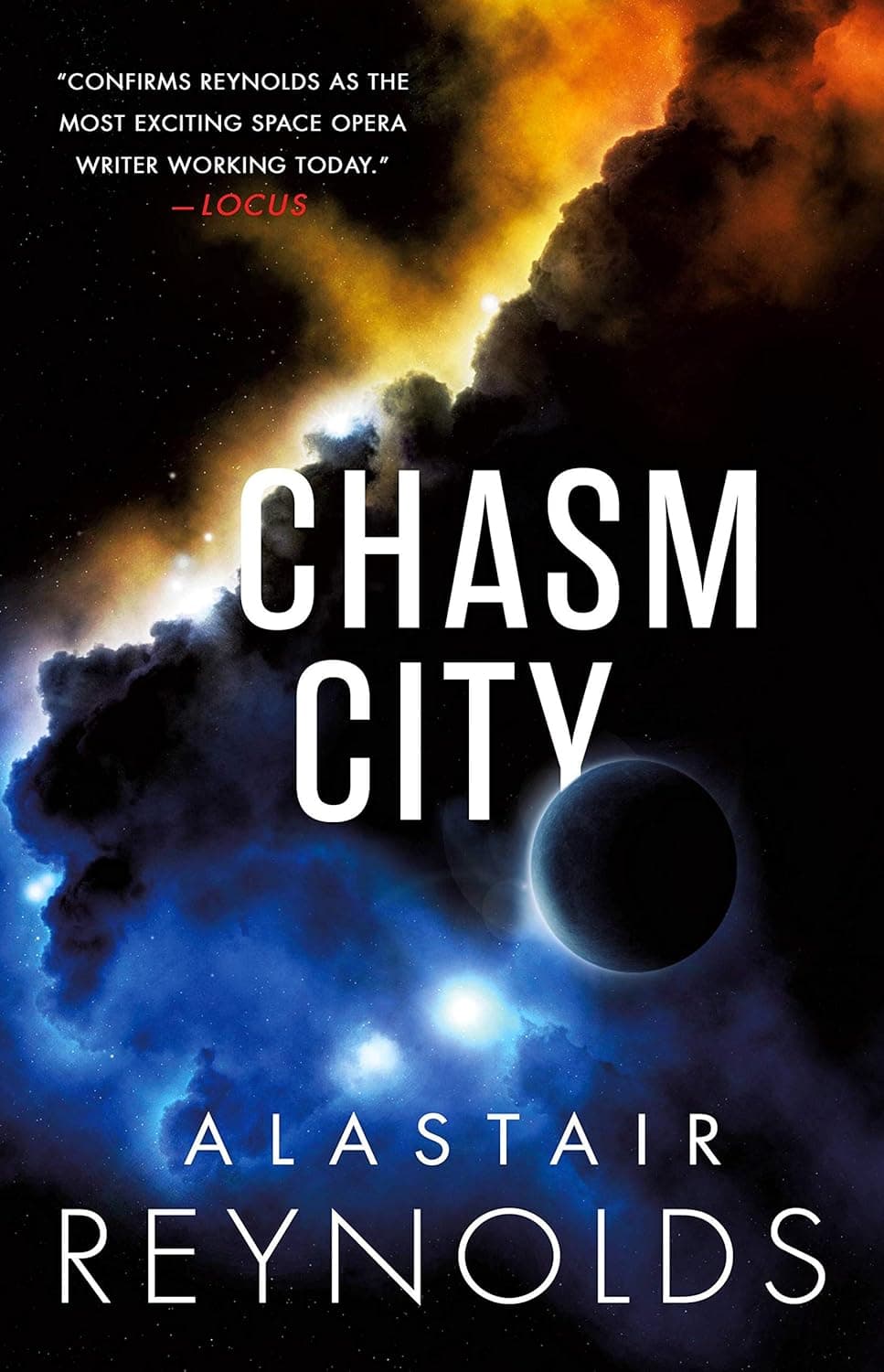
Chasm City
Chasm City provides a better noir protagonist and more controlled identity mystery in another strange city.
Best for: Choose it for SF noir with body modification, ruined cities, violence, and an unreliable identity; the story can stand alone.
As an Amazon Associate, I earn from qualifying purchases.